


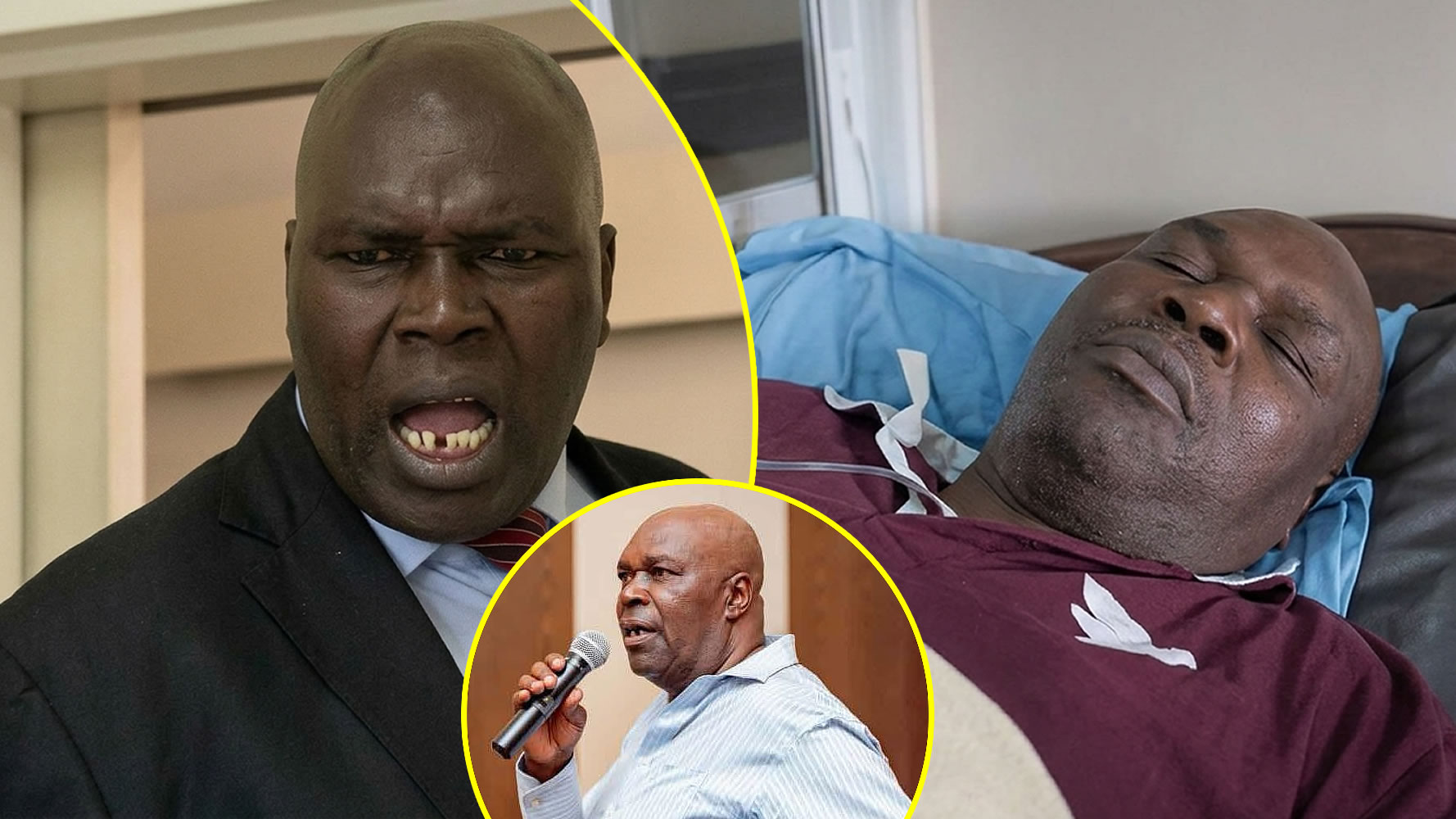
CHITUNGWIZA – William “Gweshegweshe” Matenga spent what would become his final Friday in familiar company, talking about household electricity and playing snooker at a local spot in Zengeza 5. By that evening, the veteran actor had fallen ill. Within hours, his family was facing not only the sudden loss of a father and community figure, but a difficult dispute over where his body should be laid to rest.
Matenga, whose performance in the television series Gringo made him a household name, died on Saturday after being taken ill. His family and friends described a man who had been active and cheerful just before his final health crisis, even as he had been managing recurring medical problems.
The loss brought mourners to the family home at No. 12 Mupangara in Zengeza 5, Chitungwiza. But grief was mixed with uncertainty. Relatives were divided over whether Matenga should be buried at the family cemetery in Buhera or in Harare, where a provincial-hero application was being pursued.
The dispute became more difficult as relatives offered different accounts of what Matenga himself had wanted. A close relative said his wish was to be buried in Buhera. Another family spokesperson said he had spoken about being laid to rest at the Provincial Heroes Acre beside a comrade from the liberation struggle. Family members were also waiting for a letter said to contain his final wishes.
At the wake, relatives favouring Buhera pointed to the family cemetery and argued that people recognised as heroes had also been buried at their rural homes. Others looked to Warren Hills in Harare, where a provincial-hero burial was being considered. No single arrangement had been agreed when family spokesperson Peter Chafewa described the disagreement and the outstanding paperwork.
“There was a fierce meeting regarding Gweshegweshe’s choice of burial place, as some family members preferred that his remains be interred at the family cemetery,” said an insider familiar with the developments.
“The same relatives told us that they had a say in where Gweshegweshe should be buried. For now, there appears to be an impasse regarding his preferred burial place.”
The family was also waiting for the outcome of the application for provincial hero status. Chafewa said the paperwork had not been completed and that the War Veterans Association for Harare Province wanted clarity before the funeral could proceed.
“The burial of Gweshegweshe is likely to be postponed since the War Veterans Association for Harare Province, where he was also one of the leaders, wants clarity on his status,” Chafewa said.
“There is a team which left this morning to process his papers in town, but they are yet to give us tangible feedback. This team is made up of his son Kudakwashe, who is studying IT at the University of Zimbabwe, his former wife and a few relatives. It is my hope that the paperwork will be processed in time so that we can give him a decent burial befitting his status.”
The family was meanwhile expecting two of Matenga’s children to travel from outside Zimbabwe. Lawrence was working in Australia and Lloyd Matenga was based in South Africa, where he worked as an advocate. Kudakwashe, known as Kuda, was already helping his mother with the paperwork.
Another relative said Matenga had expressed a wish to be buried in Buhera, his rural home, while discussions about provincial-hero recognition were under way. A different account placed his stated wish in Harare. The family spokesperson said Matenga had spoken at a family wedding about his final resting place and that a letter setting out his wishes was expected to be delivered for the family to review.
Two weeks before his death, the spokesperson said, Matenga had told a relative: “If I die, I would like to be buried at the Provincial Heroes Acre alongside my comrade, Cde Musiiwa. We served together in the liberation war and the army until his death.”
The burial discussions unfolded as mourners tried to understand how quickly Matenga’s health had worsened. Chafewa said the actor had been dealing with health problems since the previous year. He had been diagnosed with prostate gland enlargement, which was later complicated by hypertension. The initial condition had been treated, but it returned.
Chafewa said he had spoken to Matenga the day before his death. Their conversation had been about fixing electricity, a subject that suited Chafewa’s work as an electrical engineer. Matenga had also spent time playing snooker at Limbani Shops, his favourite spot in Zengeza 5.
“The last time I spoke to him was last Friday when we were talking about something to do with fixing electricity since I am an electrical engineer myself. He was in a jovial mood that Friday and had played snooker at Limbani Shops in Zengeza 5, which was his favourite spot.”
Later that evening, Chafewa learnt that Matenga had become unwell. He said the actor was taken to hospital and pronounced dead on admission.
“I was shocked to hear that he was unwell around 9pm. He was pronounced dead upon admission. We have lost a giant in the creative sector, a community defender and a loving father who was always ready to unite his community. Life will never be the same without him because he was indeed a unifier who preached peace and harmony.”
Matenga’s influence reached beyond the screen. Neighbours and fellow war veterans remembered him as a steady presence in Zengeza and a man who tried to keep people together. Former detainee and ex-combatant Patricia Mutuswa, known by her liberation-struggle name Cde Chido, said she had known him since 1982, when they became beneficiaries of houses in the area.
“I have known him since 1982, when we became beneficiaries of houses in Zengeza. We used to meet during our meetings as war veterans in this area, and he was always a man of peace,” she said.
Mutuswa also recalled accompanying him to play snooker. She said she had been with him on the day he fell ill and described him as a leader, father figure and mentor.
“I grew up admiring him because he was indeed a friendly man who had the community at heart. I used to accompany him whenever he went to play snooker at Limbani Shops. I was with him on the day he fell ill. I am also here mourning our hero. He deserved this status, and I will forever cherish him as a leader, father figure and mentor.”
His former churchmate, Gogo Farai Mbuzi, also remembered him as a respected neighbour and community leader. She said mourners were waiting for the paperwork and the outcome of the application for provincial hero status.
“We never had problems with him, and I am glad that we are here mourning him. We await the processing of his papers and the outcome of Harare Province’s application for him to be accorded provincial hero status. He deserved it, and we will surely miss him.”
For colleagues, Matenga’s death meant the loss of a performer and a mentor whose work had helped shape one of Zimbabwe’s best-known television comedies. He played Gweshe Gweshe, the long-suffering boss of Lazarus “Gringo” Boora’s title character in Gringo. The role gave Matenga the name by which many viewers knew him.
After Boora’s death, Matenga continued the story in The Return of Gringo, working alongside Boora’s son, Taurai. Fellow actor Blessing “Mbudziyadhura” Chimhowa said Matenga helped guide the younger actor and remained committed to the productions.
“Whenever we were on set, he was always humble. He was very passionate about acting, so this is a great loss to everyone. We have lost a legend, a father figure, a friend and a teacher. His acting was so natural that people sometimes thought what they were watching was real life. “He was disciplined both on and off set. We only learnt later in life that he was a war veteran and had served in the army but he never showed off about his background.
“That is why I say we learnt humility from him,” he said. Mudziyadhura said Gweshegweshe’s commitment to the Gringo productions was evident.
“He was one of the people who worked extensively on the Gringo series. Even when his job demanded a lot from him, he would still find time for us.” He said Gweshegweshe had also taken a fatherly role in helping to continue the Gringo story after the death of Boora. After Gringo died, he started working on The Return of Gringo alongside the late actor’s son, Taurai Boora.
“Taurai is still young and Gweshegweshe was there to guide and father him. Gweshegweshe was at the centre of the Gringo story. “His death is a huge loss to the cast. May his soul rest in peace,” he said.
Chimhowa also voiced frustration that recognition often came only after a person had died.
“It is sad that in this country people are only recognised and given their flowers when they are gone. That is when everyone starts talking about them. I am not saying people should not attend funerals but using someone’s death to create content is not honourable,” he said.
The actor’s neighbours and fellow veterans gathered at the family home as congregants from St Agnes Roman Catholic Church helped coordinate funeral arrangements. Friends, fans and former comrades continued to arrive to pay their respects. The family said Matenga was survived by seven children.
The funeral plans remained caught between the family’s rural roots, the possibility of provincial recognition and the different memories of what Matenga wanted. Those close to him remembered the Friday when he was still joking, talking about a practical repair and playing snooker. By the following evening, his family was mourning him while trying to settle where the actor, soldier, father and neighbour would finally rest.