


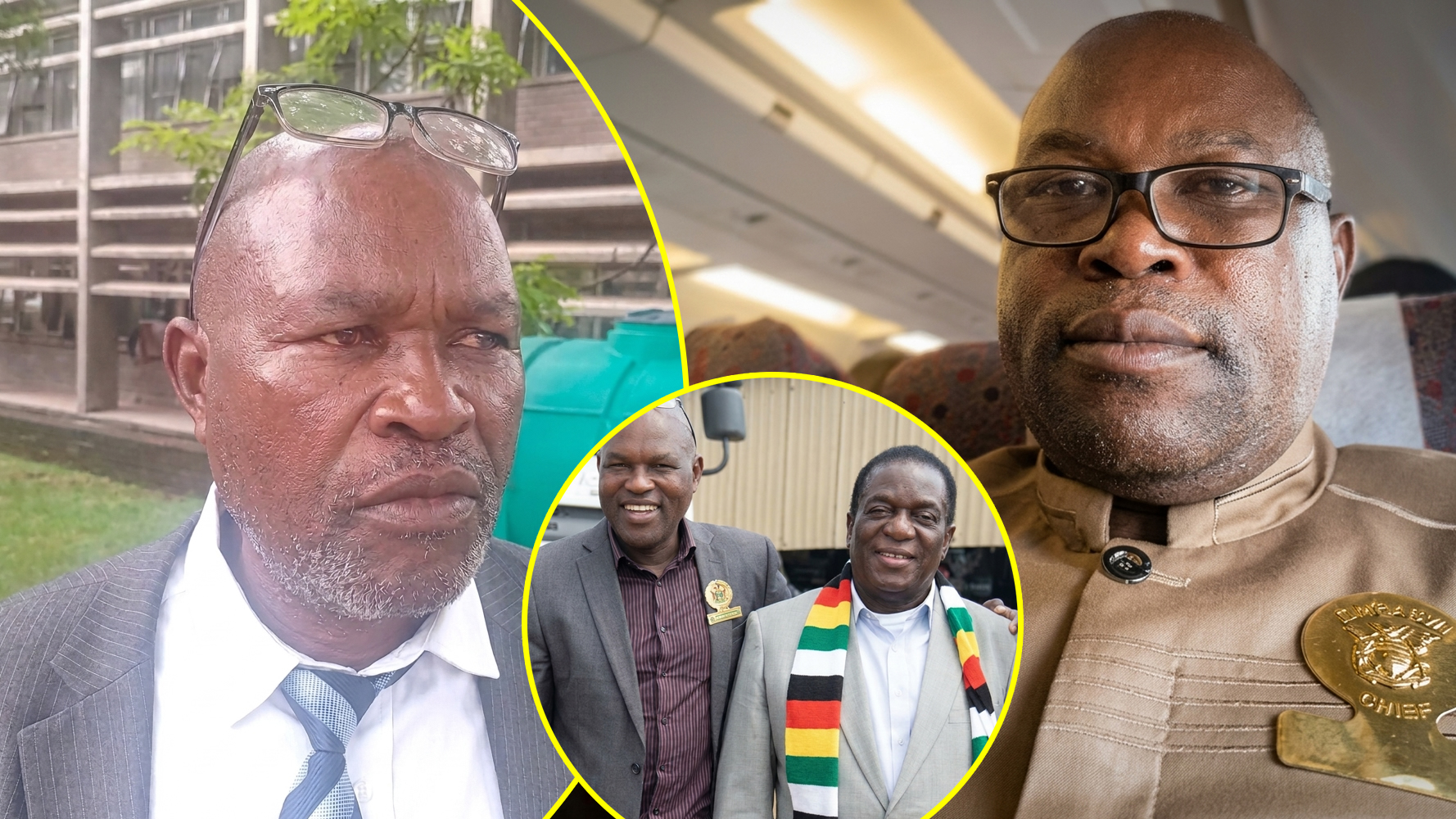
MASVINGO — Villagers under Chief Murinye in Masvingo Rural have been asked to contribute towards a private party for the traditional leader, with village heads claiming they were warned of fines if they failed to collect the money.
Chief Murinye, born Ephias Munodawafa, confirmed that communities were contributing US$20 towards the celebration. He said the plan had come from villagers themselves and denied that anyone was being forced to pay.
“Yes its true that villages are contributing US$20 for my graduation party. The decision to hold the party and make contributions was made by them,” he said.
Village heads who spoke anonymously gave a sharply different account. They said they were called to a meeting at Chatikobo last week by headmen Chibwe and Mukamwe and told to raise US$20 from each village. One said those who failed to produce the money would be fined.
“Headman Chibwe summoned us to Chatikobo last week where he instructed us to raise US$20 per village towards the chief’s graduation party. Whoever fails to raise the money will be fined. All we can do is collect the money from villagers,” one village head said.
The anonymous village heads said they feared reprisals if identified. Their account was also disputed by Headman Chibwe, born Edmore Matavire, who confirmed the US$20 contribution but said village heads had initiated it and that there would be no punishment for those who did not pay.
The collections are expected to cover more than the party itself. Villages are also said to have been asked for US$15 each to pay for transport so their headman can deliver the contribution to the chief. With more than 170 villages under Murinye, that would mean at least US$3,400 for the party and US$2,550 for transport — a combined US$5,950 if the charge applies across 170 villages.
The issue has also raised questions about the purpose of the celebration. It is not clear which qualification Murinye is marking. His last known graduation was in 2017, when he obtained a Bachelor of Laws degree. He registered as a legal practitioner in 2018.
The Ministry of Local Government spokesperson, Gabriel Masvora, said no law or policy allowed chiefs to demand money from villagers for private matters. Senior lawyer Aleck Muchadehama described the fundraiser as fleecing poor residents, saying the proposed US$20 was too much for villagers struggling to make a living.
“The party is a private function that has nothing to do with the chiefdom and villagers should not be dragged into it,” Muchadehama said.
Efforts to obtain a comment from National Council of Chiefs president Chief Mtshane Khumalo were unsuccessful.
The dispute comes against the backdrop of other charges villagers are reported to face in parts of rural Zimbabwe. The account of the proposed party contribution also lists payments made around funerals and memorial events: a charge to bury a relative, US$15 for a stone unveiling and US$15 for a memorial service. In Gutu, villagers are reported to pay US$1 each towards Chief Gutu’s Zunde Ramambo, a community food reserve initiative.
For residents living on very low incomes, the request for money for a private celebration has become particularly contentious. The village heads’ account suggests the money is being channelled through local leadership structures, while the chief and Headman Chibwe maintain that the contributions are voluntary. That difference lies at the centre of the dispute: villagers say the collection was presented as an instruction backed by a fine, while the two leaders say no one is being coerced or punished.
On 11 January 2026, as the school was due to open, Murinye used a vehicle to block the road leading to the school, preventing parents and pupils from reaching the entrance. He objected to the school’s construction, arguing that the necessary approvals had not been obtained and that the development affected communal grazing land. The school’s operator said the chief had demanded that his homestead be connected to electricity and that his children receive free education.
Mutangiri alleged that he had paid about US$7,000 for an electricity transformer after Murinye asked for a connection to his home. He further alleged that the chief later sought free, indefinite enrolment for his children. Murinye denied the extortion allegations and said he was challenging the school’s approvals and the process through which the land had been acquired.
A separate criminal case arising from the school row ended in August, when Masvingo Regional Court magistrate Innocent Bepura acquitted Murinye of extortion charges after granting an application for discharge at the close of the State case. The charges had included allegations that he demanded electricity at his homestead and free, indefinite schooling for his children. Murinye denied the claims. The criminal case and the earlier High Court order were separate proceedings: the latter barred interference with access to the school while the wider dispute continued.
The school dispute followed earlier rows over land and traditional authority. In 2022, Moses Mugabe brought a court application concerning a field in Village 33B, in Chief Mugabe’s area, which he said had belonged to his late father and which he had farmed since 2014. His application said Murinye had begun preparing the land for Zunde Ramambo community farming. Mugabe argued that the land remained registered in his father’s name and that the chief’s actions infringed his rights. Murinye said at the time he could not comment while the matter was before the courts. No outcome of that case is included in the available account.
Murinye and Chief Mugabe, born Matubede Mudavanhu, also challenged Econet Wireless over a base station built on Sviba Hills near Great Zimbabwe. The chiefs said the hill was a sacred burial site for the Duma people and that construction had exposed or disturbed ancestral remains. In 2012, they sought an urgent High Court order to stop the project and sought the reburial of exposed remains. They also demanded compensation through a traditional court, including 2,000 white cattle and special clothing for ancestral rites.
The High Court dismissed their urgent application and ordered them to pay Econet’s legal costs. The base station was built. Murinye has since continued to say that the company should compensate the community for damage to the shrine, maintaining that the site holds ancestral remains and has religious significance.
The proposed graduation-party collection is now the latest dispute to place the chiefdom’s relationship with its residents under scrutiny. For the villagers who say they have been instructed to raise the money, the immediate concern is whether a voluntary contribution can carry a threatened fine. For Murinye and Headman Chibwe, the collection is a community decision and non-payment carries no consequence.
What is clear from the figures provided is that the requested US$20 per village is only part of the expected outlay: the additional US$15 transport charge would bring the reported total to US$35 per village. The stated count of more than 170 villages would produce at least US$5,950 in combined contributions.