


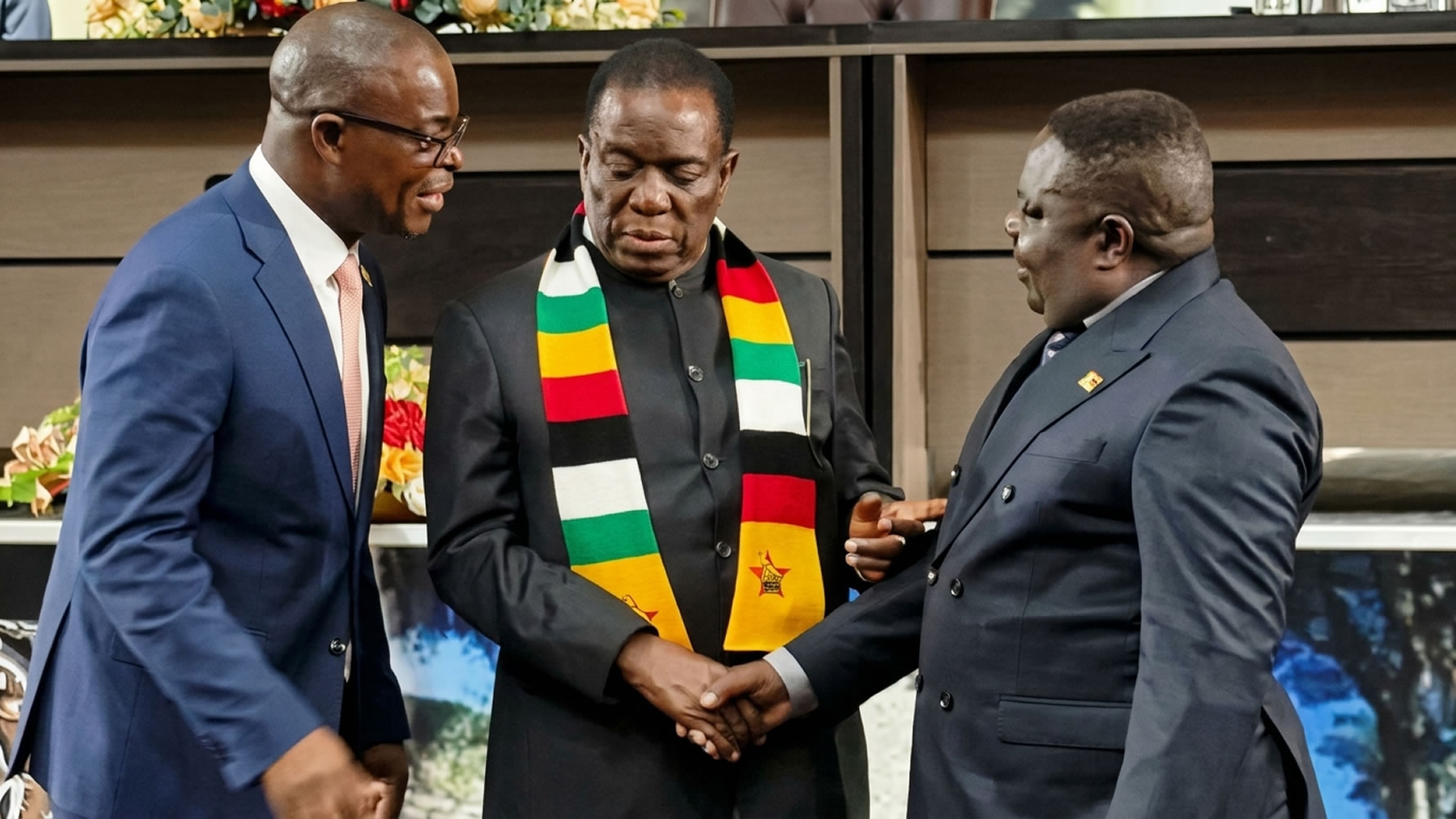
President Emmerson Mnangagwa has told Zimbabwe’s ambassadors that diplomatic postings are not a holiday, demanding measurable results as his government prepares a major reshaping of the country’s foreign service.
“Serving on diplomatic missions is no child’s play, and it is certainly not a holiday. My administration demands tangible, principled, and pragmatic results,” Mnangagwa said in a public statement after addressing ambassadors and heads of mission at the Harare International Conference Centre on 2 November.
The meeting followed a Ministry of Foreign Affairs and International Trade senior management and ambassadors’ retreat held from 19 to 22 October. Its theme was “From Strategy to Results: Advancing Zimbabwe’s National Interests through Coordinated, Accountable and Results-Driven Diplomacy.”
The president’s message was directed at a diplomatic corps facing a broad reorganisation. Reports say up to 26 ambassadors may be recalled, retired or reassigned as the government seeks to shift foreign missions towards trade and investment promotion. The proposed changes would reach across a network of about 40 embassies and 10 consulates. Some recalled officials are expected to move to other postings rather than leave the service.
The size of the reported exercise makes the president’s call for accountability more than a general instruction. Missions are being asked to show what they can deliver for Zimbabwe, from new investment and export opportunities to stronger tourism links and support for citizens abroad.
Mnangagwa described embassies as “strategic platforms” for advancing national development. He said diplomats must promote trade, investment and tourism, work closely with government offices at home, and protect Zimbabwe’s interests through partnerships that offer benefits to both sides.
He also called for a more practical approach to foreign relations. Zimbabwe, he said, remains “a friend to all and an enemy to none”, but should not depend on any one country or bloc. Diplomats are expected to provide timely advice on international developments and agreements, while translating policy into measurable programmes at their posts.
The reshuffle has already begun to take shape in public. Rwanda has approved the appointment of Helliate Rushwaya, chairperson of the Zimbabwe Broadcasting Corporation, as Zimbabwe’s ambassador to Kigali. She is to replace Charity Manyeruke, who is expected to take up a posting in Ottawa, Canada.
Retired Lieutenant-General Engelbert Rugeje was among the ambassador-designates who attended the Harare engagement. He has also taken part in diplomatic induction and training ahead of deployment. His name has been linked to a possible posting in Maputo, Mozambique, although the assignment has not been publicly confirmed. Rugeje previously served as ZANU PF’s national political commissar and held senior military roles.
Other figures reported to be in line for diplomatic work include former Harare Metropolitan Province Minister Miriam Chikukwa and former Cabinet minister Mike Bimha. Barbara Mukahanana has also been named among officials moving into diplomatic posts. The UK ambassador, retired Colonel Christian Katsande, and Zimbabwe’s envoy to Australia and New Zealand, Joe Tapera Mhishi, have been mentioned among those expected to depart or be reassigned as the review proceeds.
The exact final list of recalled and incoming envoys has not been made public. But the new approach is clear in Mnangagwa’s instructions: foreign missions should help open markets for Zimbabwean products, draw capital into priority industries and support national development goals. Agriculture and horticulture, mining and value addition, manufacturing, energy and tourism are among the sectors identified for closer attention.
The instruction comes as Zimbabwe takes on a number of regional and international roles. The United Nations General Assembly elected the country to a non-permanent seat on the Security Council for 2027–28, with its two-year term due to begin in January 2027. In October, Mnangagwa took over from Kenya’s William Ruto as chair of the Common Market for Eastern and Southern Africa Authority for a one-year term. Zimbabwe is also due to host the African Continental Free Trade Area Council of Ministers in 2027.
Those assignments will place Zimbabwean representatives in settings where trade, regional cooperation and international security are discussed. At the same time, Mnangagwa has asked the Foreign Affairs Ministry to review the National Diaspora Policy. He said diplomats should treat Zimbabweans living near or visiting their missions with humanity, describing the diaspora as a “vital pillar” in the country’s development.
The emphasis on consular care comes against the backdrop of risks faced by overseas missions. In June 2023, armed men raided and looted the office and residence of Zimbabwe’s ambassador to Sudan, Hilda Mafudze, in Khartoum during the conflict there. Mnangagwa’s latest instructions also call on missions to report promptly and remain alert to emerging threats.
Diplomatic work is also affected by changes in other countries’ representation. Sweden closed its embassy in Harare on 31 October 2026, following a decision to wind down its bilateral development assistance programme and manage relations through other regional arrangements. The closure underlines how overseas diplomatic presence can change, making the effectiveness and reach of Zimbabwe’s own missions a practical concern.
The president also directed heads of mission to manage public money carefully, maintain government property and follow administrative rules. He told them to work with ministries and agencies at home rather than operate in isolation, and to turn the resolutions of the ruling party’s 23rd National People’s Conference and the ministry’s planning workshop into targets.
Zimbabwe’s election to the Security Council and its leadership in COMESA give its diplomats new platforms, while the 2027 AfCFTA meeting will bring trade officials to the country. Mnangagwa’s challenge is for the missions to use those opportunities to produce gains beyond ceremony and protocol.
As ambassadors return to their stations, the president has set out the standard he expects: visible work on investment, trade, tourism, diaspora support and the protection of national interests. “Zimbabwe remains open for business, and global capital is safe here,” he said, urging the diplomats to make economic diplomacy part of the country’s development drive.