


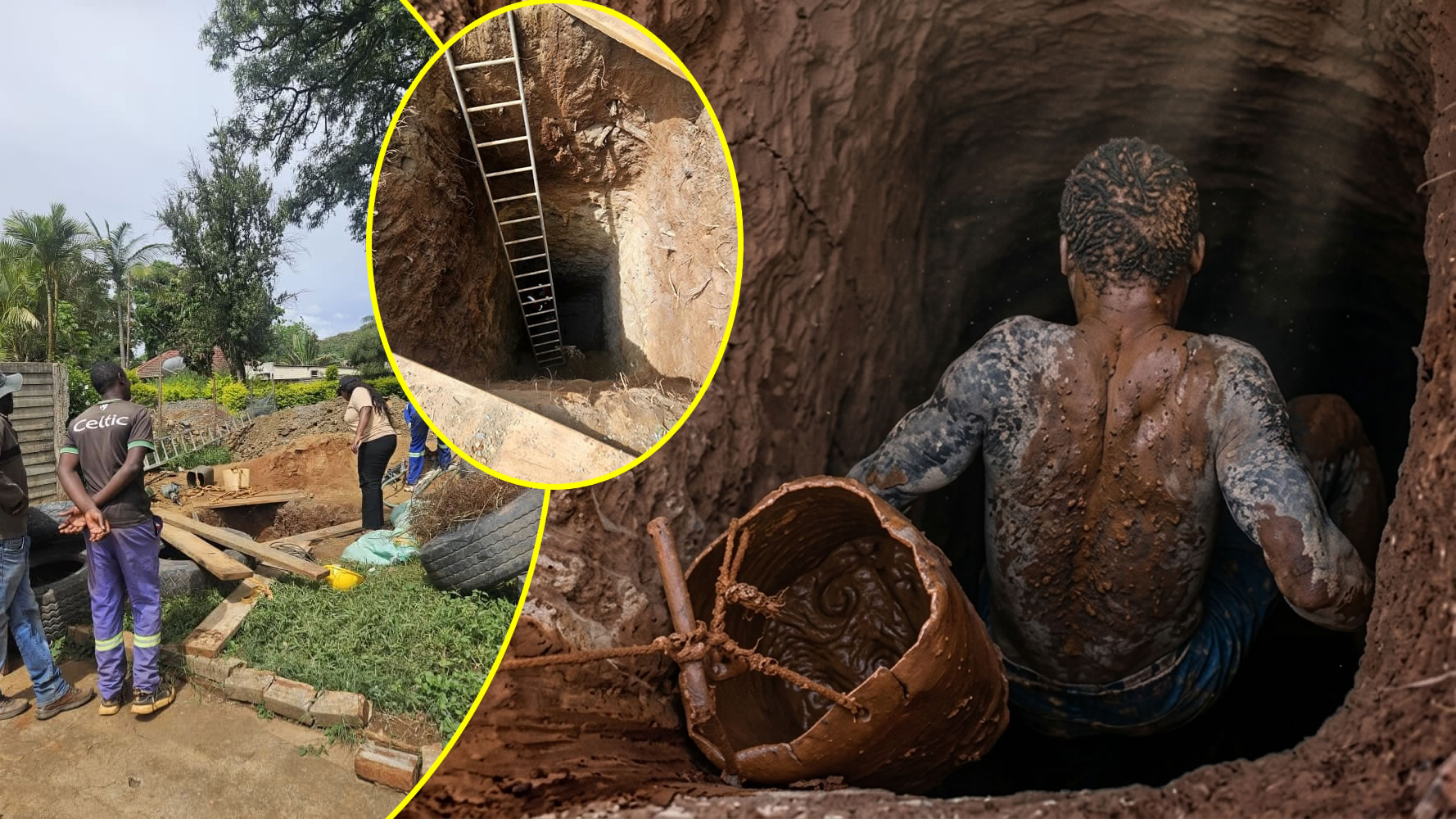
HARARE – In the quiet, leafy suburb of Marlborough, where the rhythmic sound of sprinklers and the distant hum of traffic usually define the afternoon, a much darker rhythm had been thumping beneath the surface for four years. On a quiet Sunday, 2 August 2026, that should have been like any other, the silence was shattered not by a blast, but by the heavy boots of the Zimbabwe Republic Police.
Eight men now sit in custody, with their hands calloused and their clothes stained with the red earth of a suburb they had been hollowed out from within. For four years, right under the noses of unsuspecting neighbours and oblivious authorities, a massive illegal mining operation had been carved into the heart of one of Harare’s most established residential areas.
The scale of the audacity is staggering. Authorities revealed that the suspects had sunk a ten-metre-deep shaft on a residential property, operating a full-scale extraction site that included clandestine blasting activities. This was no amateur hole-in-the-ground; it was a sophisticated, long-term enterprise that had been churning through tonnes of ore since 2022.
The Treasure Map and the Rhodesian Myth
The story behind how such an operation began sounds more like a plot from a colonial-era adventure novel than a modern-day crime report. According to Ward 41 Councillor Kudzai Kadzombe, the individuals behind the digging had spun a captivating web of deception to gain access to the land.
“They told me they had received a permit from the Ministry of Mines,” Councillor Kadzombe recounted during a tour of the affected homes. “Apparently it was a family that had been given a map by their grandfather during the Rhodesian times to retrieve what they believed was buried treasure. They convinced the property owner to allow them access and begin digging.”
This appeal to “buried treasure” and “Rhodesian maps” apparently provided the perfect cover for what was, in reality, a ruthless pursuit of gold. The allure of the “Gold Rush” has long gripped the nation, with thousands of artisanal miners scattered across the country, but rarely does it manifest so brazenly in the middle of a suburb filled with family homes and manicured gardens.
A Suburb on the Brink of Collapse
While the miners chased their “treasure,” the residents of Marlborough were living through a slow-motion catastrophe. The vibrations from underground blasting and the hollowed-out earth have left a trail of structural devastation that may be irreversible.
Councillor Kadzombe, who has been the primary voice for the distressed community, first began receiving reports of the activity in late 2024.
“I received calls from residents in October 2024 telling me there was blasting taking place at one of the properties in Marlborough,” she said.
Despite immediate reports to the City of Harare’s Development Control Unit and the Environmental Management Agency (EMA), the digging continued. Although authorities initially ordered a halt, the operation proved resilient, resuming its activities in the shadows.
By 2026, the consequences became impossible to ignore. Structural engineers, called in to assess the damage, have delivered a chilling verdict. Many of the homes, once symbols of stability and hard-earned success, are now riddled with cracks so severe they have been declared health risks.
“The report from the engineers said the cracks are posing a health risk. They could actually collapse at any given moment,” Kadzombe warned, standing inside a home where the walls looked like a shattered jigsaw puzzle.
The tragedy is compounded by the demographic of the neighbourhood. Marlborough is a sanctuary for elderly pensioners, many of whom spent their entire working lives saving to buy these properties. Now, in the twilight of their lives, they face the prospect of their greatest assets crumbling into the earth.
“Our area is predominantly filled with pensioners who invested years and years to buy these properties and maintain them,” Kadzombe said. “Just because of one reckless act by someone pursuing personal enrichment, neighbouring properties have now been affected.”
The Minister’s Mandate
The Marlborough arrests coincided with a major gathering of mining officials in Kadoma. Speaking at the official opening of the Ministry of Mines and Mining Development 2026 Mid-Term Performance Review and Second Half Reset Workshop, Minister Polite Kambamura was unequivocal in his condemnation of the Marlborough operation.
The Minister used the platform to clarify the government’s stance on urban mining, an issue that has become increasingly contentious as illegal miners move closer to city centres.
“As the Ministry of Mines and Mining Development, we do not issue licences for mining operations in urban residential areas,” he stated firmly. “We have noticed that some people are clandestinely mining at their residences, drilling and blasting, thereby causing environmental damage.”
Minister Kambamura’s address highlighted a growing concern within the government: the rise of “backyard mining” that bypasses all safety and environmental regulations. He called for a “Whole-of-Government” approach to tackle a problem that has transcended simple illegality to become a threat to public safety and national infrastructure.
“This is unacceptable and I would like to urge other Government departments to work with the Ministry of Mines and Mining Development to identify where illegal mining is taking place so that we bring the culprits to book,” the Minister added.
The workshop in Kadoma was not just about enforcement; it was a reflection on the massive scale of the industry. The Minister revealed that the country earned approximately US$5.73 billion from mineral exports in the first half of 2026 alone. Of this, US$2.532 billion was marketed through the Minerals Marketing Corporation of Zimbabwe, while gold exports accounted for a staggering US$3.20 billion.
Yet, as the Marlborough case proves, these billions often come with a hidden social and environmental cost that isn’t reflected in the national ledgers.
Echoes of Penhalonga: The Human Cost
The Marlborough incident, while dramatic, is part of a much wider and deadlier pattern of illegal mining across Zimbabwe. Minister Kambamura cited recent tragedies to remind the public of the stakes involved.
In Penhalonga, Manicaland, the desperation for gold led to a scenario that mirrored the Marlborough deception, but with a far more lethal outcome. In that instance, illegal miners had constructed a network of concealed underground tunnels, accessed through what appeared to be a harmless “dummy” tuckshop.
The charade ended in horror when a shaft collapsed, burying the men alive. The operation was only exposed when the bodies of eight miners were eventually recovered from the depths. It was a stark reminder that the “Gold Rush” is paved with the lives of those who venture into unregulated tunnels, often with the complicity or negligence of those above ground.
The Minister noted that such activities have resulted in a consistent loss of life, environmental degradation, and the systematic destruction of property. The Penhalonga disaster served as a grim precursor to the fears now gripping Marlborough: that underground excavations and blasting could end in a catastrophic collapse that takes more than just property.
The Fight for Accountability
For the residents of Marlborough, the arrest of the eight men is only the beginning of a long road to recovery. The physical damage to their homes remains, and the psychological toll of living above a blasting site for four years has left the community on edge.
Councillor Kadzombe is now working to ensure that the residents are not left to pick up the pieces alone. She has reached out to human rights lawyers to explore legal remedies for the affected families, focusing on property damage, safety violations, and the significant decline in property values caused by the illegal mine.
“We really need to look into how the Ministry of Mines could approve such a development where mining is taking place right in the middle of a residential area surrounded by other properties,” she questioned, pointing to a potential breakdown in the oversight system that allowed the operation to persist for four years despite multiple reports.
The questions remain: How did ten-metre shafts and regular blasting go unnoticed by the broader authorities for nearly half a decade? And who will pay for the restoration of the homes of the pensioners who now watch their walls crack further each day?
As the eight suspects await their day in court, the suburb of Marlborough stands as a cautionary tale of the lengths to which individuals will go in the search for gold, and the devastating wake they leave behind in the lives of ordinary citizens. The “treasure” they sought has turned out to be a curse for the neighbourhood, leaving a community to wonder if their homes will still be standing by the time justice is finally served.
Chronology of the Marlborough Mining Scandal
- 2022: Illegal mining operation commences under the guise of searching for “buried treasure.”
- October 2024: Residents first report hearing underground blasting to Councillor Kadzombe.
- Late 2024: EMA and City of Harare issue “stop orders” which are eventually ignored.
- Early 2026: Structural engineers confirm significant damage and risk of collapse in neighbouring homes.
- August 2, 2026: Police raid the property and arrest eight men; a 10-metre shaft is discovered.
- August 3, 2026: Minister Polite Kambamura addresses the Kadoma workshop, condemning urban mining.