


The Education Crossroads: Zimbabwe’s June Exam Results Reveal a System in Flux
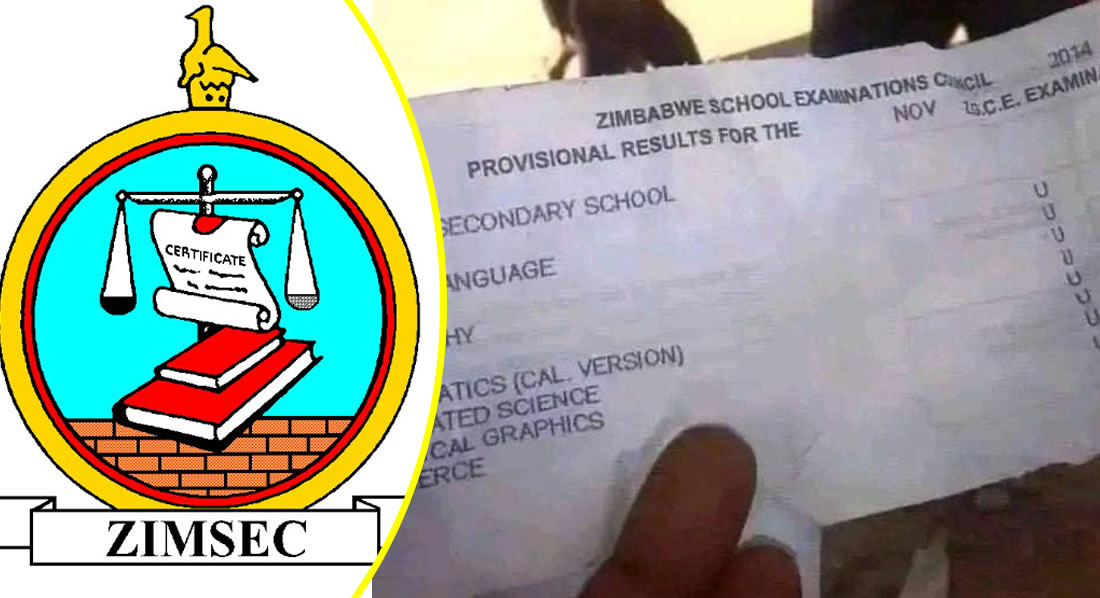
HARARE – On a cool Monday evening in the capital, the Zimbabwe School Examinations Council (ZIMSEC) pulled back the curtain on the June 2026 Ordinary and Advanced Level results. What emerged was a statistical landscape of sharp contrasts: a plummeting pass rate for Ordinary Level candidates and a surprising surge in Advanced Level performance. While officials attempted to frame the data within the context of academic cycles, the numbers tell a deeper story of a national education system grappling with economic instability, curriculum shifts, and a widening chasm between the elite and the struggling.
Addressing a packed room of journalists on Monday afternoon, ZIMSEC board chairperson Professor Paul Mapfumo confirmed that the results would be accessible online from 6:00 pm on 3 August. However, the window for digital access is narrow, with the portal scheduled to remain open for only five days.
“The Zimbabwe School Examinations Council board and management would like to advise the nation of the release of the 2026 June Ordinary and Advanced Level examination results,” Mapfumo stated. “With effect from today, 3 August 2026 at 6 pm, Ordinary and Advanced Level examination results will be accessible to all candidates and authorised personnel online through the ZIMSEC portal accessed via the ZIMSEC website.”
A Tale of Two Tiers
The data released by the council was sobering for many. The Ordinary Level pass rate for candidates who sat for five or more subjects fell to a mere 3% in June 2026. This represents a significant drop of 2.87% from the 5.87% recorded during the same period in 2025. In a country where the “O” Level certificate is a critical gatekeeper for employment and further training, such a low figure raises urgent questions about the efficacy of the June sitting.
Conversely, the Advanced Level results provided a rare glimmer of optimism. The pass rate for candidates who secured at least two subjects with a Grade E or better climbed to 67.74%, an 11.88% increase from the previous year’s performance.
While the A-Level improvement is noteworthy, critics argue that the O-Level failure rate is the more accurate barometer of the system’s health. The June session is traditionally dominated by private candidates and those seeking to supplement previous failures. However, the consistent decline suggests that the barriers to success are becoming increasingly insurmountable for the average Zimbabwean student.
The Economic Albatross
To understand these figures, one must look beyond the classroom and into the wallets of Zimbabwean parents and the staffrooms of its schools. The 2026 academic year has been defined by a bruising wage standoff between the government and educators. Teachers’ unions have been vocal about their plight, with many educators earning roughly $250 a month while demanding a minimum of $540 to keep pace with the rising cost of living.
The strain is not limited to the staff. In early 2026, ZIMSEC implemented a substantial hike in examination fees, with O-Level subjects rising to $190 each and A-Level subjects to $351. The financial pressure was so acute that the government was forced to extend the payment deadline from March to May 2026, after parents pleaded for more time to raise the required funds. For a family with a child sitting five O-Level subjects, the cost alone represents nearly ten months of a teacher’s basic salary.
Furthermore, the national budget for 2026 has come under fire for its modest allocation toward school infrastructure. With capital expenditure hovering at just 2.4% of the GDP, many rural schools continue to operate with dilapidated facilities, lack of textbooks, and no access to the digital tools required for the modern curriculum.
The Curriculum Conundrum
Adding to the complexity is the mandatory rollout of the Heritage-Based Curriculum (HBC), which replaced the controversial Continuous Assessment Learning Activities (CALA). While the government maintains that the HBC is essential for aligning education with national values and practical skills, its implementation has been uneven.
Reports from across the provinces suggest that both teachers and students are still adjusting to the new requirements. The transition has been further complicated by the lingering ghost of examination integrity. In November 2025, the council was forced to investigate the leak of a Mathematics Paper 1, an incident that undermined public confidence. While Professor Mapfumo has vowed to uphold the integrity of the council, the shadow of past irregularities continues to loom over every result release.
An Oasis of Excellence: The Dewure Success Story
Despite the bleak national averages, pockets of excellence remain, providing a blueprint for what is possible when leadership and dedication converge. In Masvingo Province, Dewure High School has cemented its reputation as an academic powerhouse, consistently ranking in the top ten over the last two decades.
Under the leadership of Thephinas Mangono, who was appointed head in 2023, the school has seen its fortunes rise even further. The O-Level pass rate at Dewure jumped from 79.3% in 2023 to 90.1% in 2025. At the A-Level, the school achieved a perfect 100% pass rate in both 2024 and 2025.
“In 2024 we had 22 learners who attained 15 points and above at ‘A’ Level. In 2025 that number increased to 24. We are pleased not only with the pass rates but also with the quality of our results,” Mangono said. She attributed this success to the school’s motto of self-reliance, discipline, and sportsmanship. “My passion is educating young minds. We believe teachers are the backbone of every nation because they mould the next generation of leaders. Our responsibility is to ensure that when we leave, we leave behind young people who are capable of taking society forward.”
The “100% Teacher”
Within the walls of Dewure High, the story of Naomi Hamadziripi, a Food Technology and Design teacher, has become legendary. Hamadziripi has maintained a 100% pass rate for her O-Level students for six consecutive years since 2020, and a 100% rate for her A-Level students for four years.
Her approach is a masterclass in investigative pedagogy. Soft-spoken and affable, Hamadziripi does not settle for second best. Her strategy involves completing the syllabus well ahead of schedule and then diving into rigorous revision using both ZIMSEC and Cambridge past papers.
“If at any time I realise that we are behind with the syllabus, I take my pupils through morning lessons which means we are in class by 6 am,” Hamadziripi explained. This dedication is a stark contrast to the national trend of teacher strikes and “two-day weeks” proposed by some unions as a form of protest.
Hamadziripi also bridges the gap between theory and practice, an essential component of the new curriculum. “Food Technology and Design is a critical subject because it is the study of the relationship between food and the human body. For example, we also study therapeutic diet; if you have hypertension there is certain food that you should not take regularly.”
She is a firm believer in the practical benefits of her subject, noting that graduates can become dieticians, nutritionists, or entrepreneurs. She has even worked to debunk the myth that the subject is only for girls. “I am expecting another 100% pass rate this year. The pupils have worked hard and are well prepared for the examinations,” she said, looking ahead to the 2026 November sitting.
A System at the Crossroads
The success of individuals like Hamadziripi and institutions like Dewure High highlights a painful truth: Zimbabwe’s education system is increasingly becoming a “two-tier” reality. On one hand, there are schools with the resources and leadership to thrive; on the other, a vast majority of students are left to navigate a system where the odds of passing O-Level are now just 3 in 100.
The June 2026 results are more than just a collection of grades; they are a call to action. As heads of examination centres begin collecting printed results from regional offices this Tuesday, the national conversation must shift toward addressing the systemic rot—from teacher remuneration to infrastructure investment—that threatens to leave a generation behind.
For now, the ZIMSEC portal remains open, a digital window into the futures of thousands of young Zimbabweans. Whether that window reveals a path to progress or a dead end remains, for many, a matter of geography and economic privilege.
Fact Box: ZIMSEC June 2026 Results at a Glance
|
Category
|
2025 Pass Rate
|
2026 Pass Rate
|
Change
|
|
Ordinary Level
|
5.87%
|
3.00%
|
-2.87%
|
|
Advanced Level
|
55.86%
|
67.74%
|
+11.88%
|
Note: Ordinary Level pass rate is based on candidates passing 5 or more subjects. Advanced Level pass rate is based on candidates passing 2 or more subjects.