


The Licence Labyrinth: Inside the Chaos of Zimbabwe’s Driver’s Licence Reform
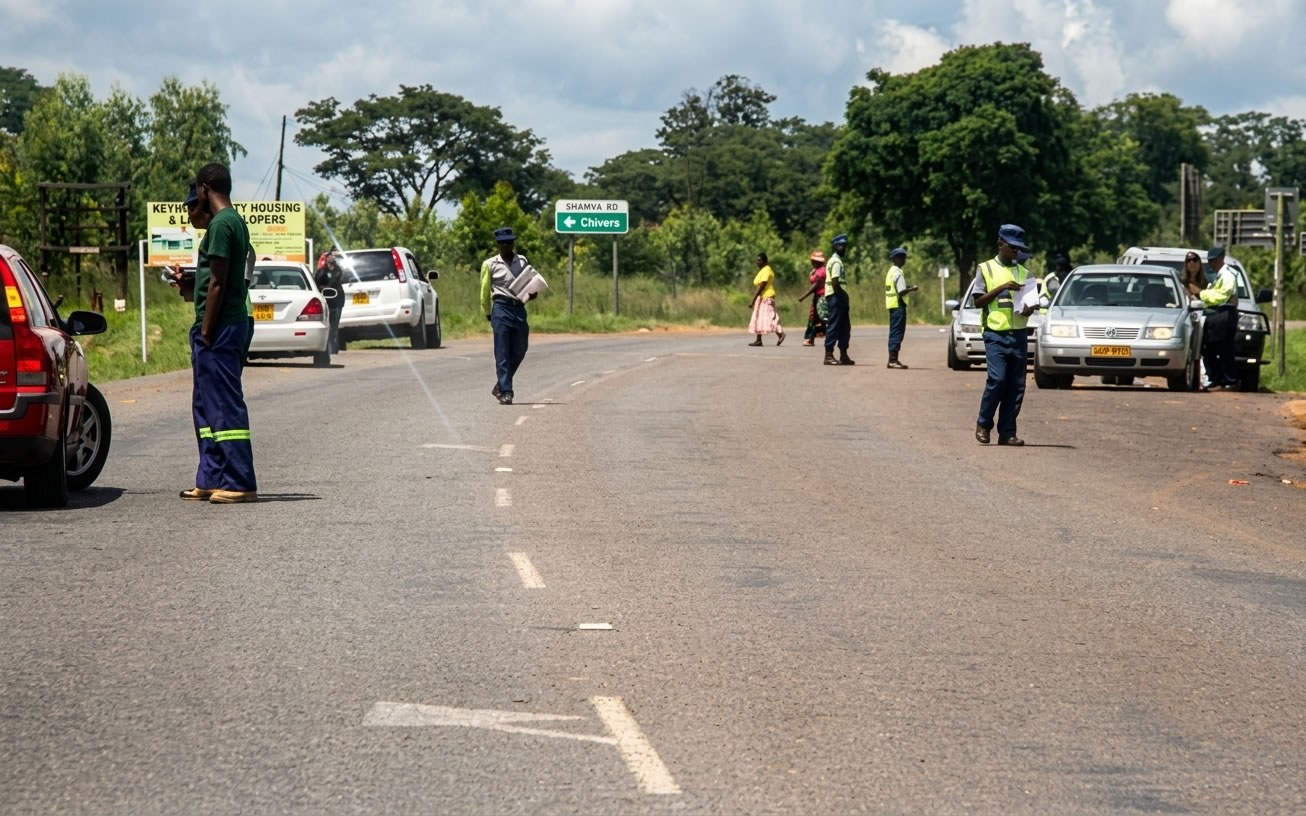
HARARE – On a busy stretch of the Harare-Bulawayo highway, just past the Kuwadzana roundabout, the morning air was thick with the smell of diesel exhaust and the mounting frustration of motorists caught in the dragnet of a nationwide police blitz. It was mid-July 2026, and the Zimbabwe Republic Police (ZRP) had just launched a massive operation targeting traffic violations. But for one motorist, the day would end not with a routine warning, but with a fine of 810 ZiG and a bewildering accusation: he was allegedly driving a vehicle he was over-qualified to operate.
The driver, who possessed a Class 2 licence — traditionally reserved for heavy trucks and lorries — was told by an adamant traffic officer that he could no longer legally drive his light motor vehicle, a Toyota Corolla. The officer insisted that under new, albeit unannounced, regulations, only a Class 4 licence would suffice. This single incident, documented by local crime watch groups, became the spark that lit a wildfire of panic across social media, leading thousands of Zimbabweans to believe that their hard-won professional qualifications had been rendered partially obsolete overnight.
For weeks, the rumour mill churned. Voice notes circulated on WhatsApp groups, warning truck drivers to stay away from their family cars. The confusion grew so intense that by Tuesday, 4 August 2026, the Ministry of Transport and Infrastructural Development was forced to step out of the shadows of policy-making to set the record straight.
“The Government has not announced any changes to the current driver’s licence classes,” the Ministry stated in a terse, urgent clarification. “Don’t let unverified claims cause panic. The Government has NOT announced any changes to the current driver’s licence classes — a Class 2 licence holder can still legally drive Class 4 vehicles.”
While the Ministry’s statement provided immediate relief, it did little to explain why such a specific and persistent rumour had taken hold in the first place. An investigation into the roots of this confusion reveals a complex tapestry of international diplomatic negotiations, a massive regional standardisation project, and a government struggling to communicate its vision for a SADC-aligned future.
The UK Connection: A Ripple from London
The seeds of the current panic were actually sown thousands of miles away, in the offices of the United Kingdom’s Driver and Vehicle Licensing Agency (DVLA). For years, Zimbabwean expatriates in the UK had faced a unique “quandary.” Back home, the “higher class covers lower class” rule was common knowledge: if you could handle a thirty-tonne haulage truck (Class 2), it was assumed you could handle a two-tonne sedan (Class 4). However, the UK’s bureaucratic machinery does not operate on assumptions.
When Zimbabwean Class 2 holders attempted to convert their metal licences to British ones, the DVLA noted a glaring omission. The Zimbabwean metal disc for Class 2 did not explicitly state that the holder was also qualified for Class 4. To the British authorities, a Class 2 licence was a specialist qualification for heavy goods vehicles, and without a separate Class 4 entry, these drivers were technically unlicensed to drive light cars on UK roads.
This diplomatic friction led to a landmark agreement between the Central Vehicle Registry (CVR) and the DVLA. The Ministry of Transport eventually “cleared the air,” announcing that Class 2 holders in the UK would have to either retest in Britain or return to Zimbabwe to have their licences “downgraded” to Class 4.
“Holders of Class 2 driver’s licence intending to drive light motor vehicles must either come back to Zimbabwe and downgrade or obtain their Class 4 licence in the United Kingdom,” the Ministry’s notice read. “Those intending to downgrade from Class 2 to 4 are required to approach the Central Vehicle Registry (CVR) offices for assistance before visiting the Vehicle Inspectorate Department (VID).”
It was this specific “downgrade” policy — designed solely for the convenience of expatriates in the UK — that was misinterpreted by local motorists and, allegedly, some over-zealous police officers as a new domestic law. The nuance of the policy was lost in translation, leading to the false belief that Class 2 and Class 4 were now mutually exclusive categories in Zimbabwe.
The SADC Shift: Beyond the Metal Disc
The underlying driver of all these changes is Zimbabwe’s ambitious transition to the SADC-compliant plastic polymer licence. Launched on 19 June 2023 by Transport Minister Felix Mhona, the new system is designed to replace the venerable, but increasingly antiquated, metal discs that have been in use since the 1960s.
The new plastic licence is not merely a change in material; it is a total overhaul of the licensing architecture. Under the new Road Traffic (Licensing of Drivers) Regulations, 2023 (Statutory Instrument 119 of 2023), Zimbabwe has moved away from its traditional numeric classes (1 through 5) to an alphanumeric system aligned with the Southern African Development Community (SADC) and international standards.
|
Old Class
|
New SADC Code
|
Vehicle Description
|
|
Class 3
|
A
|
Motorcycles
|
|
Class 4
|
B / BE
|
Light Motor Vehicles (up to 3,500kg)
|
|
Class 2
|
C / CE
|
Heavy Vehicles (over 7,500kg)
|
|
Class 1
|
D / DE
|
Buses and Omnibuses
|
|
Class 5
|
T
|
Tractors and Construction Equipment
|
This new system introduces 13 different categories, including specific codes for vehicle and trailer combinations. The goal is regional reciprocity. A Zimbabwean driver with a SADC-compliant licence can now drive in 25 different countries across the SADC, COMESA, and East African Community (EAC) regions without the need for conversion.
Minister Mhona has been vocal about the benefits, noting that the new system “uses cutting-edge digital technologies, ensuring convenience for both licence holders and law enforcement officials.” The inclusion of a QR code allows for instant verification, making it nearly impossible for the “unqualified drivers using counterfeit licences” to slip through the cracks.
Safety, Tragedy, and the Pressure to Enforce
The government’s push for stricter licensing standards is not just about regional harmony; it is a desperate response to a mounting crisis on the country’s roads. According to the Traffic Safety Council of Zimbabwe, a crash occurs every 15 minutes, and an average of five people die on the roads every single day.
The pressure on the police to act reached a boiling point in late July 2026. On 27 July, a devastating accident on the Harare-Nyamapanda highway claimed the lives of six people and left six others seriously injured. The crash involved a high-speed collision at the 101 km peg, a tragedy that the ZRP used to justify the intensification of their nationwide traffic blitz.
It is in this environment of high tension and grief that the “Class 2 confusion” flourished. With officers under orders to be “stern” and “uncompromising,” the line between legitimate enforcement and the exploitation of policy ambiguity became blurred. The 810 ZiG fine issued to the Class 2 driver in Kuwadzana was not an isolated error; it was a symptom of a system where communication between the policy-makers in the Ministry and the officers on the beat had broken down.
The Road Ahead: Renewal and Reality
As Zimbabwe moves forward, the metal disc remains valid, though its days are numbered. The Ministry has indicated that a phase-out date will be announced in the future. For now, the focus is on the five-year renewal cycle of the new plastic licences. Unlike the old system, where a licence was for life, the new cards must be updated every five years to ensure that biometrics and vision tests remain current.
“A validity of five years ensures driver’s credentials and photos are updated regularly, enhancing the authenticity of the document,” the Ministry explained. “No re-test will apply. Once you are a licence holder, your photo and biometrics will be updated every 5 years. A vision test will also be conducted during renewal.”
For the professional driver, the new system is a double-edged sword. While it consolidates the Defensive Driver’s Licence and Professional Driver’s Permit onto a single, secure card, it also brings increased scrutiny. In 2023, the government already moved to restrict newly-qualified Class 2 drivers from operating articulated haulage trucks, known locally as ‘gonyetis,’ until they undergo further specialised testing. This was a direct response to the high number of accidents involving heavy vehicles.
The journey towards a unified SADC driving standard is a noble one, promising safer roads and easier cross-border trade. However, as the events of August 2026 have shown, the road to progress is often paved with confusion. For the millions of Zimbabweans who rely on their licences for their livelihoods, the Ministry’s clarification was a necessary first step, but the real work lies in ensuring that the law on the books matches the law on the streets.
Until the final metal disc is retired and every traffic officer is fully briefed on the nuances of SI 119 of 2023, the spectre of the “wrong licence” will continue to haunt the highways. For now, the message from the Ministry remains clear: if you have a Class 2 licence, keep your hands on the wheel of your light car—you are, quite literally, more than qualified to be there.