


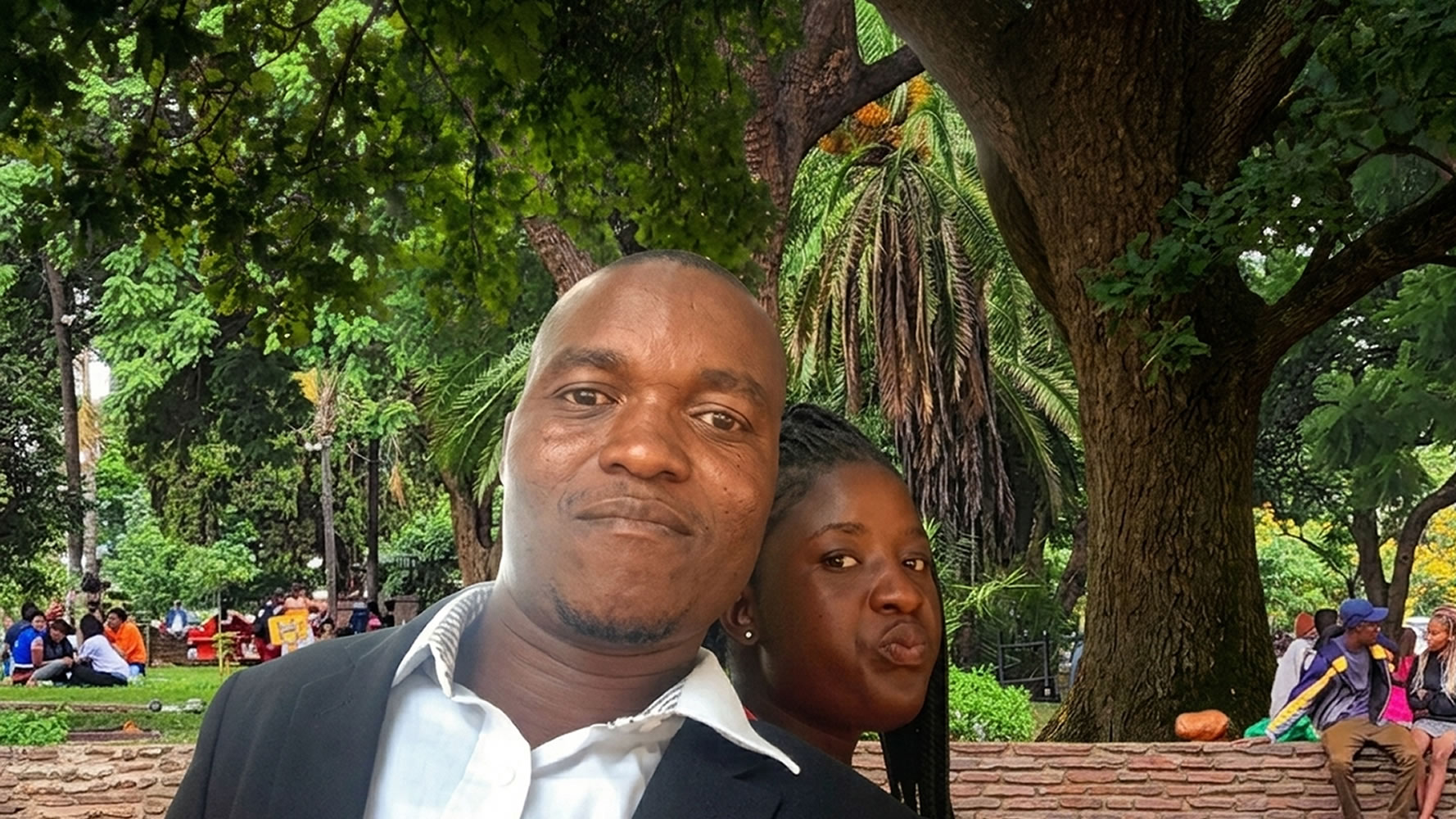
From a Prison Cell to the Altar: The Remarkable Redemption of Simbarashe Chadiwa
In the coming weeks, the bustling heart of Harare is set to witness a spectacle rarely seen in the capital’s history. Whether it be the manicured lawns of the Harare Gardens or the historic grounds of Africa Unity Square, a grand public wedding is being prepared. It is an event typically reserved for the elite—royalty, high-ranking politicians, or the nation’s wealthiest entrepreneurs. Yet, the man at the centre of this celebration is none of those things. He is a former inmate who, until sixteen months ago, believed his life would end behind the cold, unyielding bars of a prison cell.
Simbarashe Chadiwa’s journey from a shackled prisoner to a celebrated bridegroom is a story that has gripped the Zimbabwean conscience. It is a narrative of a decade lost to a lie, a spiritual haunting that forced the truth to the surface, and a community’s collective effort to mend a heart broken by the highest form of injustice.
The Shadow of 2015
The nightmare began in 2015. At the time, Chadiwa was a young man with his whole life ahead of him. That life was abruptly halted when he was accused of raping a 10-year-old girl, a neighbour in his community. In the eyes of the law, the testimony of a child was paramount. Despite his desperate pleas of innocence, the judicial system moved with a swift and devastating finality. He was convicted and handed a 20-year prison sentence.
For nine long years, Chadiwa’s world was reduced to the grey walls of a correctional facility. He became another statistic in a system that often struggles to balance the protection of victims with the rights of the accused. His claims of innocence fell on deaf ears, dismissed as the standard denials of a guilty man. While he sat in his cell, the world outside moved on. He missed the birthdays, the first steps, and the school plays of his eldest daughter, Ashiel, who is now 11 years old. The psychological toll was immense. “Prison changes you,” Chadiwa would later reflect. “Everything is controlled. You wake up at a certain time, eat at a certain time, and sleep at a certain time.”
A Spiritual Reckoning
While Chadiwa languished in prison, a different kind of justice was brewing in the village of his accuser. In Zimbabwean culture, the concept of Ngozi — or avenging spirits — is a powerful and deeply respected force. It is believed that an injustice of this magnitude, particularly one involving the wrongful imprisonment of an innocent man, can bring a spiritual curse upon the perpetrator’s family.
Evidence Makambe, the young girl whose testimony had sealed Chadiwa’s fate, grew into a woman haunted by her past. Now over 18 years of age, she could no longer bear the weight of the falsehood she had been forced to maintain. Following the death of her mother — the woman who had coerced her into the lie — Evidence claimed she was being tormented by spirits. The misfortune following her family was, in her eyes, a direct result of the pain inflicted upon Chadiwa.
“That man never raped me,” she finally confessed, her words arriving nearly a decade too late. “I was under so much pressure that I ended up wrongly implicating him. That action has been haunting me daily such that I can no longer live with the fact that there is someone out there who is suffering for a crime that he never committed in the first place.”
The details of the original fabrication were as heartbreaking as they were simple. Evidence’s mother, suspicious of reports that her daughter had been seen with Chadiwa while she was away in Botswana, had pressured the child. She took the girl to a river and concluded she had lost her virginity. Under duress and emotional abuse, the nine-year-old pointed to Chadiwa. A friend of Chadiwa was even arrested first before the finger was finally pointed at him.
Ngozi hits back!
Evidence’s mother, the woman who had coerced her daughter into the fabrication, reportedly met a mysterious and sudden end. Local accounts suggest she was struck by a baffling illness that saw her health deteriorate in a matter of days. Most tellingly, it is whispered that she suffered a sudden and total loss of sight, a condition often associated in local lore with the spiritual blindness of one who has borne false witness. Her death left Evidence not with a sense of relief, but with a terrifying spiritual inheritance that would eventually force the truth to the surface.
For Evidence, the years following her mother’s death were marked by a series of inexplicable misfortunes that she directly attributed to the injustice inflicted upon Chadiwa. She spoke of being “haunted” daily, describing an emotional and spiritual torment that transcended simple guilt. “I have no reason to lie since I am not related to Simbarashe,” she later admitted to reporters. “My mother fooled me, abused me emotionally when she forced me to lodge a false case against our neighbour. I feel guilty and I think Simbarashe is being punished for nothing.” This sense of being pursued by the grief of an innocent man became so overwhelming that Evidence was eventually cast out by her own family, forced to seek refuge with a Good Samaritan as she sought a way to appease the spirit she believed was demanding restoration.
The cultural weight of these events cannot be overstated. In the Zimbabwean heartland, the sudden illness of a perpetrator or the persistent bad luck of their descendants is rarely seen as coincidence. To the villagers in Gokwe, the mother’s blindness and subsequent death were the silent testimony of a universe demanding balance. It was this atmosphere of spiritual reckoning that finally broke the decade-long silence, transforming a private family secret into a public confession that would eventually open the prison gates for the man they had once called a monster.
The Gates Open
In April last year, the prison gates finally swung open for Chadiwa. His release came under the Presidential Amnesty, a move designed to decongest the nation’s prisons. While the amnesty provided the physical freedom he craved, it was the subsequent confession by Evidence Makambe that provided the moral vindication he had sought for nine years.
However, freedom for an exoneree is rarely a simple affair. Chadiwa found himself in a world that had transformed in his absence. Reintegrating into society after nearly a decade of isolation is a Herculean task. “People think that once the prison gates open, everything becomes normal. It does not happen like that,” Chadiwa explained. “Your mind has to adjust. You have to learn to trust people again. You have to learn how to interact freely.”
He relocated to Gokwe, where he began working at a relative’s small-scale mine. The work is physically demanding, but for Chadiwa, it has been a form of therapy—a way to reclaim his dignity through honest labour. “When I started working at the mine, it was not just about money. It gave me dignity again,” he said.
Love Amidst the Ruins
Perhaps the most miraculous part of Chadiwa’s post-prison life is the discovery of love. In a society where the stigma of a rape conviction can be a permanent social death sentence, he found a partner in Christabell Kudziwe. She looked past the labels and the headlines, believing in the man behind the story.
The couple recently welcomed a baby boy, Ayani, who is now two months old. For Chadiwa, fatherhood has brought a sense of peace he once thought impossible. “God has a way of rewriting stories. After everything I went through, I never thought I would become a husband, a father and now someone people want to honour with a public wedding,” he remarked. “Sometimes I look at my baby son and I realise that if I had given up hope in prison, I would never have experienced this joy. My past tried to destroy me, but my future is proving stronger than my pain.”
A Nation Rallies
The news of Chadiwa’s exoneration and his subsequent struggle to rebuild has touched a nerve across Zimbabwe. It has sparked a national conversation about the fallibility of the justice system and the need for accountability. But more than that, it has triggered an outpouring of generosity.
A committee of Good Samaritans has come together to bankroll what many are calling the “Mother of All Weddings.” The event, planned for September, is expected to be a unique community-sponsored affair. Supporters have volunteered everything from financial contributions and wedding attire to catering, transport, and photography. Even the Zimbabwe Republic Police Band is being considered to lead a colourful procession through the central business district.
Organisers initially asked Chadiwa if he wanted the ceremony in Gokwe, but he chose Harare. “The majority of people who have followed my story are in Harare and surrounding areas,” he told them. “It would be easier for many people to attend here than travelling all the way to Gokwe.” Temporary accommodation has already been secured for him in Southlea Park to facilitate the final logistics.
The Broader Shadow of Injustice
While Chadiwa’s story is heading toward a joyous climax, it highlights a sobering reality within the Zimbabwean legal framework. The “cautionary rule,” which once required courts to treat certain testimonies with extra care, has been a point of significant debate. Legal experts note that while reforms aim to protect genuine victims, the vulnerability of the accused to false testimony remains a critical concern.
Furthermore, Zimbabwe currently lacks a formal compensation framework for those who have been wrongfully convicted. Unlike other jurisdictions where exonerees might receive financial restitution for their lost years, men like Chadiwa are often left to fend for themselves, relying entirely on the kindness of strangers and the support of their families. In recent years, other cases of false accusations have surfaced, such as a woman in Kadoma who was spared jail after admitting to a false rape claim—a stark contrast to the nine years Chadiwa served for a similar lie.
A Message of Resilience
As the preparations for the September wedding reach a fever pitch, the focus remains on the man who refused to break. Organisers insist the event is not about glorifying the tragedy he endured, but about celebrating the triumph of hope over despair.
For Chadiwa, the wedding is a symbol of restoration. “If there is one lesson my life has taught me, it is that we should never give up,” he says. “No matter how painful your situation is, there is always tomorrow. Sometimes life becomes so difficult that you ask God why it is happening to you. I asked those questions many times. But today I realise that God has a purpose for every person.”
A man who was once transported under armed guard, branded by a crime he did not commit, will soon walk the streets of Harare as a celebrated groom. His story is no longer just about a miscarriage of justice; it is about a nation’s determination to help one of its own begin again. In the heart of the capital, under the open sky, Simbarashe Chadiwa will finally write a headline that is entirely his own: one of love, one of family, and one of an unbreakable spirit.