


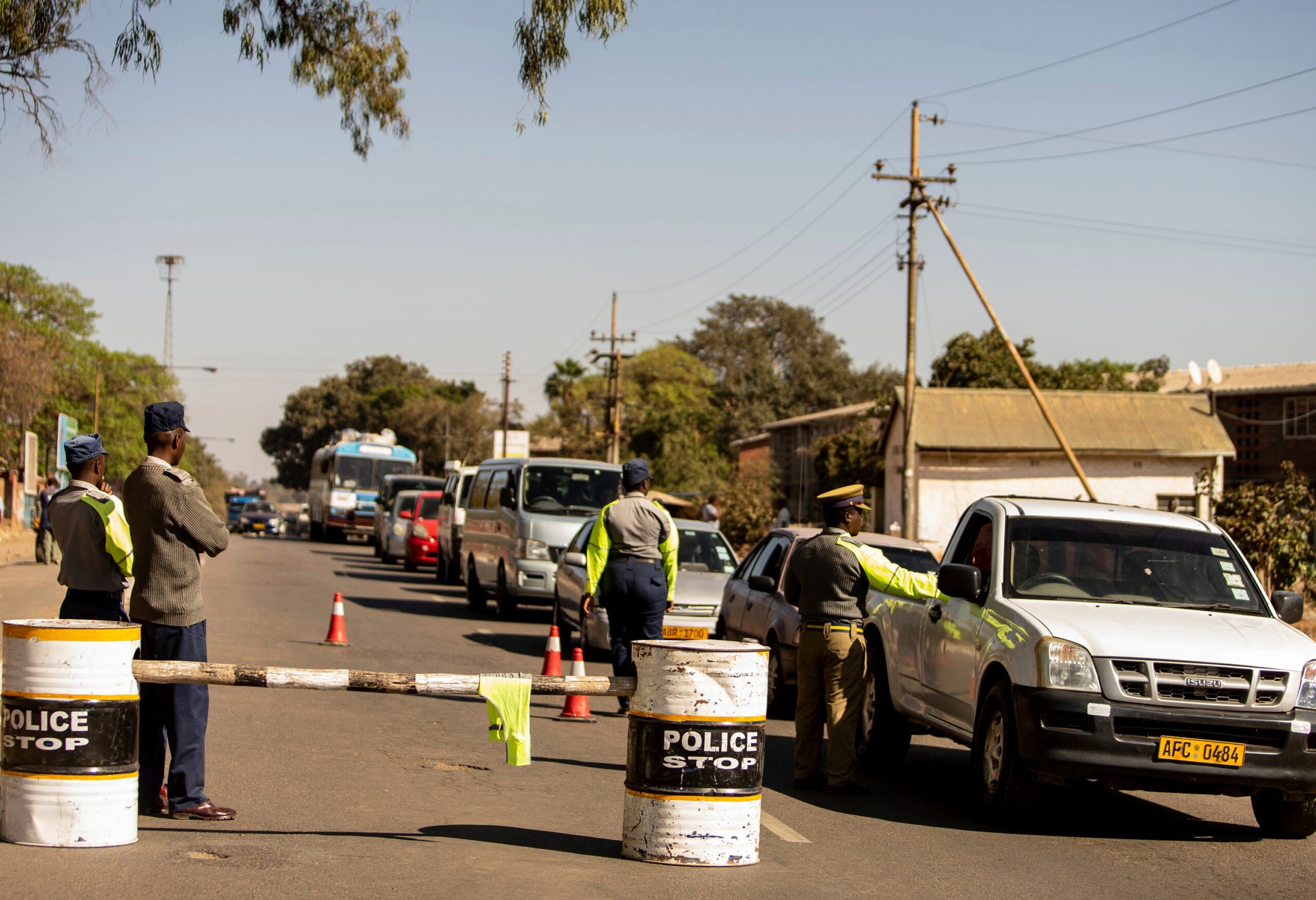
A High Court ruling dismissing a US$31,000 claim by Masvingo motorist Courage Mushunje has placed the conduct of drivers and police officers at roadblocks under a sharper legal spotlight.
The case followed a confrontation at Nyika Growth Point, where Mushunje was stopped while travelling from Mutare to Zvishavane in a Toyota Corolla. He later sued senior police authorities and individual officers, claiming damages for torture, unlawful detention, denial of access to a lawyer and relatives, and damage to his mobile phone.
Justice Sunsley Zisengwe rejected all four parts of the claim and ordered Mushunje to pay the defendants’ legal costs. The judgment found that the police had lawful grounds to arrest and detain him, that the treatment he described did not amount to torture, and that he had not been prevented from seeking legal representation.
The ruling does not give police unlimited power at a roadblock. Instead, it draws a line between a motorist’s right to be treated with dignity and the police’s authority to stop, question, arrest and secure a person suspected of committing an offence.
That line can be difficult to see during a tense roadside confrontation. A driver may be ordered to stop, asked to produce documents, questioned about an incident or directed to accompany officers. If the encounter escalates, the driver may be handcuffed or taken to a police station. The judgment shows that an arrest can still be lawful even when the person arrested considers the experience humiliating, uncomfortable or unfair. It also shows that a claim of torture requires more than proof that an arrest was unpleasant.
How the confrontation reached court
Mushunje sought US$10,000 for alleged torture, a further US$10,000 for alleged unlawful detention, US$10,000 for alleged denial of access to his lawyer and relatives, and US$1,000 for alleged damage to a Samsung S20 mobile phone. He also sought interest and legal costs on the higher attorney-and-client scale.
The court considered the circumstances of his arrest and the evidence placed before it, including an audio recording of the encounter. According to the judgment, the recording captured repeated insults directed at police officers.
Justice Zisengwe found that Mushunje’s conduct fell within the offence of disorderly conduct under section 41 of the Criminal Law (Codification and Reform) Act. The court also noted that Mushunje later paid a ZWL1,000 admission-of-guilt fine, reported as approximately US$10 at the time.
That payment did not by itself resolve every question about the conduct of the officers, but it formed part of the court’s assessment of whether the arrest had a reasonable foundation. The judge concluded that the police had reasonable grounds to suspect that an offence had been committed.
The detention also did not exceed the constitutionally prescribed 48-hour limit. Under Zimbabwe’s constitutional framework, a person who has been arrested must be told the reason for the arrest, treated humanely and brought before a court within the required period. An arrested person is also entitled to legal assistance.
Those protections apply at a roadblock just as they apply at a police station. A roadblock is not a place outside the Constitution. Officers may exercise police powers there, but those powers remain subject to the law.
When can a motorist be arrested?
The judgment makes clear that a motorist cannot assume that an argument at a roadblock will remain a simple traffic dispute. If officers have reasonable grounds to suspect that a person has committed an offence, an arrest may follow.
In Mushunje’s case, the court relied in particular on the audio recording and the conduct it captured. The finding means that abusive or disorderly behaviour towards officers can have consequences beyond the immediate exchange. A driver who believes that an officer is acting improperly may challenge that conduct, but the challenge must not itself become conduct that gives officers reasonable grounds for arrest.
This does not mean that every disagreement, refusal to answer an improper question or complaint about police behaviour amounts to disorderly conduct. Nor does it mean that an officer should arrest a motorist merely to punish criticism. The important issue is the factual basis for the arrest and whether the officer’s suspicion is reasonable.
For drivers, the practical lesson is to remain calm, ask why they are being stopped and comply with lawful directions while recording the details of the encounter as soon as it is safe to do so. The officer’s name or force number, the location, the time, the vehicle details and the names of witnesses may later become important if a complaint or court case follows.
What may police demand at a roadblock?
Police roadblocks are used for traffic enforcement, public-order operations and special operations, including responses to immediate incidents involving moving criminals or stolen property. In an October 2025 statement, the Zimbabwe Republic Police said roadblock schedules are submitted by station, district and provincial commanders to Police General Headquarters for guidance and clearance.
The force also said roadblocks are supervised by senior commanders to prevent indiscipline and corruption and to ensure quality service to the public. It encouraged members of the public to raise concerns about unusual deployments with the Commissioner-General or the relevant provincial command.
In ordinary circumstances, a motorist should expect to stop when directed by a uniformed officer at an authorised roadblock. Officers may ask for documents required by traffic law, inspect a vehicle where the law allows it and investigate suspected offences. A driver is not entitled to drive through simply because the stop is inconvenient or because the roadblock has caused a delay.
At the same time, officers are not entitled to use a roadblock as a licence for arbitrary detention, intimidation, assault or demands unrelated to a lawful police purpose. The police statement itself says disciplinary action will be taken against officers who conduct roadblock duties in a manner that does not conform to police standards.
The force has provided a National Complaints Desk on 0242 703631 and a WhatsApp number, 0712800197, for members of the public who want to raise concerns.
Arrest is not automatically torture
One of the most important parts of the judgment is the distinction between torture and other forms of unlawful or improper treatment. Justice Zisengwe said: “The three key ingredients to support a claim for torture are therefore (i) the causing of severe pain or suffering and (ii) the intentional infliction on a person and (iii) committed for a specific purpose.”
The court considered Mushunje’s allegation that he had been secured to the anti-roll bar of a police vehicle with handcuffs. The judge accepted that this may have been uncomfortable, but found that it did not meet the threshold for torture. The court accepted the police explanation that Mushunje needed to be secured during transport to prevent a possible escape.
The court also rejected the allegation that officers deliberately soaked him with water. It found insufficient evidence to support the claim that police deliberately exposed him to COVID-19.
The finding is specific to the evidence before the court. It does not make every use of handcuffs or restraint lawful, and it does not remove the constitutional prohibition on torture or cruel, inhuman or degrading treatment. It means that the claimant had not proved that the particular conduct in this case met the legal test for torture.
That distinction matters because the words used to describe an encounter can affect the type of claim brought. An arrest may be lawful but involve unnecessary force. A detention may begin lawfully but become unlawful if it continues beyond the permitted period. An assault may be proved without meeting the more demanding definition of torture. These are related but different complaints.
What happens to the right to a lawyer?
Mushunje also claimed that police denied him access to legal representation and relatives. The court rejected that part of the case after considering an audio recording which showed officers informing him that he was entitled to seek a lawyer.
Justice Zisengwe ruled: “The probabilities favour a finding that the plaintiff, for reasons best known to himself, spurned and therefore waived his right to legal representation.”
The finding places emphasis on the difference between being denied a lawyer and declining to use the opportunity to obtain one. If officers refuse a request to contact a lawyer, that is different from telling an arrested person about the right and the person choosing not to exercise it.
For a motorist, the safest course after arrest is to state clearly that legal assistance is wanted and to repeat the request if necessary. The time and manner in which the request is made should be noted.
Mushunje’s case also underlines the importance of evidence. The court examined the audio recording, the circumstances of the arrest, the period of detention and the explanations for the restraint used during transport. It found that the evidence did not establish the damages claimed.
A person who alleges assault or torture may need to preserve medical records, photographs of injuries, damaged clothing, witness statements, messages sent during or immediately after the incident, the names of officers involved and any available audio or video. A prompt medical examination can document injuries while they are still visible. A record of the exact time of arrest and release can help establish whether the constitutional time limit was exceeded.
Mushunje’s phone claim failed because the court found insufficient evidence that he had the particular Samsung S20 with him during the incident or that police officers were responsible for damaging it. That part of the ruling is a reminder that a claimant must link the alleged loss to the officers and the incident, rather than simply show that an item was later damaged or missing.
For Mushunje, the High Court found that the police stayed on the lawful side of that boundary. His US$31,000 claim was dismissed, and he was ordered to pay the defendants’ costs. For other motorists, the ruling is a warning that an argument at a roadblock can lead to arrest, but it is also a reminder that police powers remain answerable to the Constitution and to the evidence of what happened on the roadside.