


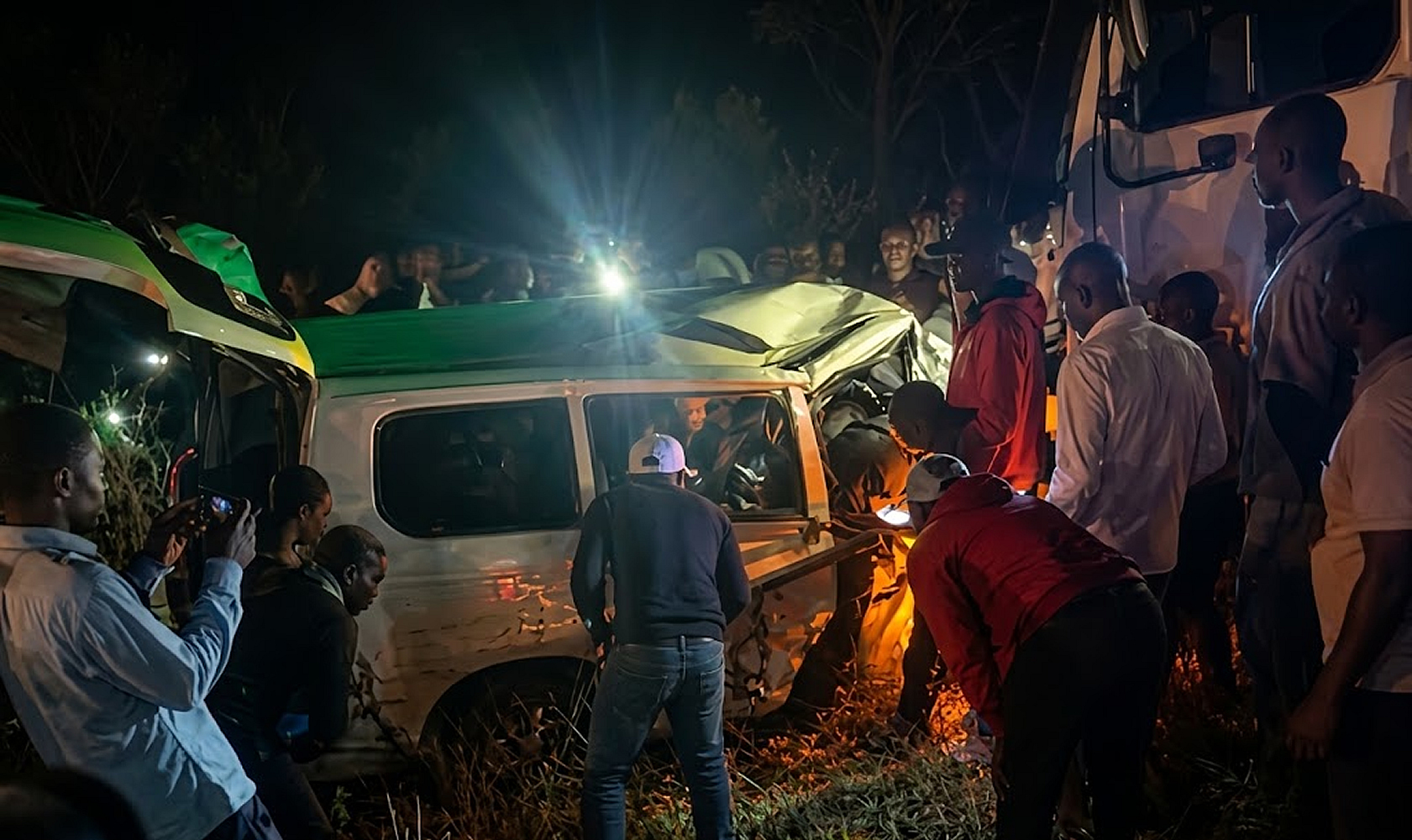
Seven people have been killed in two separate head-on crashes involving overloaded mushikashika vehicles in Zimbabwe, with four dying at the Ngundu blackspot only hours after churches gathered there for cleansing prayers.
The latest deaths occurred at about 8pm on Thursday, 20 August, at the 2-kilometre peg along Ngundu Tanganda Road. A Toyota Probox carrying 10 passengers collided head-on with a Hino rigid truck travelling towards Chiredzi, police said.
Four passengers in the Toyota Probox died on the spot. Six other passengers sustained serious injuries and were taken for medical treatment. The bodies of the dead were conveyed to Neshuro District Hospital mortuary for post-mortem examinations.
The crash took place at a section of the highway widely described as a blackspot. It came a day after churches held cleansing prayers in the area, where residents and travellers have raised concern over the number of serious collisions recorded over time.
The Zimbabwe Republic Police gave the following account in a statement released on social media:
“The ZRP reports a fatal road traffic accident which occurred on 20/08/26 at approximately 2000 hours, at the 2km peg along Ngundu Tanganda Road. A motorist driving a Toyota Probox vehicle, carrying ten passengers and travelling towards Ngundu, was involved in a head-on collision with a Hino rigid truck which was travelling towards Chiredzi. Four passengers who were travelling in the Toyota Probox died on the spot, while six others sustained serious injuries. The bodies of the victims were conveyed to Neshuro District Hospital mortuary for post-mortem examination.”
The statement did not identify the four people who died or give details about the condition of the six injured passengers. It also did not state how the collision happened, whether the truck driver was injured or how long the injured passengers waited before receiving treatment.
The number of people inside the Probox points to the vehicle’s role as a mushikashika, the informal passenger transport system used by many people travelling between rural communities, growth points and towns. The vehicle was carrying 10 passengers before the crash. The Hino rigid truck was travelling in the opposite direction towards Chiredzi when the two vehicles collided.
Residents have long referred to the Ngundu section as a dangerous point on the Ngundu Tanganda Highway. The road carries traffic towards Chiredzi and other parts of Masvingo province, with passenger vehicles, heavy trucks and private cars sharing the route. At night, the danger is increased by limited visibility and the difficulty of reaching help quickly when a crash occurs away from a major town.
The latest accident has also drawn attention because of its timing. Churches held cleansing prayers at the blackspot on Wednesday, 19 August. The gathering was held in response to fears and concerns surrounding previous crashes at the location. Less than 24 hours later, a Probox and a Hino truck collided there, leaving four people dead at the scene and six seriously injured.
The crash was still being attended to as families waited for information about the victims. In rural road accidents, relatives may first hear of a collision through people who were at the scene or through messages passed between passengers. Formal identification is then needed before the dead can be named and funeral arrangements can begin.
The Ngundu collision was followed closely by another fatal head-on crash in the east of the country. On 19 August, three passengers died after a Toyota Wish collided with a Nissan NV350 at the 19-kilometre peg along the Mutare–Burma Valley Road.
The Toyota Wish was carrying nine passengers, while the Nissan NV350 had five occupants. The vehicles were travelling in opposite directions when they collided. Three passengers in the Toyota Wish sustained severe injuries and were pronounced dead upon admission to Victoria Chitepo Hospital.
The deaths in Mutare bring the confirmed total from the two road crashes to seven. The three victims were passengers in the Toyota Wish, just as the four people killed at Ngundu were passengers in the Toyota Probox. The available accounts did not identify the victims by name or give a full account of the injuries suffered by the other people involved in the Mutare collision.
The Toyota Wish, like the Probox at Ngundu, was being used to carry a large number of passengers. In both cases, the vehicles were operating in the role commonly known as mushikashika. The term is used locally for informal or loosely regulated passenger transport, often serving routes that are not adequately covered by scheduled buses.
Police said: “The ZRP confirms a fatal road traffic accident which occurred at the 19-kilometre peg along the Mutare–Burma Valley Road on 19/08/26.”
The police statement continued: “A Toyota Wish vehicle, carrying nine passengers, collided head-on with a Nissan NV350, which was travelling in the opposite direction and carrying five occupants. As a result of the collision, three passengers who were travelling in the Toyota Wish sustained severe injuries and were pronounced dead upon admission at Victoria Chitepo Hospital.”
The two accidents happened on separate highways and involved different types of vehicles, but both placed passengers in informal transport at the centre of fatal crashes. The Toyota Probox at Ngundu was carrying 10 passengers, while the Toyota Wish near Mutare was carrying nine. The police accounts made clear that the people who died were passengers rather than occupants of the heavy vehicles involved in the collisions.
There was also a serious rail-road crash at Mbarira during the same week. A haulage truck struck a locomotive at a level crossing between Dete and Victoria Falls, leaving the locomotive on its side and blocking the railway line.
The National Railways of Zimbabwe said the line blockage forced the Bulawayo–Victoria Falls passenger train to terminate at Dete over the weekend. Passengers who were travelling on to Victoria Falls were to be refunded, while railway workers worked to clear the track and restore movement along the route.
The rail authority attributed the Mbarira collision to the haulage truck driver attempting to cross ahead of the approaching train. Its statement said: “The accident was due to the haulage truck driver trying to beat the train to the level crossing. NRZ urges motorists not to race trains at level crossings.”
No deaths or injuries were reported in the available account of the Mbarira incident, but the crash damaged the truck and locomotive and left the track impassable. The Mbarira crash also affected people who were not at the scene. Travellers heading to Victoria Falls faced a change in their journey, with the passenger service ending at Dete instead of reaching its scheduled destination. Railway officials had to arrange refunds while the line remained blocked.
Meanwhile, a separate tragedy has also claimed the life of Bantwana Zimbabwe executive director Mbonisi Tshuma, who died in a road traffic accident near Kwekwe while travelling back to Harare from a meeting in Bulawayo. His death was announced as the organisation marked its sixth anniversary, after Tshuma had recorded birthday messages with staff in Bulawayo. Bantwana Zimbabwe said his passing was a devastating loss to its staff, partners, communities and the children and families he served.
The organisation described Tshuma as a compassionate leader, mentor, colleague and friend who helped shape its work supporting vulnerable children, adolescents, families and communities across Zimbabwe. “His leadership was defined by integrity, humility, and an unrelenting belief that every child deserves the opportunity to thrive,” Bantwana Zimbabwe said. He is survived by his wife, Emelda, and their children, Lihle and Khaya. Funeral and burial arrangements had not yet been announced.