


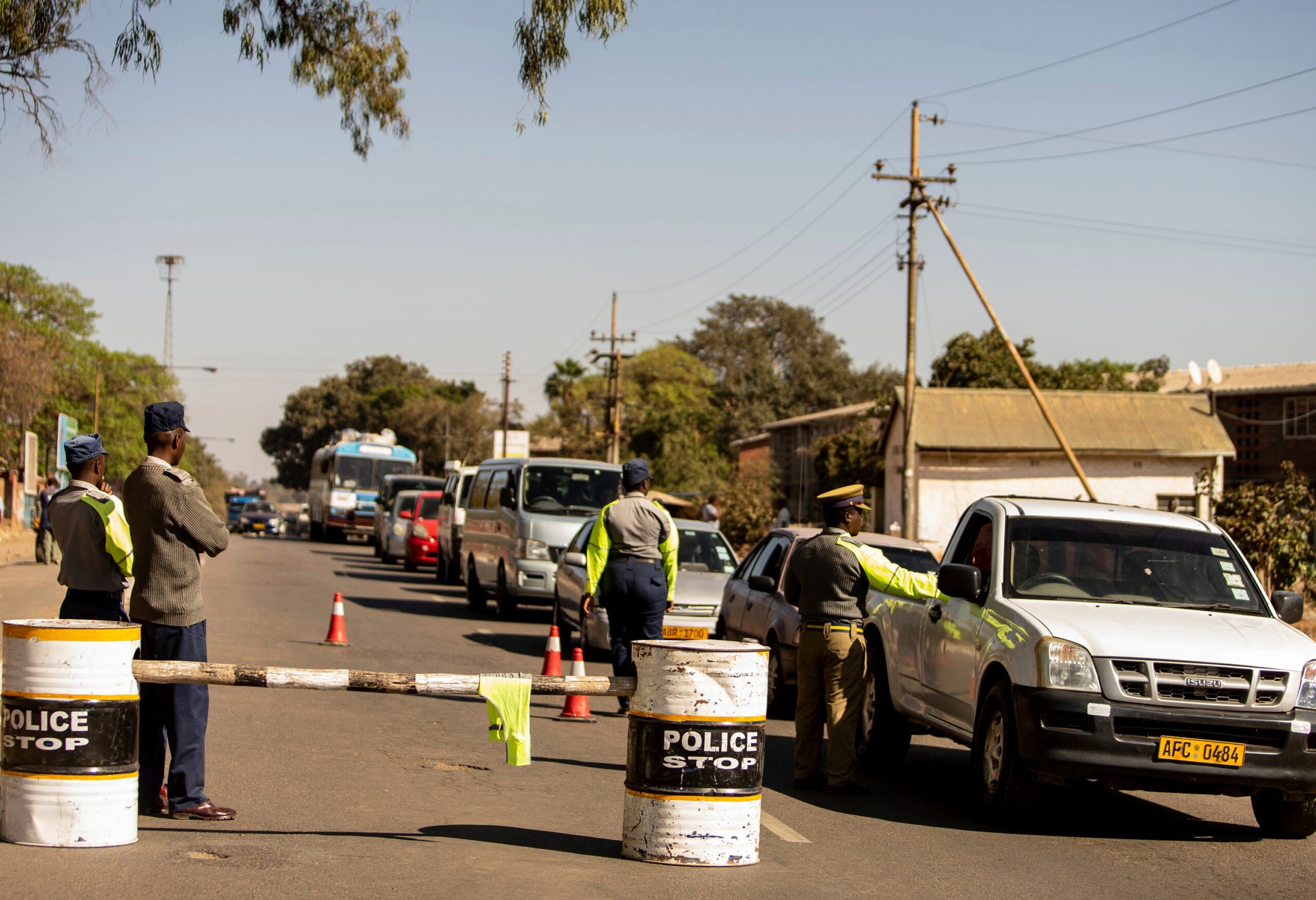
A proposal before Zimbabwe’s Parliament could make five O-Level passes, including English and Mathematics, a requirement for anyone seeking a professional driving licence. If adopted, the measure would change the path into a profession that carries thousands of passengers every day and would place academic qualifications at the centre of the debate about who is fit to drive buses and other public-service vehicles.
The petition was brought before Parliament on August 20, 2026, and has been referred to the Portfolio Committee on Transport and Infrastructural Development for consideration. It is not a new licensing rule. Drivers do not currently have to return to school or change their qualifications because of the petition, and no immediate change to existing licences has been announced.
The proposal nevertheless raises a question that has become increasingly difficult to avoid: what should Zimbabwe demand from a professional driver before allowing that person to carry passengers for a living?
Supporters of the petition are likely to point to the everyday demands of the job. A professional driver must read road signs, understand written instructions, complete forms, communicate with passengers and respond quickly to information given by police, inspectors or transport operators. English and Mathematics, in particular, are being presented as practical tools rather than as academic decorations. A driver who can read a warning, understand a route instruction or calculate fuel, distance and passenger charges may be better placed to manage the responsibilities of the road.
But the debate is not simply about whether education is useful. It is about whether a five-subject pass mark is the best test of competence, and whether it would improve safety more effectively than stronger practical training and enforcement.
The debate over who should be allowed to drive Zimbabwe’s buses and other public-service vehicles has moved beyond the question of passing a driving test. The Drivers’ Association of Zimbabwe wants Parliament to establish a professional framework for driving, including a statutory professional association with the power to set minimum educational qualifications for people entering the occupation.
The association approached Parliament with a petition seeking legislation to professionalise driving and create a body that would regulate entry into the profession. Speaker of Parliament Advocate Jacob Mudenda read the petition during a National Assembly sitting and informed the House that it had been referred to the Portfolio Committee on Transport and Infrastructural Development.
The request places drivers themselves at the centre of a national discussion about road safety, public transport and standards in an industry that carries thousands of passengers every day. It also gives practical meaning to a related proposal now before Parliament: that applicants for professional driving licences should have at least five O-Level passes, including English and Mathematics.
The five-subject requirement is not yet a licensing rule. It remains a proposal under consideration, and existing drivers do not currently have to change their qualifications because of it. The wider issue raised by the association, however, is already clear. Driving is treated as a vital occupation, but the route into professional driving has not been organised in the same way as other safety-sensitive professions.
The association’s case is that professional drivers need more than the ability to move a vehicle from one place to another. Bus drivers, coach drivers and other commercial motorists are responsible for passengers, vehicles, timetables and public safety. Their decisions affect people who have placed their lives in the hands of someone they may never have met before.
A professional body could create a clear entry standard, maintain a register of qualified drivers, support continuing training and give the occupation a formal voice when transport rules are being developed. It could also help separate a person’s ordinary right to drive a light vehicle from the higher responsibilities attached to carrying passengers, operating a heavy vehicle or driving for commercial gain.
That distinction matters because a driving licence on its own does not describe the full demands of professional work. A driver may be able to pass a basic test but still require further training before taking control of a fully loaded bus on a long-distance route. Professional standards should therefore be designed around the risks of each category of work rather than applied as a single examination for everyone.
For many experienced drivers, education was not equally accessible. Some entered the transport industry after leaving school early. Others learnt their trade through years on the road, apprenticeship and practical experience. A formal academic threshold could therefore close the profession to people who have built their livelihoods behind the wheel but do not hold the required certificates. It could also affect employers already searching for drivers and families that depend on driving work as a source of income.
The impact would be felt most sharply in the public transport sector. Bus and coach operators need drivers who can handle heavy vehicles, crowded routes, difficult weather, mechanical problems and the pressure of keeping to a timetable. Their responsibilities extend beyond steering and changing gears. They must protect passengers while boarding and disembarking, manage emergencies, maintain discipline inside the vehicle and remain alert for long periods.
Those duties demand more than a school transcript. They require structured training, supervised driving hours and a testing system that measures how an applicant behaves in real traffic. A candidate may have five O-Level passes and still drive aggressively, ignore road rules, use a mobile phone behind the wheel or fail to keep a safe following distance. Another person may have limited formal education but demonstrate excellent vehicle control, patience, judgement and knowledge of defensive driving.
That is why the Parliamentary discussion must look beyond the number of subjects on a certificate. The central test should be whether the full licensing system identifies the risks that cause crashes and prevents unsuitable drivers from carrying passengers.
Training hours are one part of that system. Professional drivers should receive enough instruction to understand vehicle handling, braking distances, lane discipline, overtaking, night driving and the dangers of driving in rain or heavy traffic. A short examination cannot replace time spent learning how a large vehicle behaves when it is fully loaded or when a mechanical fault develops on a busy road.
Defensive driving is equally important. Public-service drivers must anticipate mistakes by other road users instead of assuming that every motorist will obey the rules. They need to recognise blind spots, control speed before a hazard appears and leave room to stop. They also need to know when not to overtake, when to pull over and when a journey should be delayed because the vehicle or the driver is not in a safe condition.
Fatigue management should be treated as a professional requirement, not as a private matter between an employee and an operator. Long-distance bus drivers may work through the night, make repeated trips or continue driving after inadequate rest. A driver who is struggling to stay awake is a danger to passengers regardless of how many examination passes appear on a certificate. Operators need enforceable schedules, rest periods and checks that discourage drivers from being pushed to the point of exhaustion.
Vehicle maintenance also belongs in the same conversation. Tyres, brakes, lights, steering systems, doors and emergency exits affect passenger safety every time a bus leaves a depot. A professional licensing reform that focuses heavily on education while allowing poorly maintained vehicles to remain on the road would address only one part of the danger. Drivers should know how to identify basic defects, but owners and inspectors must also be held to clear maintenance standards.
Alcohol testing and other forms of roadside enforcement are another measure of whether the system is working. Rules have little effect when drivers believe that speeding, drink-driving or overloading can be ignored. Regular testing, visible policing and consistent penalties can do more to change behaviour than a qualification requirement that is checked only when a licence is first issued.
The recent confusion over Class 2 and Class 4 licences has shown how quickly uncertainty can affect ordinary motorists. In early August, reports circulated that holders of Class 2 licences could no longer drive light motor vehicles and that they needed Class 4 licences to do so. Some motorists said traffic police officers were stopping, arresting or fining drivers who were using light vehicles while holding Class 2 licences. The reports created anxiety among drivers who had understood that a higher licence class covered lower vehicle classes.
The Ministry of Transport and Infrastructural Development responded on August 4 by saying that the Government had announced no change to the existing licence classes. The Ministry said that a Class 2 licence holder could still legally drive a Class 4 vehicle. Class 2 licences cover heavy vehicles such as trucks and lorries, while Class 4 licences apply to light motor vehicles. Under the system described by the Ministry, the higher class covers the lower class.
The controversy moved from social media posts to the roadside, where drivers feared being treated as though they were operating without the correct authority. Reports of motorists being fined for driving light vehicles on Class 2 licences added to the confusion. For professional drivers, the dispute was particularly serious because a licence is not merely a personal document. It is tied to employment, access to vehicles and the ability to move passengers or goods without interruption.
The Ministry urged motorists not to rely on unverified claims. Its clarification also exposed a wider weakness in the licensing system: when rules are poorly understood, enforcement can become inconsistent and drivers may not know which document they are expected to produce. Clear communication between the Ministry, the Vehicle Inspectorate Department, police officers, driving schools and transport operators is essential if new requirements are to command public confidence.
That lesson matters as Parliament considers the five O-Level petition. A change affecting professional drivers would need to be explained in plain language, with clear dates, transitional arrangements and a distinction between new applicants and people who already hold licences. It would also need an accessible way for drivers to verify requirements without depending on rumours circulating on social media or informal advice at a police roadblock.
The petition has opened a national conversation about professionalism, but professionalism cannot be reduced to a school record. A safer bus industry would require drivers who can read and communicate, but it would also require competent examiners, effective practical tests, reliable medical checks, proper rest, roadworthy vehicles, alcohol screening and traffic enforcement that is consistent from one roadblock to the next.
Five O-Level passes may become part of that framework if Parliament and the relevant committee decide that the requirement is justified. The more important issue is what comes with it. If education is added without improving driver training, fatigue controls, vehicle inspections and enforcement, the reform may create a higher entry barrier without delivering the safer roads that passengers expect.
If the proposal is designed carefully, it could encourage transport operators to treat driving as a skilled profession rather than a job requiring only access to a vehicle. If it is applied without considering experienced drivers and unequal access to education, it could remove capable people from the industry while leaving the most immediate safety problems untouched.