


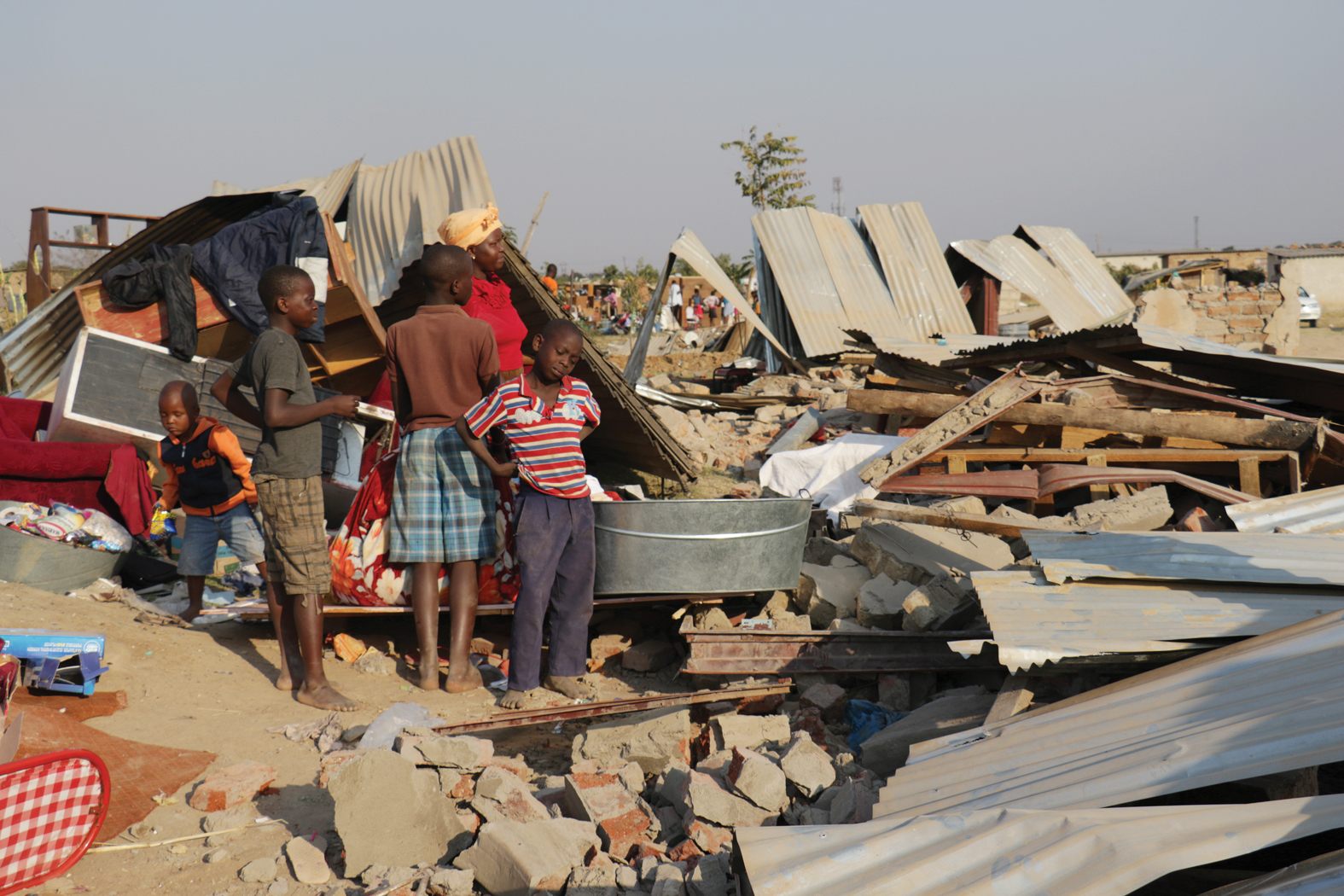
Harare is preparing for a fresh demolition drive after the city council revealed the scale of illegal land dealings spreading across the capital. This includes 40 unapproved cooperatives accused of parcelling out land, and approximately 200 structures standing along Harare Drive.
The crackdown follows a public notice issued on August 20, warning residents to stop all unapproved land clearing, trenching, and construction. The notice also drew a firm line under the city’s regularisation programme: developments linked to land invasions after September 24, 2023, will not be considered for approval.
This warning has left thousands of home-seekers facing an uncertain future. Many paid their savings for residential stands through cooperatives or informal intermediaries, then began building after receiving letters, receipts, or documents that appeared to show their purchases had been approved. Some now face the possibility that the same structures they financed will be destroyed.
The council’s notice came after a document titled “Report on Regularisation and Demolitions of Illegal Structures in Harare” circulated widely on WhatsApp. The city described the document as an old preliminary internal working draft from May 2025. However, while distancing itself from the leaked version, the council confirmed that its central enforcement position remained in force.
“Regularisations of properties that meet the Regularisation Framework cut-off date remains the 24th of September 2023. Any land invasions and illegal developments done after that date will not be considered for regularisation. Appropriate enforcement action will be undertaken.”
That deadline is now at the centre of the dispute. Structures built after the cut-off date on land that was not lawfully allocated will not be brought into the city’s planning system. The council has also ruled out regularisation in wetlands, public spaces, sports grounds, school sites, hospital and clinic land, and areas reserved for shopping centres or other public facilities.
The city’s disclosures point to a land system that has been operating far outside formal council control. Illegal cooperatives are alleged to have divided and sold plots without municipal authority, while land barons and other intermediaries made promises that developments would eventually be accepted by the council.
In some cases, prospective buyers were reportedly given fake permits, forged signatures, and counterfeit council documents. These documents were designed to give desperate home-seekers confidence that they had secured legitimate stands. By the time doubts emerged, many families had already spent money on bricks, cement, plans, labour, and boundary walls.
A council report has described a further tactic used by land invaders: occupying land at night or over weekends and quickly moving people onto the sites. The sudden presence of residents can make enforcement more difficult and create pressure on officials to delay demolition. The report stated that forged documents had become especially common in medium- and low-density areas, and that the cases had been reported to the police.
The problem is not confined to one part of the city. Areas named for further enforcement include Greendale, Belvedere, Budiriro, Kuwadzana, Mabvuku, Glen View, Mabelreign, Tynwald, Crowborough, Chisipite, Glen Lorne, Southlea Park, Hopley, Mainway Meadows, Tafara, and Hatcliffe.
The immediate impact of the campaign has already been seen in St Martins Extension, opposite 1 Commando Barracks along Airport Road. Municipal authorities carried out demolitions there last week, leaving residents confronting the loss of homes and temporary structures. The operation has provoked anger because residents and political representatives have raised questions about the orders relied on by the council in the affected area.
The St Martins dispute is complicated by the history of the land. The council had previously pegged stands for the St Martins Housing Scheme along Airport Road after an earlier approved plan was affected by a 200-metre statutory cantonment linked to the Zimbabwe National Army. A separate arrangement involving 333 stands and the National Building Society was later cancelled by the council, adding to the confusion over which allocations remained valid.
Harare Mayor Jacob Mafume described the destruction of homes as “disheartening,” but defended the need to enforce planning rules and control the spread of illegal settlements. Harare South legislator Trymore Kanopula criticised the operation and called for a halt to further demolitions while affected areas were audited and verified.
“I rise on a point of national interest pertaining to the unfortunate demolition of St. Martin’s houses by City of Harare. The demolitions were carried without a court order and it is a direct violation of the Constitution of Zimbabwe.”
Kanopula also called for an investigation into the allocation of land in the area and the roles played by officials, cooperatives, and other parties involved in the transactions. The controversy has intensified scrutiny of the relationship between the city’s formal planning department, housing cooperatives, and private intermediaries who sell stands to members of the public.
The government has now moved to take a more direct role. Local Government and Public Works Minister Daniel Garwe is expected to lead a joint inspection of identified illegal settlements this week. The exercise will involve local authorities, law-enforcement agencies, and representatives of the Zimbabwe Chiefs Council as officials seek to identify illegal allocations and halt further construction.
Garwe has warned that the campaign will not target only residents who built on the land. He has also threatened action against land barons, illegal dealers, and traditional leaders who participate in unauthorised sales. “With immediate effect, all identified land barons will be arrested, prosecuted, and subjected to the full penalties prescribed by law.”
He also issued a warning to traditional leaders accused of facilitating land transactions outside approved procedures. “Any headman or village head found participating in, facilitating, or benefiting from illegal land sales will be arrested, prosecuted and, upon conviction, removed from office in accordance with the Constitution of Zimbabwe and the Traditional Leaders Act,” Garwe said. “The era of lawlessness is over. The abuse of public land, fraudulent land sales, and illegal settlements will no longer be tolerated,” Garwe concluded.
The same pattern has appeared beyond Harare. In Murombedzi, Zvimba Rural District Council has demolished rural homes linked to informal land transactions widely known as “sabhuku deals.” In these arrangements, home-seekers pay village heads, headmen, local intermediaries, or other individuals for plots presented as available for settlement.
Families in Murombedzi built after receiving letters, receipts, agreements, or customary approval, only to discover that some of the land was reserved for roads, schools, clinics, public facilities, or environmental protection. The council has separately invited owners of completed, unfinished, occupied, and unoccupied structures to submit proof of ownership, agreements of sale or leases, approved layouts, development permits, building plans, and relevant environmental, geotechnical, and engineering reports for assessment.
The rural demolitions underline the wider danger facing buyers who rely on informal assurances. A receipt or signed letter may appear convincing, but it does not necessarily show that a stand was created on an approved layout or that construction permission was granted by the responsible authority.
Harare’s enforcement drive is therefore moving on two fronts. Officials are trying to stop new construction on disputed land while examining older developments that may qualify for regularisation. The city says some settlements have already been assessed through its regularisation programme, but it will not approve invasions on protected or public land, nor developments established after the September 2023 deadline.
For residents, the most urgent issue is whether the crackdown will reach the people who sold the land. Families who paid for stands say they were drawn into the system by promises of official recognition. Authorities are now warning that those promises cannot protect structures built on land that was never lawfully allocated.
The inspection led by Garwe will provide the clearest sign yet of how far the government intends to go. Arrests of land barons and corrupt officials would mark a major shift from demolishing structures alone. Without action against those who allegedly organised the sales, forged documents, and collected money, the campaign risks leaving thousands of residents without homes while the networks behind the disputed allocations continue to operate.
For now, the council’s message is direct: stop building, verify every document, and do not assume that an illegally acquired stand will later be regularised. Across Harare and in rural districts such as Murombedzi, the bulldozers have become the final stage of a land-sale system that allowed ordinary families to pay first and ask questions too late.