


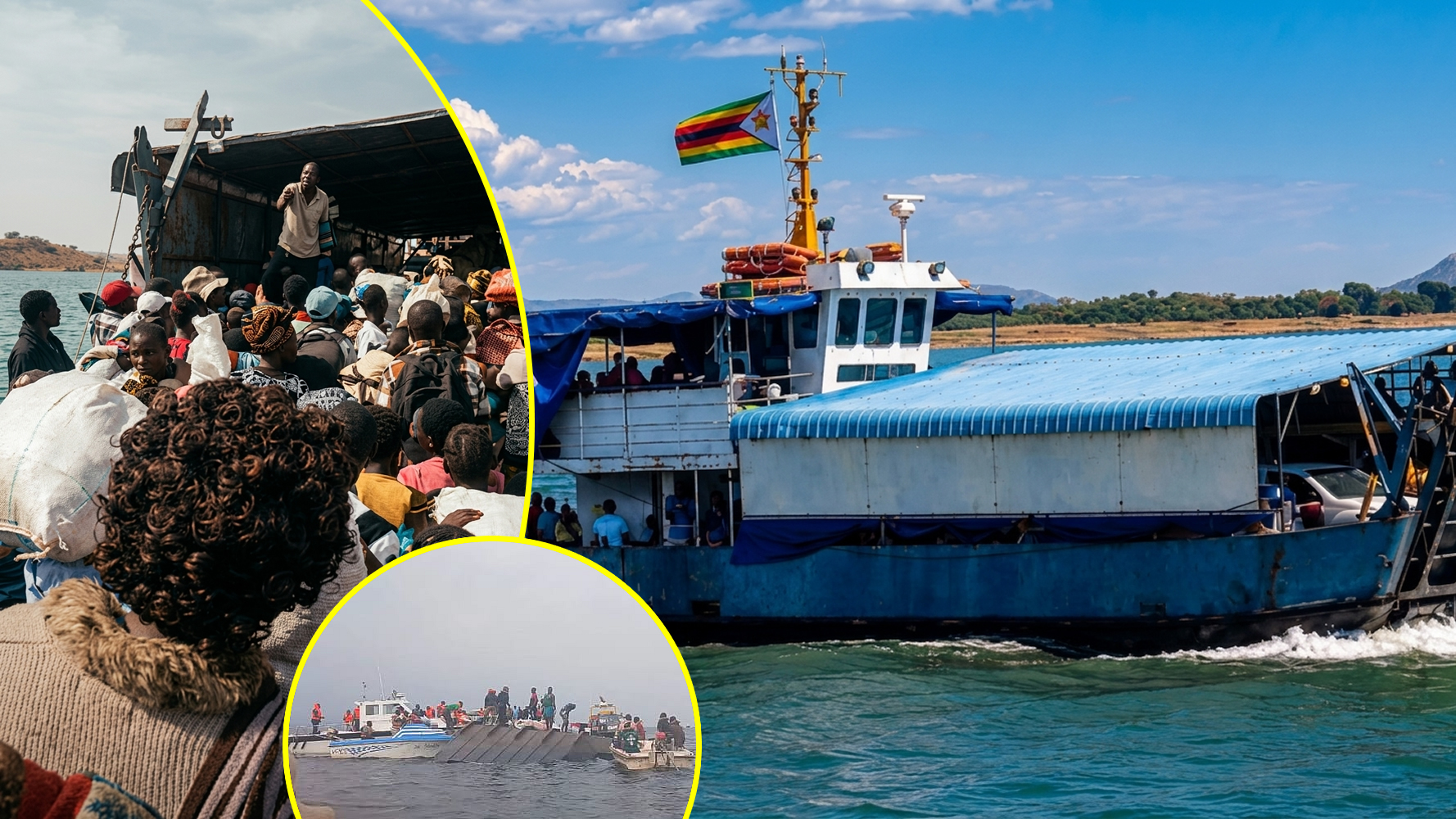
KARIBA — The first major criminal case arising from the Mbuya Nehanda ferry disaster began in Kariba this week after police arrested a senior Rural Infrastructure Development Agency official over the sinking that killed 97 people on Lake Kariba.
Ignitious Chiome, the Kariba District Clerk and acting RIDA district head, appeared before the Kariba Magistrates’ Court on August 26 facing a charge of culpable homicide. He was remanded in custody until August 27, when the court is expected to hear his bail application. Chiome, aged 49 according to police, has not yet entered a plea.
The arrest places the operation of the government-run ferry service at the centre of a criminal investigation that is examining how the 41-year-old vessel was allowed to leave Andora Harbour for the Chalala fishing camps despite the number of people and the amount of cargo on board.
The State says administrative failures, operational lapses, overloading and breaches of safety procedures contributed to the disaster. The ferry was authorised to carry 90 passengers, but preliminary findings presented to Cabinet indicate that it may have been carrying as many as 178 people, together with heavy goods, when it began the journey on August 11. Other official figures recorded 114 adult passengers and five crew members, while the final number may have been higher because some children were believed to have travelled without tickets.
The difference between the authorised capacity and the estimated number on board has become one of the central questions in the case. The Mbuya Nehanda was a vital link for communities around the lake, transporting residents, fish, luggage and other goods between remote settlements and Kariba town. For many passengers, the ferry was not a leisure vessel but the main practical way to reach markets, services and supplies on the opposite shore.
The journey quickly turned dangerous. Investigators are examining whether the vessel was permitted to sail after the Meteorological Services Department issued warnings about strong south-westerly winds known locally as the Binga Wave. Rough water began flooding the deck about 30 minutes after departure. The bilge pump was submerged, the engine failed and the ferry eventually capsized in the heavy waves.
Survivors have described a growing crisis before the boat overturned. Passengers reportedly urged the crew to turn back or seek shelter near islands as the weather worsened. One survivor told the state broadcaster: “We argued with him right at the harbor. We told him the waves were too dangerous. A bag fell overboard before we had even left, and we pointed it out, but he refused to listen.”
Anyway Chambati, one of the two crew members who survived, said he had been responsible for ticketing and had counted 153 people, including crew members and infants, before the vessel left. “Some of us survived by standing on top of the capsized hull,” Chambati told the broadcaster. “Before it went down, passengers were screaming at us that the boat was flooding, water was pouring into the engine room and goods were spilling out.”
The captain, Sign Patsikadova, died in the accident. His actions, along with the decisions of officials responsible for the ferry’s operation and supervision, are being examined by investigators. A report published before Chiome’s arrest also drew attention to an earlier incident involving Patsikadova, when he reportedly turned the Mbuya Nehanda around after encountering dangerous waters while carrying nearly 90 people. The incident has added to questions about the vessel’s readiness, the route’s operating conditions and the decisions made before the fatal voyage.
The disaster triggered one of Zimbabwe’s largest lake search-and-recovery operations. President Emmerson Mnangagwa declared a State of Disaster, allowing authorities to mobilise additional equipment, emergency personnel and other resources. Police sub-aqua teams, the Zimbabwe National Army Boat Squadron, local divers, boat operators and other emergency workers joined the operation.
At least 77 people were rescued, but the search for the dead continued in difficult conditions. Recovery teams worked in parts of the lake reaching depths of up to 80 metres. The wreckage was later brought towards the mainland as authorities continued the grim task of recovering bodies and identifying victims.
The lake’s size and weather made the response more difficult. Lake Kariba stretches for more than 200 kilometres and reaches about 40 kilometres across in places. Its waters form part of the border between Zimbabwe and Zambia, while its remote shoreline and scattered fishing camps can leave communities dependent on boats that face long journeys to reach help.
A witness, Maxton Kanhema, said rescue boats responded after a distress signal was seen. “People were in distress… There were bodies in the water and it was a sad situation to witness. Those that could be rescued were rescued,” he said. “However, due to the bad weather, the responses were a bit late. Getting to the boat took time, and unfortunately lives were lost.”
The court proceedings against Chiome are expected to be followed closely as investigators establish the chain of decisions that led to the voyage. Authorities are examining the conduct of RIDA management, the ferry crew and those responsible for checking passenger numbers, cargo, weather information and safety equipment before departure.
Further arrests have not been ruled out. The investigation is also expected to examine why a vessel with a stated capacity of 90 passengers was allowed to travel with numbers that were substantially higher, how cargo was loaded, whether the bilge and engine systems were functioning properly, and whether warnings about the lake conditions were acted upon.
For families of the 97 people who died, the arrest is the first formal step towards accountability after a disaster that has left communities around Lake Kariba mourning. It has also intensified demands for clear answers about the ferry service, the condition of ageing vessels and the safeguards in place for passengers who rely on the waterway every day.