


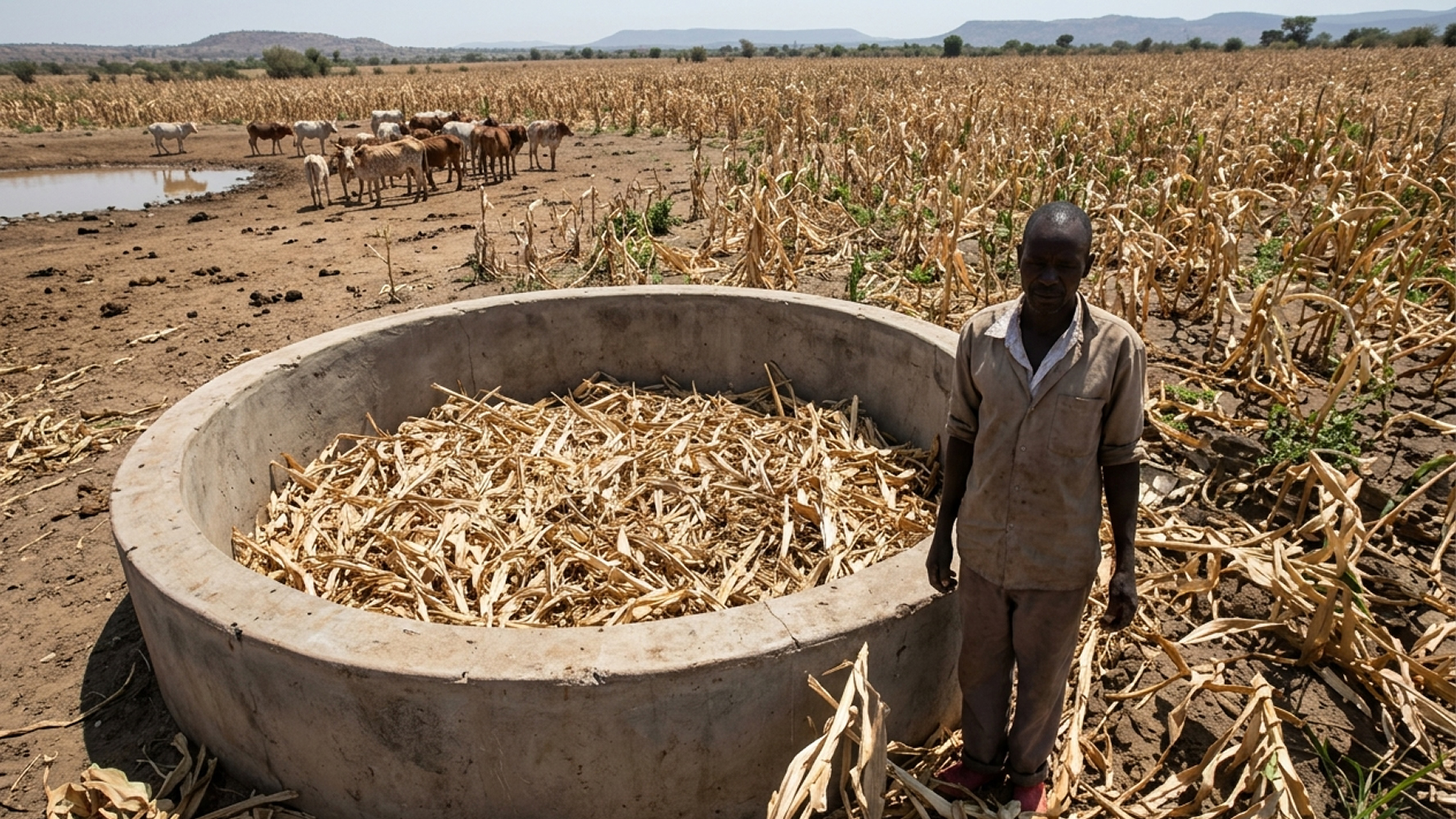
Zimbabwe is preparing for a potentially devastating drought after regional climate authorities warned that a rapidly strengthening El Niño could bring the country’s worst rainfall deficit during an El Niño year since 1950.
The warning comes as farmers enter a crucial period for preparing land, buying seed and protecting livestock. A regional preparedness alert says El Niño is expected to persist from July 2026 to March 2027, with a greater than 90 per cent likelihood of reaching very strong intensity. It also puts the chance that rainfall deficits between October and December will exceed those recorded during any previous El Niño year since 1950 at 70 per cent.
The forecast is particularly serious because October to April is Zimbabwe’s main rainy season and the period when most farmers plant and grow crops. A late start to the rains, long dry spells or poorly distributed rainfall could leave crops without enough moisture at the stages when they need it most.
For livestock farmers, the government’s message is direct: prepare before pasture disappears and water sources shrink. Dr Dumisani Kutywayo, Chief Director of the Directorate of Research, Education and Specialist Services, urged farmers to build feed reserves capable of sustaining their animals for at least 2 years.
“Farmers are being urged to stock sufficient feed reserves to last at least two years,” he said.
Kutywayo said the forecast could place heavy pressure on grazing land, water supplies and livestock productivity. Authorities are encouraging farmers to plan purchases early, store fodder where it is protected from rain and pests, and use crop residues, hay and locally produced feed where it is safe and suitable for animals.
The advice reflects the losses suffered during previous droughts. More than 40,000 cattle deaths were recorded during the 2023/24 drought, while the 1991/92 El Niño was associated with the reported deaths of more than 1 million cattle.
“During the 1991/1992 El Niño more than one million cattle reportedly died. During the 2023/2024 drought over 40,000 cattle deaths were recorded. We cannot afford to repeat these losses,” he said.
The earlier drought reduced crop production, weakened grazing areas and left communities struggling to find water for people and animals. In April 2024, Zimbabwe declared a state of national disaster after more than 80 per cent of the country received below-normal rainfall. The crisis affected food supplies in both rural and urban areas and led the government to seek humanitarian assistance.
Although better harvests in the 2025/26 season have given households a temporary cushion, the improvement has not removed the country’s vulnerability. Humanitarian agencies have classified Zimbabwe as a country of high concern, with rural households in deficit areas expected to face stressed food-security conditions that could deteriorate into crisis between October 2026 and January 2027. Reduced agricultural production, weaker access to food and high fuel and transport costs are expected to add to the pressure.
What El Niño means for Zimbabwe
El Niño is a naturally occurring climate pattern that begins when surface waters in the central and eastern equatorial Pacific Ocean become warmer than average, changing the interaction between the ocean and atmosphere. Those changes influence rainfall, temperature and weather patterns far beyond the Pacific.
El Niño does not produce the same result everywhere. In Southern Africa, however, it is commonly associated with below-average rainfall. When the pattern coincides with high temperatures, the effect can be severe: soil dries more quickly, dams and wells recover slowly, crops fail and pasture becomes too sparse to support animals.
The risk is not limited to commercial farms or rural households. Farmers may harvest less maize, sorghum, millet, vegetables and other crops, while livestock producers may lose animals or spend more on feed and water. If national supplies fall, households that do not farm can also feel the effects through higher food prices, reduced choice in shops and shortages of particular commodities.
The animal-feed industry faces the same chain of pressure. Feed manufacturers depend on reliable supplies of grain and other raw materials. A poor harvest can make those materials more difficult and expensive to obtain, leading to shortages, higher prices or both. Poultry, rabbit, pig and cattle producers may then pass those costs on to consumers through higher prices for meat, eggs and other food products.
Zimbabwe has already seen how shortages in the feed market can affect different farming sectors. Rabbit farmers have reported difficulty obtaining commercial pellets, while some poultry producers have turned to rabbit pellets as a cheaper substitute for part of their broiler-finisher rations. That response may reduce costs for some producers but can leave fewer pellets available for rabbit farmers, placing additional pressure on small businesses and household projects.
The coming season will also test water supplies. Drought is not simply a lack of rain on a particular day. It is a prolonged shortage that can empty dams, lower groundwater levels, reduce river flows and leave communities travelling farther to collect water. Where water becomes scarce, households may face higher costs, longer queues and greater risks to hygiene. Livestock become weaker when they walk long distances for water or are forced to graze on poor-quality pasture.
The authorities are calling for early action rather than waiting for an emergency. Recommended measures include planting drought-tolerant traditional grains such as sorghum and millet, choosing early-maturing varieties, harvesting rainwater, protecting seed and feed, and considering livestock breeds suited to hot and dry conditions. Pasture seed could also help farmers produce fodder before the crisis deepens.
Farmers should monitor official weather updates before making major planting decisions, avoid buying unverified agricultural inputs and keep records of available feed, water and animals. Where possible, fodder should be stored off the ground and protected from moisture, pests and contamination. Crop residues can be valuable after harvest, but they should be assessed carefully and supplemented where they do not provide a balanced ration.
Urban and peri-urban households can also prepare. A small backyard garden will not replace national grain supplies, but it can provide useful food and reduce the amount a family needs to buy. Residents with access to a safe water source can plant vegetables such as tomatoes, carrots, butternuts, potatoes, onions and leafy greens. Even a modest garden in containers, sacks or a small plot may help during periods when prices rise or fresh produce becomes harder to find.
Families can reduce waste, preserve suitable food when possible and plan purchases around essential staples rather than waiting for shelves to empty. Communities can share information about water-saving methods, seed varieties and local growing conditions. Small shops, schools and institutions can review their supplies early, while food producers can identify alternative sources of raw materials before transport and prices become more difficult.
The regional preparedness alert says early interventions, including drought-tolerant seed distribution, livestock protection and water harvesting, must be delivered before planting begins. Yet around 80 per cent of planned regional mitigation activities remain unfunded, and humanitarian partners warn that assistance arriving after October may be too late to prevent avoidable losses to crops, livestock and livelihoods.
Zimbabwe still has a short window to strengthen grain and water reserves, protect animals and support vulnerable households. The warning is severe, but preparation can make the difference between a difficult season and a nationwide food emergency. Farmers, consumers, businesses and local authorities all have a role in acting before the effects of the next drought become impossible to ignore.