


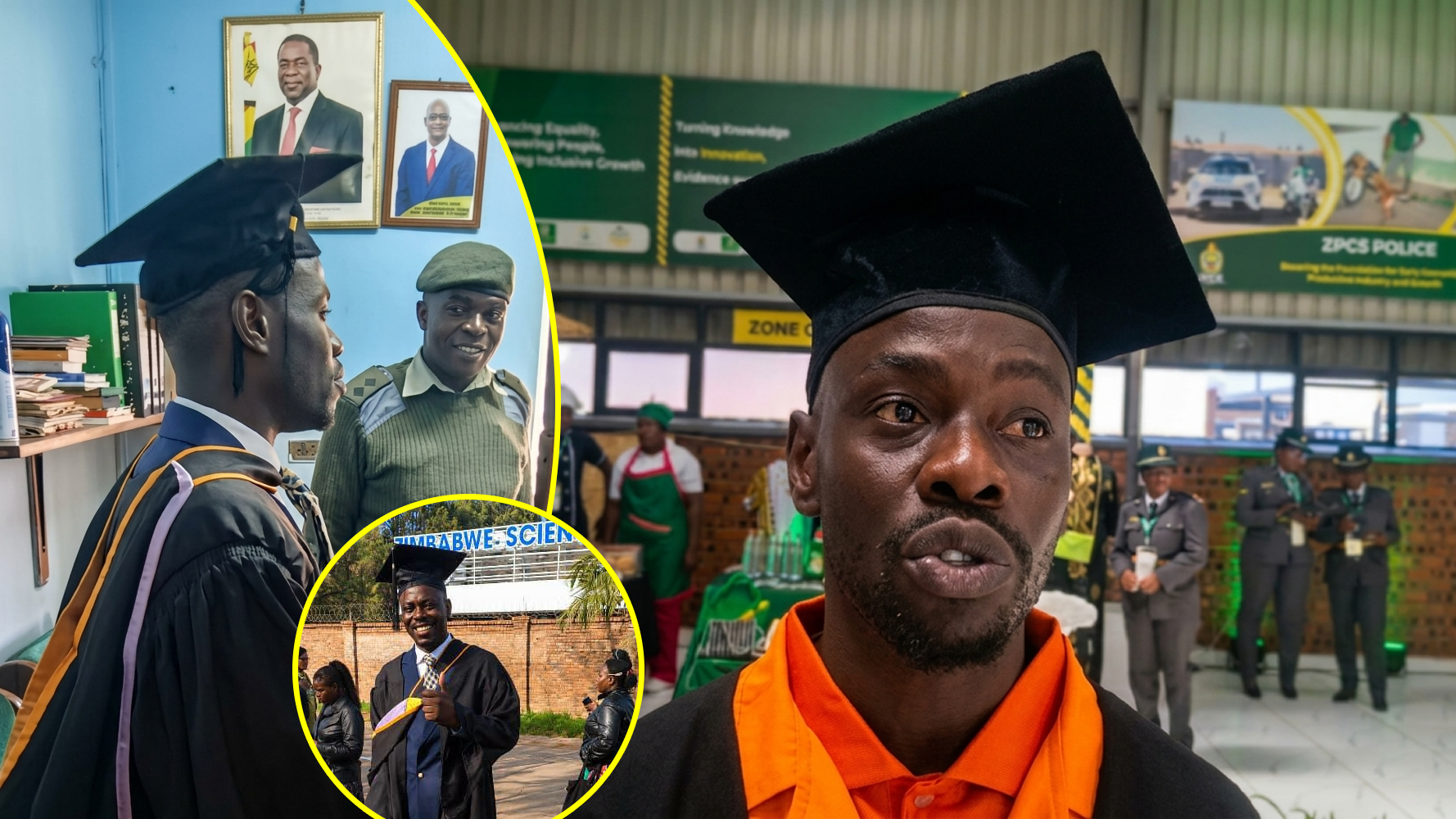
The father of University of Zimbabwe graduate Robert Zivengwa has revealed that his son was drawn into crime by friends after losing his religious faith, as he praised the Government for changing the country’s prisons from places of punishment into correctional facilities.
Isaac Chirongamabwe Zivengwa, 66, spoke after Robert made headlines when he was temporarily allowed to leave prison and attend his graduation ceremony at the University of Zimbabwe under guard. Robert, aged 30, completed his studies while serving a 24-month prison sentence for unlawful entry into a house.
For Isaac, the graduation was not only an achievement for his son but also a sign of how much can change when inmates are given an opportunity to study and prepare for life beyond prison. He said Robert had performed well throughout his school years, but later made choices that put him on the wrong side of the law.
“I have come to understand where my son, Robert, went wrong. He was influenced by friends into criminal activities after departing from his faith,” said Isaac.
The father said Robert had once been deeply religious. In his view, the change in his son’s behaviour began when he moved away from the values that had guided him and became vulnerable to the influence of people involved in wrongdoing.
Isaac said the experience had also given him a new appreciation of the direction being taken by the Zimbabwe Prisons and Correctional Service. Rather than seeing a prison sentence as the end of a person’s future, he said the system was increasingly creating opportunities for inmates to correct their behaviour, gain skills and return to society with a different outlook.
“I want to thank the Government for moving our prisons from punitive to correctional facilities and these are the results,” he said.
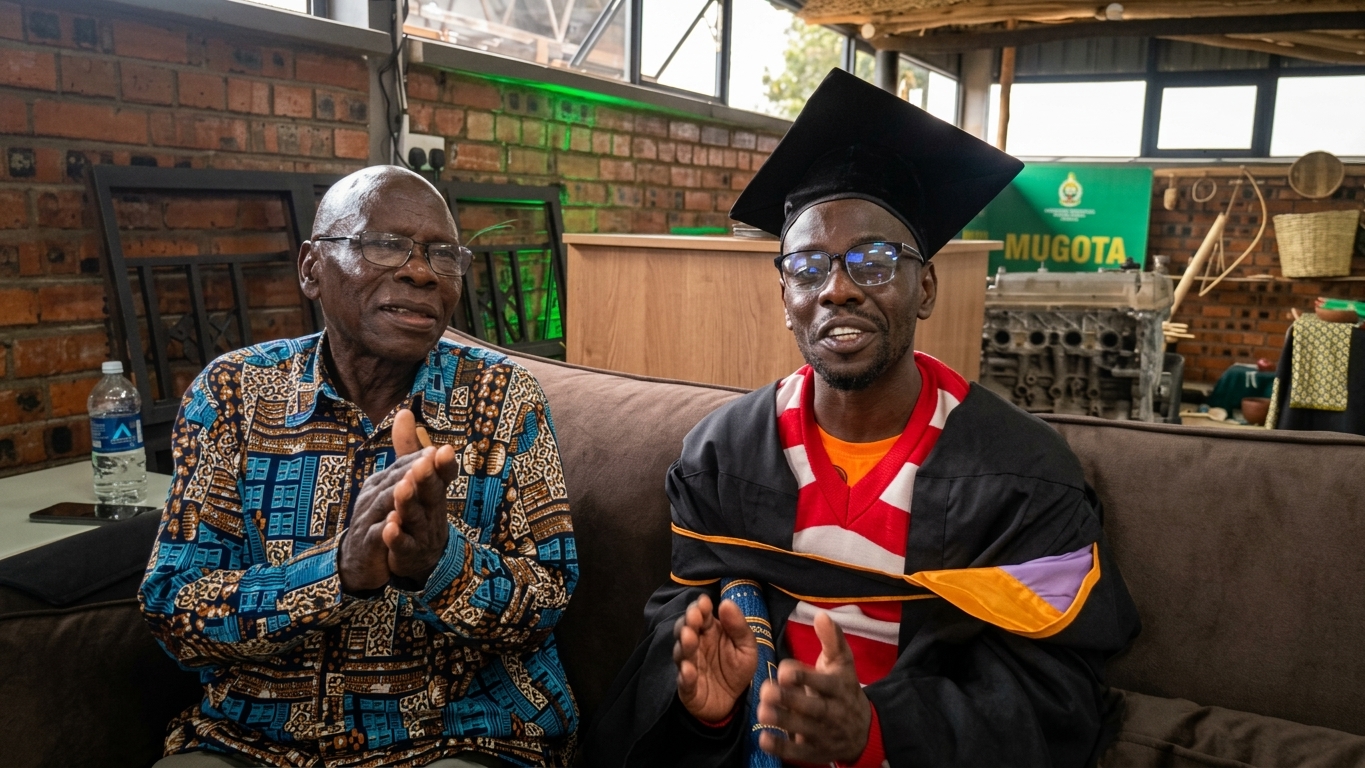
He reserved special praise for the ZPCS leadership, including Commissioner-General Moses Chihobvu, and the officer in charge of Harare Central Prison. Isaac said their decision to allow Robert to continue with his university studies while behind bars had made it possible for him to complete a major personal milestone despite his imprisonment.
“Commissioner General Moses Ngavaite Chihobvu, through the Officer In Charge of Harare Central Prison, allowed my son to continue with his studies behind bars and he went on to graduate under guard,” said Isaac.
The development was particularly significant to the family because Isaac said education had not been treated in the same way in earlier periods. He recalled that during the liberation struggle, inmates were not allowed to pursue education in prison.
“This is new in Zimbabwe. Prisons were too hostile, they were places of death, not life. Today, I can feel the correctional aspect.”
Isaac said his son had built a strong academic record before entering university. Robert achieved good results from Form One through Form Six at Rusitu High School before enrolling at the University of Zimbabwe. That foundation enabled him to continue with his studies after he was jailed and ultimately complete a degree that could open a path into scientific work.
Robert has acknowledged that his conduct changed after he lost his faith and became involved with people who encouraged harmful habits. He said he began drinking alcohol on campus and associated with criminals, a combination that eventually led to the actions for which he was convicted and jailed in March 2026.
“I was influenced into drinking alcohol at the campus, departed from my faith, and dined with criminals,” said Robert.
He said his time in prison had forced him to reflect on his decisions and had also changed the way he understood education, responsibility and the consequences of crime. Through ZPCS rehabilitation and reintegration programmes, he said, he had begun to look towards a different future.
“Today I have seen the hand of God. My inner person has been convicted by the Spirit of God and I am looking forward to a better life — focusing on my education and ready to make a change in society and the nation at large.”
Robert’s graduation became an unusual moment at the University of Zimbabwe. He left the prison cells under guard, not as a visitor attending an ordinary family event, but as a graduate collecting the result of years of study. The occasion brought together two parts of his life that rarely appear side by side: the consequences of a prison sentence and the achievement of an honours degree.
His appearance later at the ZPCS exhibition stand at the Zimbabwe Agricultural Show in Harare attracted further attention. Wearing his prison uniform and graduation cap, Robert met visitors who wanted to congratulate him and ask how he had managed to complete university while serving his sentence.
He said the public response was warm and memorable.
“I had many visitors after the publication of my story. I ate some delicious food, there were many beautiful smiles, congratulations and, of course, some ice cream. Ndanzwa nawo.”
Robert now hopes to use his scientific training after completing his sentence. He has spoken of joining clinical laboratories and research institutions, while also using his knowledge to help other people and contribute to national development.
The exhibition also highlighted another example of inmates using their time in custody to develop practical skills. Charlington Timba, 41, a qualified motor mechanic serving a 10-year sentence for robbery after being convicted in September 2022, demonstrated some of his technical abilities to members of the public at the same ZPCS stand.
Together, the two men presented different sides of correctional work. Robert’s story centred on university education, personal reflection and the chance to complete a degree. Timba’s focused on vocational ability and the value of practical skills that can support a livelihood after release.
For Isaac, however, the most important part of his son’s story is the change in character he has seen. He believes Robert’s education, rehabilitation and renewed faith can help him rebuild his life once he has completed his sentence.
Robert’s journey from Rusitu High School to the University of Zimbabwe, and then from a prison cell to a graduation ceremony under guard, has given his family a reason to hope. His father now sees the achievement as evidence that correctional institutions can help people confront their mistakes while continuing to develop the knowledge and skills needed to make a positive contribution to society.