


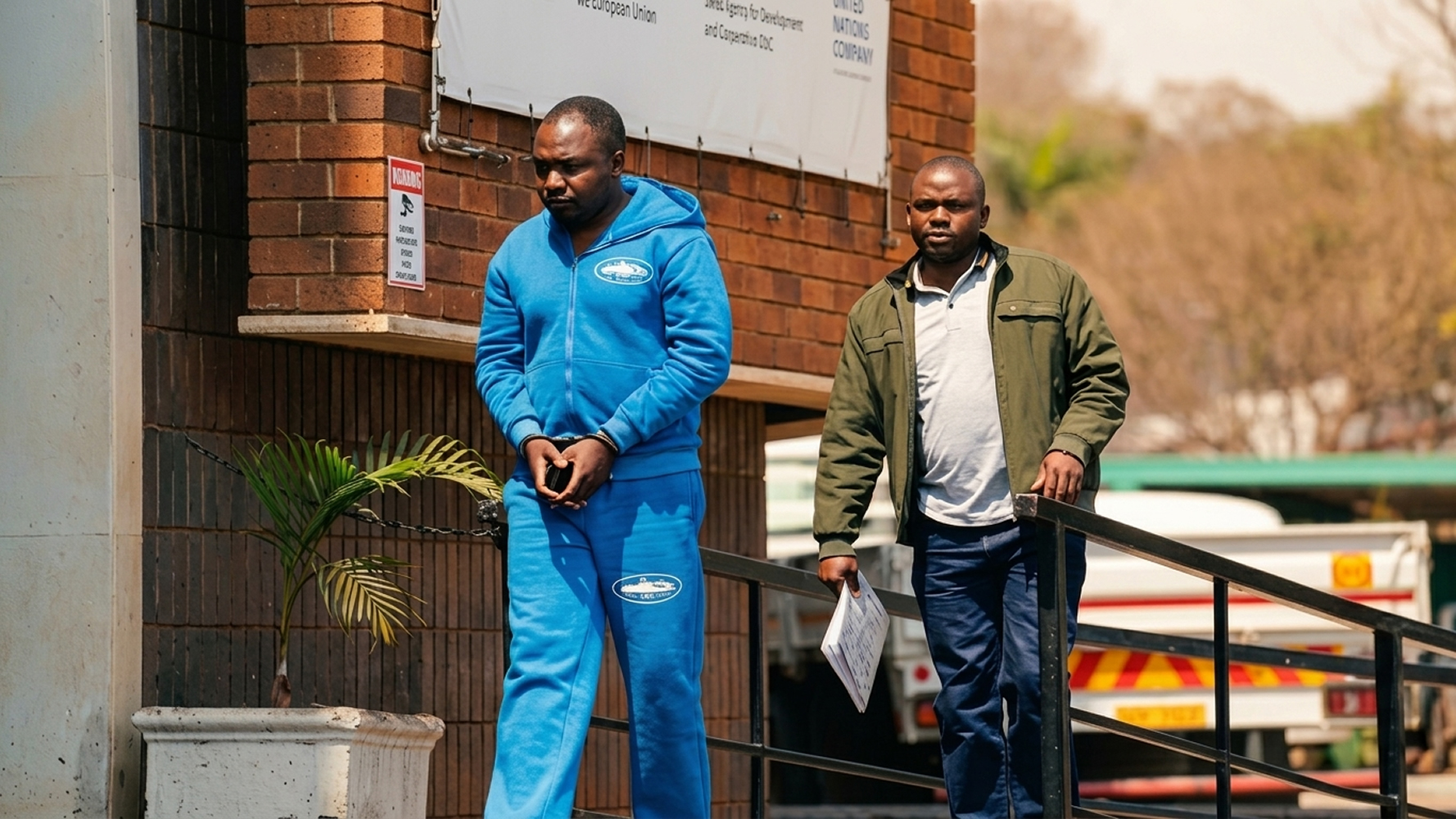
A Chitungwiza man who allegedly masqueraded as a pastor with spiritual powers to heal cancer used WhatsApp, mobile money and a fabricated connection to the United Kingdom Embassy to defraud a UK-based woman of US$25,900.
Kelvin Nyamhika, 33, appeared before Harare magistrate Jacqueline Gara facing fraud charges. He pleaded guilty and was remanded in custody pending sentencing.
The complainant, Mildred Zvimbvatu, is based in the United Kingdom. The court heard that Nyamhika was a friend of her son, Tinashe Zvimbvatu, 32, and used that connection to gain her trust before presenting himself as someone who could provide spiritual help to her family.
Prosecutor Kanchelskis Ropi told the court that sometime in 2023, Nyamhika contacted Zvimbvatu on WhatsApp using his Econet line. The two developed a friendship, during which Zvimbvatu confided in him about personal and family problems.
After she relocated to the United Kingdom, they remained in contact. It was during this period, the court heard, that Nyamhika allegedly began putting his plan into action.
He told Zvimbvatu that he could link her with a pastor who had the spiritual ability to heal her daughter, who was battling cancer. Nyamhika then acquired another Econet line registered in the name of Exter Kambalame and assumed the identity of Pastor Mugoriwe, from a church called City of Truth.
Using the false identity, Nyamhika told Zvimbvatu that he had seen, through the “realm of the Holy Spirit”, misfortunes affecting her family. He instructed her to send money towards prayers intended to address the problems.
Zvimbvatu sent various amounts to Nyamhika’s EcoCash account through WorldRemit on different occasions. The payments eventually accumulated to US$15,900, but the demands did not stop. Nyamhika allegedly continued asking for more money for the purported prayers.
The second part of the scheme involved a different promise. Nyamhika later claimed that he was connected to the United Kingdom Embassy and could assist Zvimbvatu with visa documentation for her daughter and grandchild.
He demanded US$10,000 for the service. Zvimbvatu sent US$6,250 to Nyamhika’s EcoCash account through WorldRemit, while her aunt, Babra Mugandani, who is based in the United States, sent the remaining US$3,750.
The combined payments for the alleged spiritual assistance and visa documentation reached US$25,900. After receiving the money, Nyamhika became evasive and eventually blocked Zvimbvatu on social media platforms.
It was then that she realised she had been defrauded and reported the matter to the police. Investigators followed the electronic trail left by the mobile-phone accounts used in the transactions.
Police sent a search-and-seizure warrant to Econet Wireless. The mobile-network operator provided Nyamhika’s particulars and call history, information that enabled investigators to identify him.
The court heard that nothing was recovered. The full amount prejudiced in the case was US$25,900.
The case shows how a familiar relationship can be used to make an online deception appear credible. Nyamhika was not a stranger who approached Zvimbvatu without any connection to her family. He knew her son and maintained contact with her after she moved abroad. That familiarity gave him an opening to learn about her concerns and later shape his demands around the illness affecting her daughter.
The use of separate identities also formed a central part of the deception. Nyamhika allegedly first presented himself as someone who could connect Zvimbvatu to a spiritual healer, then adopted the identity of Pastor Mugoriwe when communicating with her. He later presented himself as a person with access to assistance at the United Kingdom Embassy.
The payments were made through established digital channels. WorldRemit was used to send money into an EcoCash account, allowing the transactions to take place across borders while the complainant was living in the United Kingdom and her aunt was in the United States. The money was received in Zimbabwe, where Nyamhika was based.
Police have separately warned the public to be careful when using mobile-money services. Authorities have said fraudsters use digital platforms to obtain personal security information, including mobile numbers, personal identification numbers and one-time passwords, and can also use fraudulent websites, fake promotions and counterfeit mobile-money branding to lure victims.
In Nyamhika’s case, the court record points to a different route into the victim’s confidence. The requests were linked not to a fake bargain or a technical trick, but to family distress, religious belief and the hope of finding help for a child with cancer. The later promise of help with visa documents added another urgent and valuable service to the demands for money.
The investigation also demonstrated the importance of information held by telecommunications companies in tracing suspected fraud. After the police obtained the warrant, Econet’s records supplied the particulars and call history that connected the number to Nyamhika and helped move the case from a complaint to an identified suspect.
For Zvimbvatu, the financial loss amounted to nearly US$26,000, with no money recovered. The payments made for prayers and visa assistance did not produce the services promised, and communication ended after Nyamhika blocked her on social media.
Nyamhika’s guilty plea now leaves the court to determine his sentence. Until then, the case remains a warning about the risks of trusting online identities that are supported by personal familiarity, religious claims or supposed official connections. A message from someone known to the family can still be used to build a carefully planned fraud, particularly when the requests are directed at people facing illness, separation or the pressure of migration paperwork.
The evidence presented in court described a scheme that began with a WhatsApp friendship, expanded through a false pastoral identity and ended with a claim of embassy access. By the time the deception was uncovered, US$25,900 had been transferred and nothing had been recovered.