


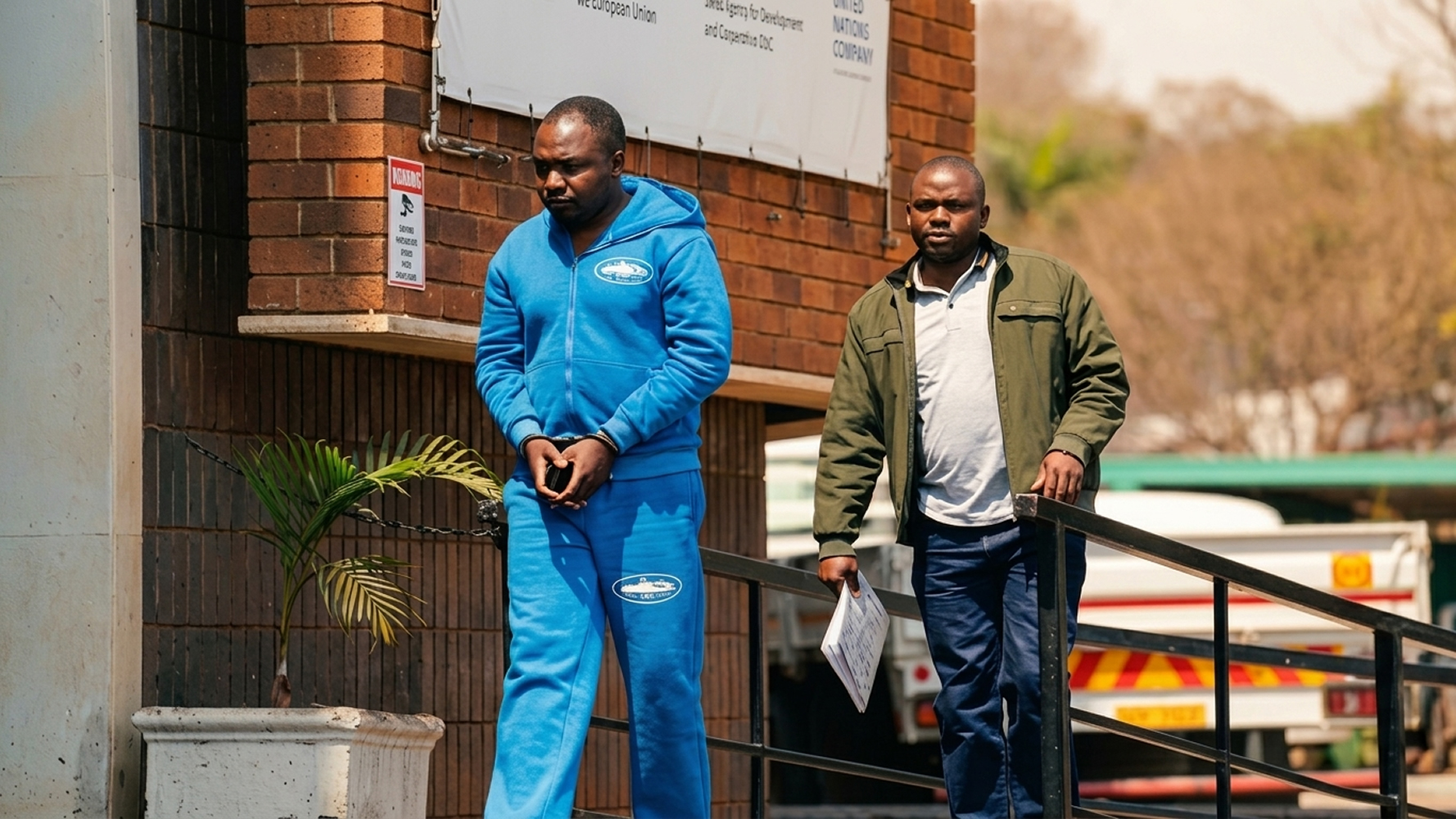
A Chitungwiza man who posed as a pastor with spiritual powers to heal cancer and used the identity to extract US$25,900 from a woman living in the United Kingdom has been sentenced to 46 months in prison.
Kelvin Nyamhika, aged 33, was convicted of fraud after pleading guilty before Harare magistrate Jacqueline Gara. Although the full sentence was 46 months, the court suspended 12 months for five years on condition that he remains of good behaviour. A further 14 months were suspended on condition that he pays back the full US$25,900 to the complainant by 1 December this year. The arrangements left him with an effective 20-month jail term.
The case began with a relationship built on familiarity and trust rather than a chance online encounter. Prosecutor Kanchelskis Ropi told the court that Nyamhika was a friend of the complainant’s son, Tinashe Zvimbvatu, 32. Sometime in 2023, he contacted Tinashe’s mother, Mildred Zvimbvatu, through WhatsApp using his Econet mobile line.
The pair remained in contact after Mildred relocated to Britain. During their conversations, she confided in Nyamhika about personal and family problems. The court heard that he used that access to present himself as a source of spiritual guidance and then built a second identity around a supposed church leader.
Nyamhika claimed he could connect Mildred with a pastor who had the power to heal her daughter, who was battling cancer. He later acquired another Econet line registered in the name of Exter Kambalame and used it to assume the identity of Pastor Mugoriwe from a church called City of Truth.
Speaking through the fabricated identity, Nyamhika told Mildred that he had seen misfortunes affecting her family through the “realm of the Holy Spirit”. He instructed her to send money for prayers that would supposedly deal with the problems facing her family and help her daughter.
Mildred sent a series of payments to Nyamhika’s EcoCash account through WorldRemit. The transfers gradually reached US$15,900. The demands, however, continued, with Nyamhika asking for more money for the purported prayers.
The alleged spiritual intervention was then followed by a second promise involving immigration documents. Nyamhika claimed that he was connected to the United Kingdom Embassy and could help Mildred obtain visa documentation for her daughter and grandchild. For that service, he demanded US$10,000.
Mildred sent US$6,250 to his EcoCash account through WorldRemit. Her aunt, Babra Mugandani, who is based in the United States, sent the remaining US$3,750. Together, the payments for the supposed prayers and visa assistance brought the total amount involved to US$25,900.
After receiving the money, Nyamhika became evasive. He stopped responding properly and eventually blocked Mildred on social media platforms. The silence ended the promises that had drawn the payments. Mildred realised that she had been defrauded and reported the matter to the police.
The investigation followed the electronic trail left by the mobile phones and money transfers. Police sent a search-and-seizure warrant to Econet Wireless, which supplied Nyamhika’s particulars and call history. The information enabled investigators to identify him and connect him to the lines used during the scheme.
Nothing was recovered, leaving the complainant facing the loss of the full US$25,900. The suspended portion of Nyamhika’s sentence now carries a clear financial condition: he must restitute the money by the date set by the court or face the consequences attached to the order.
The Chitungwiza case has brought together several methods increasingly seen in fraud complaints involving self-styled spiritual figures: a private approach through social media, a claim of special access to invisible powers, urgent requests for payment, and a second promise designed to widen the flow of money. In this case, the personal connection through the complainant’s son gave the approach a familiar face before the invented pastor was introduced.
It also shows how quickly a spiritual claim can be joined to an official-sounding service. After the requests for prayers, Nyamhika’s alleged claim of a connection to the United Kingdom Embassy created another route for demanding money. The visa promise involved the same family and the same trust already established through the cancer-related appeal.
The case comes amid continued scrutiny of religious leaders and spiritual movements in Zimbabwe. In March 2024, police raided a religious compound linked to a self-styled prophet, and the leader appeared in court in a case involving children living at the site. The allegations in that matter included child abuse and labour-related offences, drawing attention to the risks that can arise when followers place unchecked authority in the hands of a religious figure.
Other complaints involving prophets and traditional healers have also followed a familiar pattern: claims of extraordinary powers, promises of a dramatic change in a person’s health or circumstances, and demands for money before the promised result can be delivered. The targets are often people dealing with illness, family trouble, immigration difficulties or financial pressure.
For Mildred, the consequences were measured not only in dollars but in the collapse of a relationship she believed was genuine. Her daughter’s illness was used as the centre of the appeal, while the family’s hope of securing documents for a daughter and grandchild created another opening for payment. By the time the contact ended, money had moved from Britain and the United States into Zimbabwe through mobile-money channels.
The police inquiry demonstrates the importance of records held by mobile-network operators in tracing such schemes. The Econet information supplied investigators with the details and call history needed to identify the person behind the separate telephone identity. Digital communication and remittance services had helped the payments cross borders, but they also left a trail.
Nyamhika’s effective 20-month sentence brings the criminal case to a close while placing the unpaid money at the centre of the next stage. The court heard that nothing had been recovered before sentencing. Unless the US$25,900 is repaid by 1 December, the condition attached to the suspended 14 months will become critical.
What began with a WhatsApp message from a trusted connection ended with a criminal conviction, a prison term and a restitution order. The promised cancer miracle never came. Instead, the trail led from a false pastor and an invented church identity to blocked accounts, a police investigation and a total loss of US$25,900.