


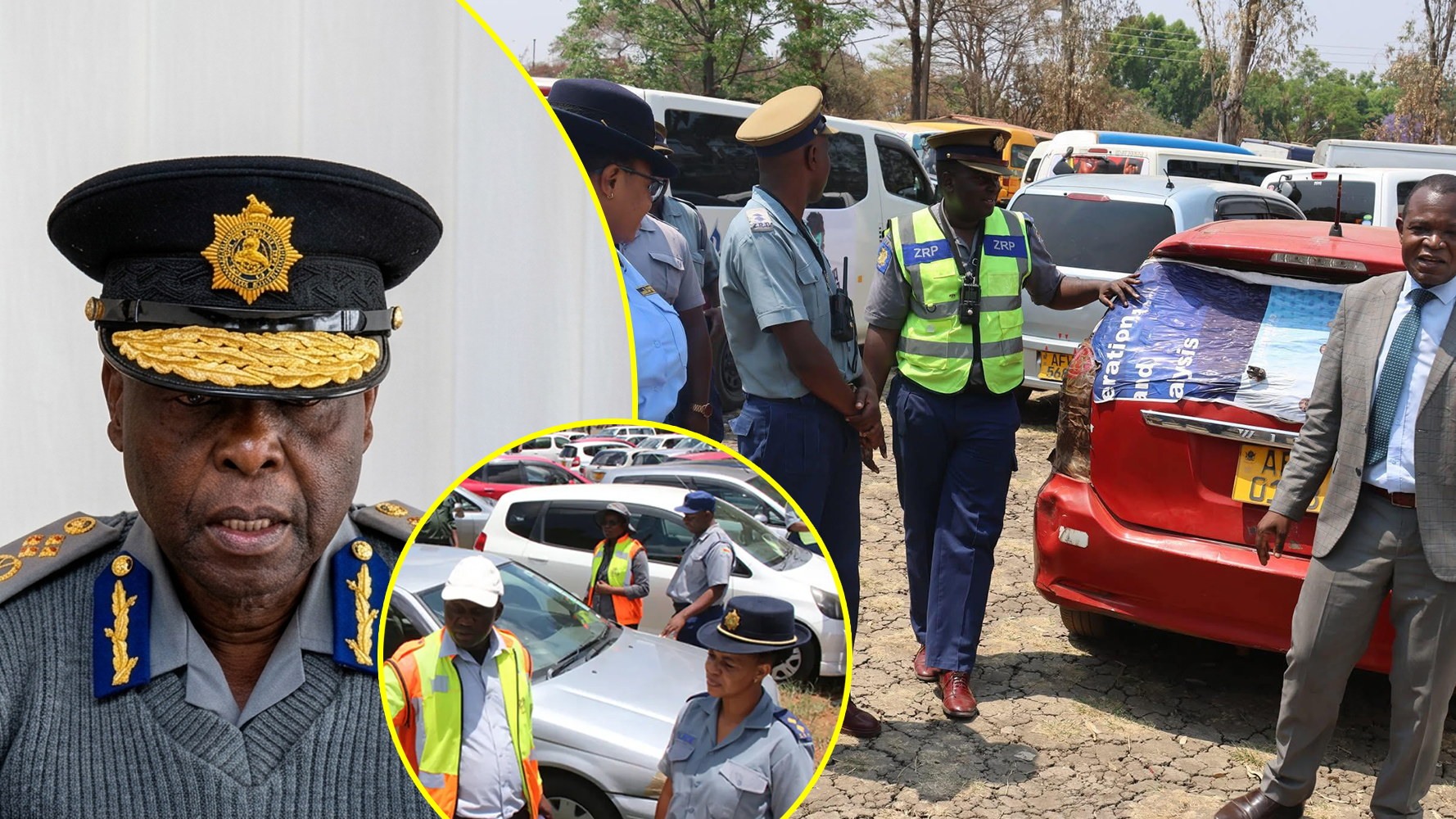
The Zimbabwe Republic Police has ordered a nationwide crackdown on motorists driving vehicles without registration plates or using illegal blue lights, sirens and other emergency-style fittings, with officers directed to arrest offenders and impound the vehicles involved.
The directive, issued by Commissioner-General of Police Stephen Mutamba, applies to police stations, districts and provinces across the country. It comes as police renew their campaign against motorists who are openly driving plateless vehicles and fitting private cars with equipment normally associated with authorised emergency and security services.
National police spokesperson Commissioner Paul Nyathi said the force had noted a continuing and disturbing trend on Zimbabwe’s roads. He said some motorists were ignoring the requirement to display registration numbers while others were installing blue lights, sirens, bar lights, beams and related gadgets without permission.
“The Zimbabwe Republic Police has noted with concern a disturbing trend of Zimbabweans who are continuously driving vehicles with no registration numbers or plates on the country’s roads with total disregard of the law,” police said.
Nyathi said the Commissioner-General had now instructed officers to move beyond warnings and take direct enforcement action against vehicles that breach the regulations.
“The Commissioner-General of Police has directed all Police stations, Districts and Provinces to take stern action by effecting arrests and impounding all vehicles with no registration plates and those with illegal blue lights or fittings,” he said.
The police warning covers private cars, public service vehicles, company fleets and Government vehicles. Any vehicle found operating without proper registration plates faces removal from the road, while motorists found using prohibited lights, sirens or other fittings face arrest.
The force has also made clear that the equipment will not simply be ignored because it has been installed on an otherwise roadworthy vehicle. Blue lights and sirens are intended for authorised emergency and security operations, and their unauthorised use can make it difficult for members of the public to distinguish genuine police, ambulance or other emergency vehicles from private motorists attempting to imitate them.
“Some individuals are also fitting and driving vehicles with blue lights, sirens, bar lights, beams and other unauthorised gadgets, thereby posing as a danger to the maintenance of law and order in the country,” Nyathi said.
Police said the latest operation is part of a wider effort to restore compliance on the roads and improve the identification of vehicles. Number plates allow officers and other road users to identify vehicles involved in collisions, traffic offences and criminal incidents. When plates are removed, tracing a vehicle becomes more difficult and enforcement officers lose an important means of establishing who was driving it.
The scale of earlier operations shows how widespread the problem has become. In March, police impounded more than 1,000 vehicles during the first week of a nationwide crackdown on unregistered cars and vehicles fitted with illegal sirens, blue lights, bar lights, beacons and other unauthorised gadgets.
Days later, the number of vehicles seized during the same countrywide operation had risen to 3,478. The figure included private vehicles, company cars, public service vehicles and Government vehicles. Police said some of the impounded cars had no registration plates, while others carried fittings reserved for authorised emergency vehicles.
The March operation also exposed the different reasons some motorists were driving without plates. Police said certain drivers were deliberately removing registration numbers to avoid identification after criminal offences or serious traffic violations. Vehicles without plates were linked by investigators to incidents including armed robberies, kidnappings, hit-and-run accidents and dangerous driving offences.
Some public service vehicles were also found to be operating without plates, making it harder for officers to follow up after traffic offences or accidents. Police said the practice was particularly dangerous when vehicles continued to carry passengers while ignoring basic identification requirements.
The use of powerful bar lights has raised a separate road-safety concern. Police said the bright beams can interfere with the vision of other motorists, especially at night, increasing the risk of crashes. Sirens and blue lights can also create confusion when they are used by vehicles that have no official emergency role.
During the March blitz, police said illegal sirens, blue lights, beacons and related gadgets would be removed on the spot. Vehicles without registration plates were to remain impounded until the owners completed the proper registration process and fitted lawful plates.
The latest order indicates that enforcement will continue across the country rather than being limited to major cities or selected highways. Officers at local stations and district offices have been instructed to act against offenders, giving motorists little room to avoid checks by moving between different areas.
Nyathi warned motorists that explanations would not prevent enforcement action once a violation had been established.
“No excuses from drivers or motorists will be entertained by police officers to enable the effective maintenance of law and order in the country to be enhanced,” he said.
Motorists are being urged to check their vehicles before travelling, particularly where registration plates are damaged, missing or awaiting replacement. Drivers who have installed blue lights, sirens, bar lights, beams or other emergency-style equipment on private vehicles also face the removal of those fittings and the impoundment of their cars.
The police operation places the responsibility on vehicle owners and drivers to ensure that cars on the road are properly registered and clearly identifiable. It also signals a tougher approach to the growing use of unauthorised equipment, with officers now directed to combine arrests with the immediate seizure of offending vehicles.
With thousands of vehicles already impounded in previous blitzes, the latest warning is a clear message that plateless cars and privately fitted emergency gadgets will remain a priority for police operations throughout Zimbabwe.