


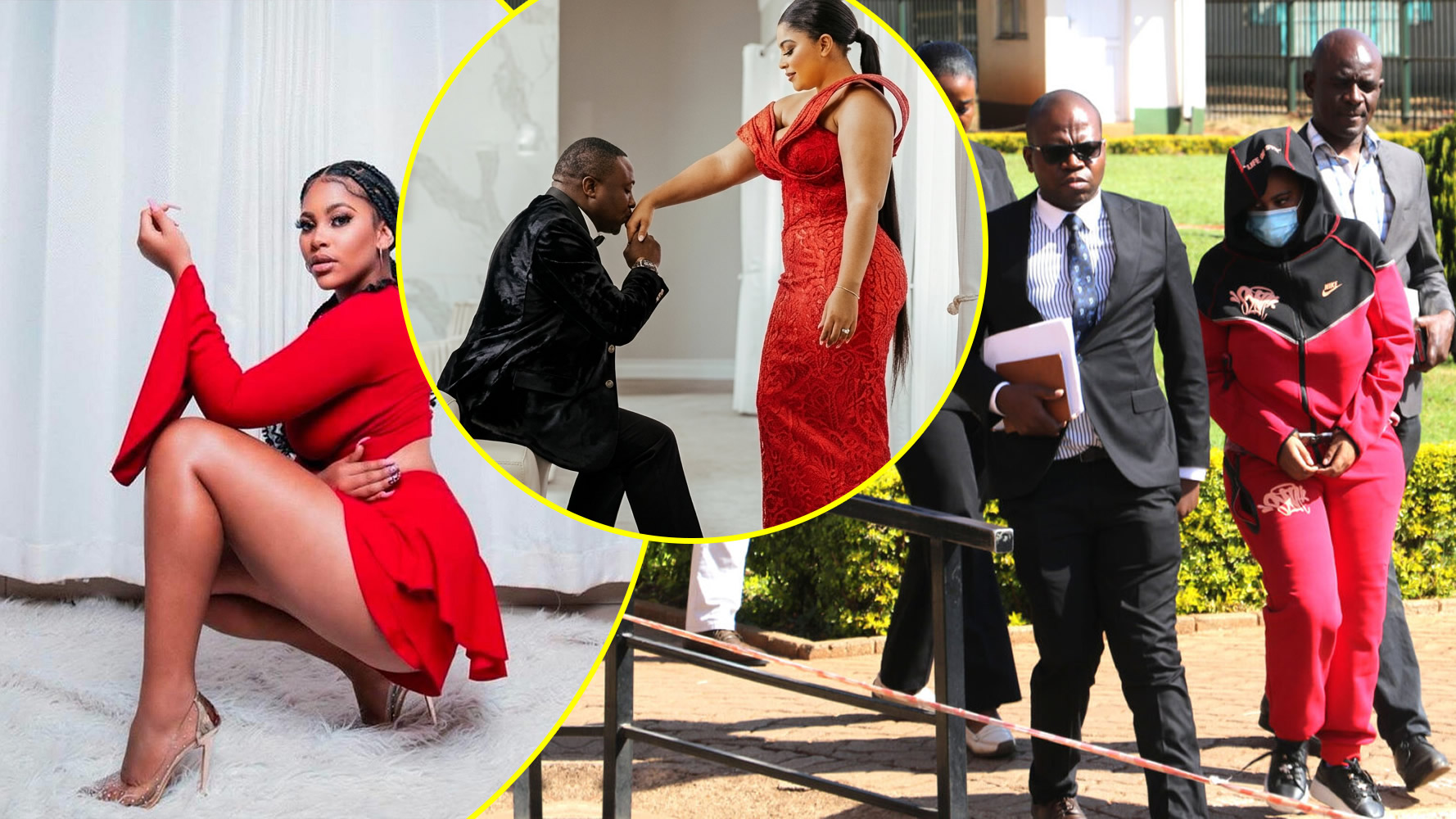
HARARE — Kelsea Tadiwa Tafirenyika’s appeal for peace with First Lady Auxillia Mnangagwa has failed to secure her freedom, with a Harare magistrate ordering that the President’s daughter-in-law remain behind bars in a US$9.3 million money-laundering case.
Regional magistrate Francis Mapfumo dismissed Tafirenyika’s bail application on Wednesday after accepting the State’s argument that she could flee the country. The ruling leaves the 22-year-old further languishing in custody as detectives pursue a property and vehicle trail which they say was built with money from drug-related activities.
Mapfumo described Tafirenyika as “liquid” and said she “could abscond”, holding that she allegedly had enough resources to sustain herself outside Zimbabwe. The decision came less than two weeks after she secured bail in a separate drugs case, only to be arrested again as she left custody and placed before the courts on the new financial charges.
Her lawyers had sought an amicable settlement with Auxillia in a carefully worded apology delivered while Tafirenyika remained in custody. They said their client “is fully committed to taking whatever steps are necessary to achieve an amicable resolution” and “has reflected deeply on the events that have unfolded”.
“Our client holds the institution of the first family in the highest regard and is deeply pained that her name has become entangled in a narrative she never sought to create,” they said.
The apology did not persuade the court to release her. Instead, the bail hearing brought the focus back to the investigators’ claims about properties in Zimbabwe and abroad, and to the dispute over the source of the money used to acquire them.
Detective Assistant Inspector Gift Machipisa told the court that Tafirenyika allegedly had properties in South Africa and the United Arab Emirates. He said the authorities were engaging Interpol to help trace and recover foreign assets. Investigators have also referred to 10 properties in Zimbabwe, nine vehicles and a wider portfolio said to include 13 properties outside the country.
The total value placed before the court is US$9,353,750. Police allege that the assets were acquired with proceeds from the illegal sale of pethidine hydrochloride, morphine sulphate and cannabis. The defence rejects that account, saying the properties and vehicles were gifts from Collins Mnangagwa, the President’s son and Tafirenyika’s husband, and should be treated as matrimonial assets.
That explanation has become a central part of the case. Tafirenyika maintains that Collins had extensive business interests and was able to provide the assets. Investigators, however, say they are still examining his business profile and the source of the money behind the purchases.
Machipisa said police had obtained title deeds, Deeds Registry searches and vehicle-registration records. He also referred to a Victoria Falls property whose former owner allegedly confirmed receiving cash directly from Tafirenyika. Police have further mentioned an identity document bearing the name Getrude Badza, which they say does not appear in the Civil Registry database.
The defence has attacked the State’s affidavit and challenged the connection between the drugs recovered during the initial investigation and a portfolio worth more than US$9 million. Lawyer Afmire Rubaya argued that the affidavit “had not been properly commissioned because the person who signed it did not state his rank”.
The money-laundering case grew out of a drugs investigation that began on August 4, when detectives from the Criminal Investigations Department’s Drugs and Narcotics unit raided a house at Edgehill Close in Greystone Park, Harare. Police said they had received information that pethidine was being sold from the property.
According to the State’s account, officers entered Tafirenyika’s bedroom at about 8pm and found her “seated on her bed counting some ampoules placing them on the bed”. They initially seized eight ampoules of Fresenius Pethidine, 10 ampoules of Verpat Pethidine and seven 1ml ampoules of Fresenius Morphine Sulphate.
A further search of bedroom drawers allegedly produced 72 more Verpat Pethidine ampoules, 64 Fresenius Pethidine ampoules and 43 ampoules of Morphine Sulphate. The total came to 204 ampoules, which court documents valued at US$204.
Police also searched a white Lamborghini parked in the yard. Five rolls of dagga, known locally as mbanje, were allegedly found concealed in the driver’s armrest. Tafirenyika and her uncle, Isaac Arab Jassub, were charged in connection with the alleged possession and dealing in dangerous drugs, as well as the possession of unregistered medicines.
The first bail battle in the drugs case ended with a High Court order on August 20. Justice Pisirayi Kwenda allowed an appeal by consent, set aside the magistrate’s August 13 decision refusing bail and ordered Tafirenyika and Jassub to pay US$1,000 each. They were required to surrender their passports, report to police every fortnight and remain at their stated addresses. They were also ordered not to interfere with State witnesses, exhibits or police investigations.
The relief was short-lived for Tafirenyika. She was re-arrested after her release and remanded in custody on the money-laundering allegations. Prosecutors have argued that she could interfere with the investigation, reconnect with alleged suppliers or leave Zimbabwe using international contacts and assets.
In an affidavit opposing bail in the drugs case, Detective Sergeant N. Charuma said: “The accused was found in possession of Verpat Pethidine designed for sale in foreign markets indicating that she has foreign ties she can utilise to evade prosecution”. He warned that she could “re-establish communication lines with her supplier” if released.
The defence has also raised claims about the way the arrest was carried out. Malvern Mapako told the court that Tafirenyika and Jassub were “heavily beaten” and forced to surrender their mobile phones and sign seizure certificates under pressure. A magistrate ordered a medical inspection after the claims were made.
The First Family dispute has added a personal dimension to the criminal investigation. Tafirenyika’s lawyers have denied that she intended to scandalise Auxillia or the family. In their letter, they said: “It has never been our intention to scandalise you or the first family”. They also said the allegations had been manufactured by “others, opportunists, detractors and adversaries of the first family… to cause disharmony”, adding that “our client is not party to that scandalous enterprise, and neither are we.”
Tafirenyika has also told police that her arrest was driven by detractors of the First Family and was not connected to the drug-possession allegations. Her defence continues to insist that Collins was the source of the disputed gifts. The family’s position, as presented in the investigation, is that Tafirenyika used Collins’ money to build a property empire without his knowledge. Collins was reported to have travelled to Belarus for rehabilitation before going to Dubai.
Tafirenyika’s mother, sister and aunt have also been reported as being held without bail at Mlondolozi Prison near Bulawayo on separate drug charges, widening the number of relatives caught up in the investigations.
The case is unfolding as Zimbabwe faces growing public concern over drugs, particularly among young people and over the misuse of prescription medicines. An Afrobarometer survey published in January 2025 found that 79% of Zimbabweans considered drug and substance abuse widespread in their communities, with 56% describing it as very widespread. The government launched a Multi-Sectoral Drug and Substance Abuse Plan covering 2024 to 2030, combining enforcement with prevention, treatment and rehabilitation.
In 2025, the Zimbabwe Civil Liberties and Drug Network said 57% of admissions to mental-health institutions were linked to drug use. The government also launched a campaign seeking more than US$77 million for the fight against drug and substance abuse and outlined plans to identify more than 60 rehabilitation centres.
Against that national backdrop, the Tafirenyika case has placed tightly controlled medicines, alleged drug supply networks and high-value property holdings at the centre of a dispute involving the President’s family. The apology to Auxillia sought to lower the temperature and protect the family’s name, but it has not changed the immediate outcome for Tafirenyika.
She will remain in custody while the State continues assembling its evidence and prepares witnesses. Machipisa told the court that about 10 witnesses were expected and that investigators were still gathering information, including checks into Collins’ business interests.
For now, the court’s finding that Tafirenyika has the means and connections to leave Zimbabwe has overridden her plea for an amicable solution. Her attempt to repair relations with the First Lady has therefore ended with another stay behind bars, while the disputed properties, the alleged drug proceeds and the family conflict remain locked together in the case before the Harare courts.