


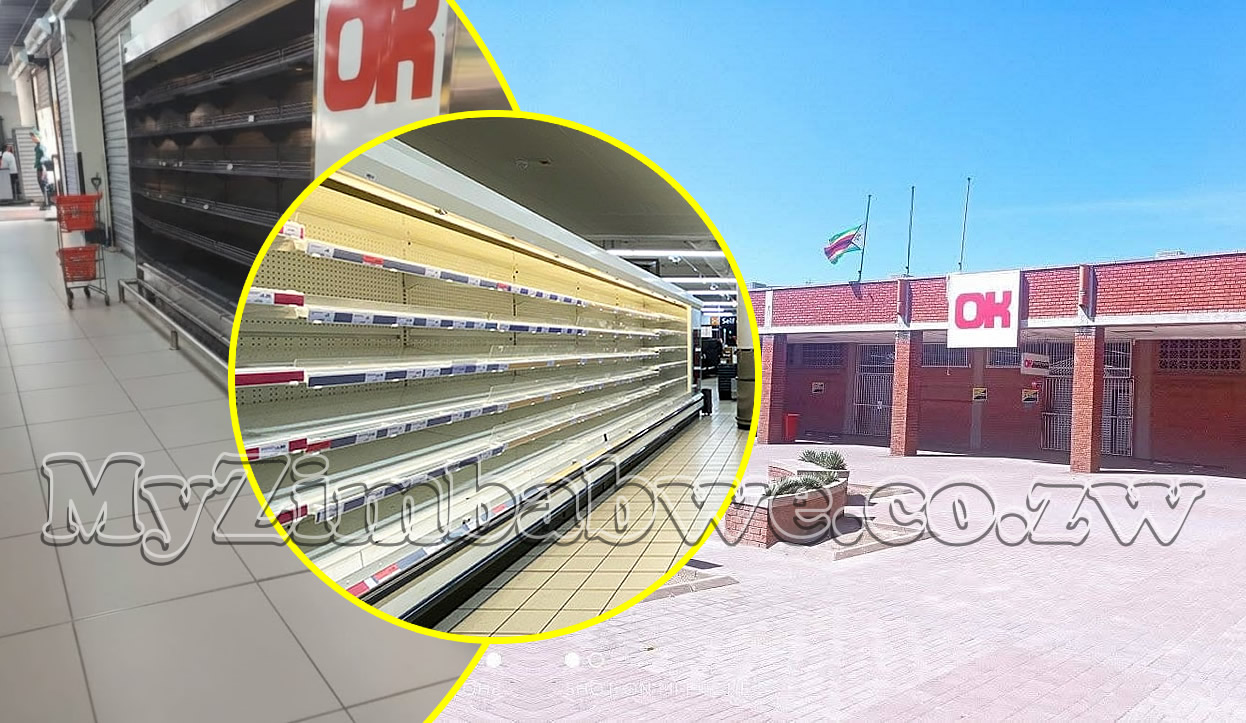
OK Zimbabwe has launched an aggressive recovery drive aimed at bringing empty shelves, closed branches and lost customers back to life after one of the most difficult periods in the supermarket chain’s history.
The retailer has begun a major restocking exercise after securing financial guarantees from two leading local banks. The guarantees have unlocked critical credit facilities, allowing the company to resume purchases from manufacturers and rebuild relationships with suppliers who had scaled back or stopped deliveries during the cash-flow crisis.
Dairibord, ZimGold, Olivine, National Foods and Nestlé are among the manufacturers that have returned to the retailer’s stores. Their products are gradually reclaiming shelf space, giving customers access to a wider range of basic goods and household brands that had become difficult to find in some OK Zimbabwe outlets.
The return of suppliers is central to the company’s recovery plan. For a supermarket, the ability to keep shelves stocked is the foundation of the entire business. It determines whether customers return, whether stores generate daily sales and whether the retailer can produce enough cash to meet wages, rent, transport costs and supplier obligations. Without reliable stock, even a large branch network can quickly lose its commercial value.
OK Zimbabwe is also reopening branches that were shut during the height of its financial troubles. The closures reduced the group’s trading footprint and made it harder for the company to maintain its position in a competitive retail market. Bringing the outlets back into operation is intended to restore customer traffic and reconnect the retailer with communities where its stores had previously been an established part of everyday shopping.
The recovery has been supported by an agreement with major trade creditors to defer the settlement of legacy debts. That arrangement has given OK Zimbabwe additional liquidity and operational headroom at a time when the company needs to spend money on stock and store operations rather than directing every available dollar towards old obligations.
Corporate Rescue Practitioner Bulisa Mbano confirmed that the debt standstills had created the breathing space needed to restart store operations. He said the recovery remained at an early stage, but management was optimistic about stabilising the business.
The latest steps represent a sharp change from the position the company faced earlier in 2026. OK Zimbabwe was placed under corporate rescue with debts reported at about US$37.4 million. The move followed a prolonged deterioration in the retailer’s finances, despite efforts to raise fresh money and reduce its obligations to suppliers and other creditors.
In 2025, the company raised US$20 million from shareholders through a rights issue intended to support a turnaround. A substantial portion of the money was earmarked for settling legacy debts. The expectation was that paying down those obligations would help restore confidence among suppliers and allow normal deliveries to resume.
However, the funds did not immediately produce the hoped-for recovery in stock availability. Much of the money was used to reduce old liabilities, while the company continued to struggle to secure the credit and inventory required to operate its stores at full capacity. The experience exposed the difficulty of rescuing a retailer whose problems are not limited to its balance sheet but also affect its daily ability to trade.
The company had also committed capital to expansion outside its core supermarket operations. About US$5 million was invested in Food Lover’s Market, while approximately US$3 million went into a Bon Marché outlet in Marondera. A further US$800,000 was invested in Alowell Pharmacies. Those ventures were later closed, adding to the pressure on a business already fighting to preserve liquidity and protect its main retail network.
Efforts to raise more money through the sale of properties also fell short of expectations. The disposals generated about US$8.7 million against a target of US$27.7 million. Proceeds from the sale of properties in Gweru and Malvern included about US$2.6 million used to settle obligations to NBS Bank.
That history explains why the latest bank guarantees are important. The guarantees do not simply provide another source of funding; they have helped persuade manufacturers that OK Zimbabwe can once again place orders and honour the arrangements attached to them. The return of major suppliers, in turn, gives the retailer a chance to generate sales from a more complete product range.
The company’s immediate challenge is to turn that improved access to stock into consistent trading performance. Reopening branches will require staff, security, transport, electricity, maintenance and working capital. Stores must also keep the right products available, maintain competitive prices and provide a dependable shopping experience if they are to win back customers who changed their habits during the crisis.
The retailer will therefore need to manage its recovery carefully. A sudden increase in stock can improve the appearance of stores, but long-term stability will depend on regular deliveries, disciplined cash management and the continued support of creditors and financial institutions. The agreement to defer legacy debts has provided time, but the business must use that time to rebuild sales and restore confidence across its operations.
For customers, the most visible sign of the turnaround will be the shelves. Familiar brands returning to the stores and previously closed branches opening their doors again will indicate whether the recovery has moved beyond an emergency rescue and become a sustained rebuilding effort.
OK Zimbabwe is not yet declaring victory. The rescue is still in its early stages, and the company is coming back from a serious financial crisis that weakened its supply lines and reduced its operating network. But the combination of bank-backed credit, returning manufacturers, deferred legacy debts and reopening branches has given the supermarket chain a new opportunity.
Its strategy is straightforward: secure the confidence needed to buy stock, refill the stores, restore the branch network and bring customers back. After months in which the retailer’s survival was in question, OK Zimbabwe is now attempting to prove that a supermarket once pushed to the edge can still rebuild itself one delivery, one shelf and one reopening at a time.