


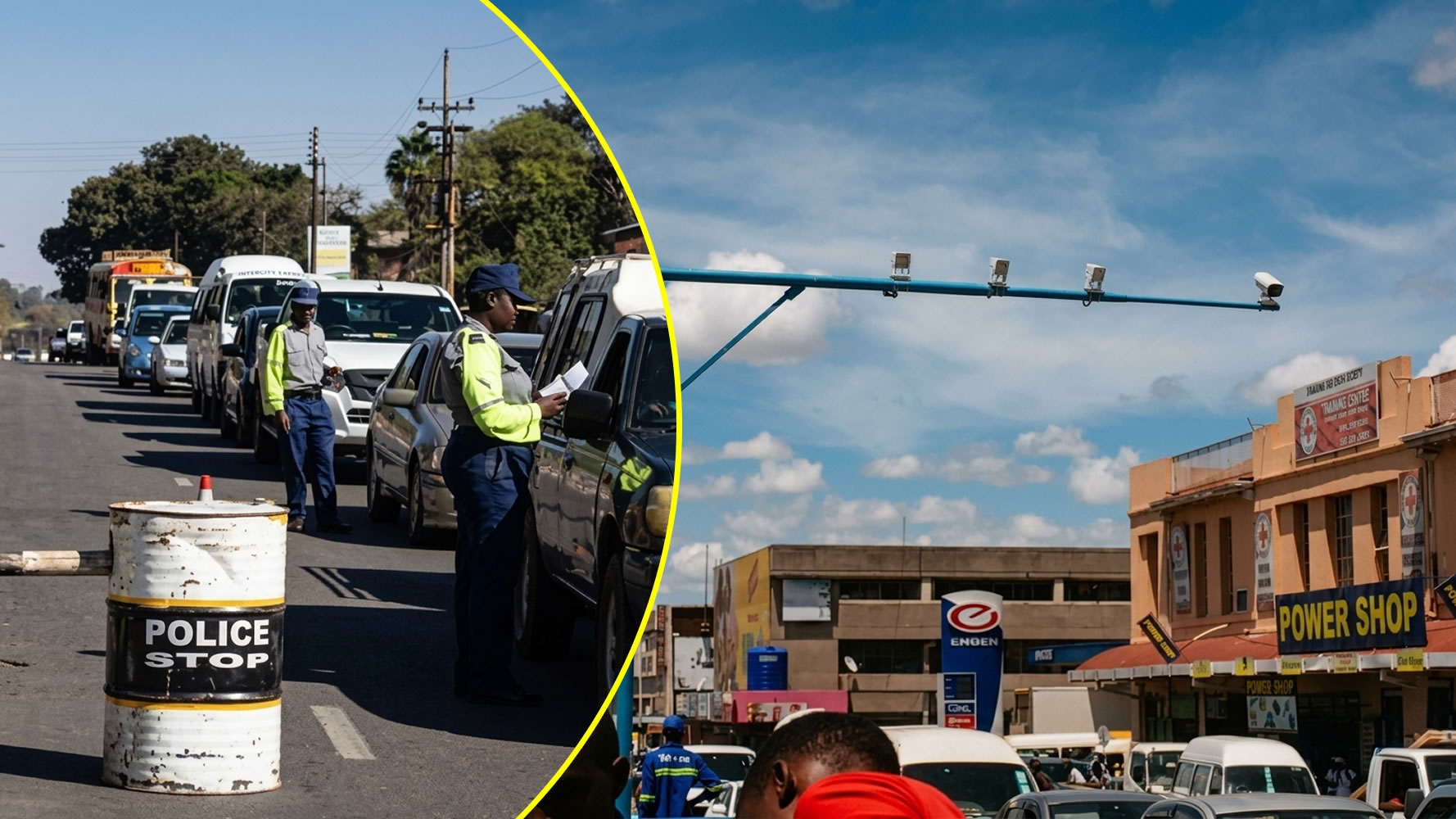
Zimbabwe is preparing legislation that could cancel the driving licences of motorists who repeatedly break traffic rules, as the Government moves to introduce a formal demerit points system for habitual offenders.
Transport and Infrastructural Development Minister Felix Mhona told Parliament that investigations were under way to create the legal framework. Under the proposed system, drivers would accumulate points for traffic offences and could eventually lose their licences after reaching a prescribed threshold.
“It is true that as the Ministry of Transport, we are conducting investigations into the law to come up with measures to address the issue of demerits for drivers so that in the end, should you reach a certain number of points, your licence will become null and void,” Minister Mhona said during the Question and Answer session.
The proposal comes as authorities continue to grapple with fatal crashes involving speeding, dangerous overtaking, overloaded vehicles, unroadworthy cars and drivers who remain behind the wheel after repeated offences. The minister said the loss of life on the country’s roads had made stronger intervention necessary.
“It is quite sad that we still have drivers who are causing a lot of accidents, but they continue to drive,” he said.
At present, courts already have the power to cancel a driving licence in serious cases. Minister Mhona said a court could remove a driver from the road where reckless conduct had created a risk of death. The planned points system would add a continuing record of offences, allowing action to be taken against repeat offenders before their conduct results in a fatal crash.
“At the moment, our courts can cancel your licence if they see that you are a reckless driver and you could have caused the death of people on the road,” he told legislators.
The proposed law is expected to be brought before Parliament after consultations with interested parties. The ministry is also expected to hold public hearings before the Bill is formally tabled, giving motorists, transport operators, road-safety organisations and other stakeholders an opportunity to comment on how the system should work.
“It is a law that we want to put in place, and we will be coming back to this august House to come up with this particular act,” Minister Mhona said.
He added: “As we have been urged by His Excellency the President, that is to ensure that all those that are involved in the transport sector should put their hands together so that we can come up with stronger legislation that will curb the carnage that is occurring on the road.”
Demerit systems are already used in several prominent countries, although the rules differ from one jurisdiction to another. In Australia, the system is administered by states and territories rather than through one national scheme. Drivers begin with a clean record and receive demerit points for offences such as speeding, dangerous driving and using a mobile phone while driving. When a driver reaches the applicable limit, the licence may be suspended. The number of points and the length of the suspension depend on the driver’s licence class and the rules in the state or territory where the offence is recorded.
In New South Wales, for example, drivers face a suspension when they reach their demerit-point limit. Learner and provisional drivers have lower thresholds than unrestricted licence holders, while holiday periods may bring double-demerit penalties for selected offences. A driver who loses the right to drive must observe the suspension or disqualification period, and further sanctions can follow if the person drives while banned.
New Zealand also operates a points-based system. Demerit points are added for specified offences, and a driver who collects 100 or more points within a 2-year period may have their licence suspended for 3 months. Serious offences can bring immediate court-imposed disqualification, separate from the accumulation of points. Points remain part of the driver’s record for a defined period, meaning repeated violations can affect a motorist long after a single roadside stop.
The United Kingdom uses penalty points, known as endorsements, on driving records. The rules are particularly strict for newly qualified motorists. A new driver who receives 6 or more penalty points within 2 years of passing the test has their licence revoked. To drive legally again, that motorist must apply for a new provisional licence, pass the theory test and pass the practical driving test once more. A court can also impose a driving disqualification for serious offences or for accumulating too many points under the relevant rules.
These systems generally distinguish between a temporary suspension and the cancellation or revocation of a licence. A suspension removes the right to drive for a set period, after which the motorist may regain the licence if all conditions have been met. Cancellation is more severe. It normally ends the existing licence and may require the driver to apply afresh, meet medical or administrative requirements and pass one or more tests before being allowed back on the road. In some cases, a court or licensing authority may impose a longer disqualification, particularly where a driver has caused serious injury or death, driven under the influence of alcohol or drugs, or continued driving during an earlier ban.
The details of Zimbabwe’s proposed threshold, the offences that would attract points, the period for which points would remain active and the procedure for restoring a cancelled licence have not yet been announced. Those matters are expected to be addressed during the investigations and consultations before the Bill reaches the House. The system will also require an accurate national record linking traffic offences to individual licences so that points are allocated consistently and cannot be removed through informal arrangements.
Supporters of the education requirement say professional drivers need to understand road signs, written instructions, safety notices, journey records and official documentation. Mathematics is also relevant to basic calculations involving distances, time, fuel, loads and fares. The proposal would mark a significant change for applicants who currently qualify through driving instruction and testing without the same academic requirement.
The planned demerit system and the professional-driver education proposal form part of a wider legislative programme in 2026. One of the most closely watched measures has been Constitutional Amendment Bill No. 3, commonly referred to as CAB 3 during its passage and now as CAA3 after enactment. The Bill moved through Parliament at speed and became one of the year’s most prominent pieces of legislation, alongside continuing public debate over its constitutional and political consequences.
Cabinet has also approved the Municipal Police and Courts Bill. The proposed law would give municipal police a wider role in enforcing local authority by-laws, traffic rules and other minor offences. It provides for municipal police services, the apprehension of offenders and dedicated municipal courts to hear certain municipal, traffic and minor cases. The measure is intended to strengthen local enforcement and improve service delivery, but its practical effect will depend on how the new powers are defined, supervised and applied in towns and cities.
For motorists, the proposed demerit law would create a system in which a pattern of offences follows the driver rather than ending with each separate fine. A speeding ticket, dangerous manoeuvre or other violation could become part of a cumulative record. Once the legal threshold is reached, the driver could face suspension or cancellation, depending on the final wording of the Bill.
The ministry has not said when the legislation will be tabled. It has, however, made clear that public hearings and stakeholder consultations will take place before the proposal is presented to Parliament. Until then, drivers remain subject to the current laws, including the power of the courts to cancel licences in serious cases. The Government’s stated objective is to remove persistent offenders from the road and reduce the number of families losing relatives in preventable crashes.