


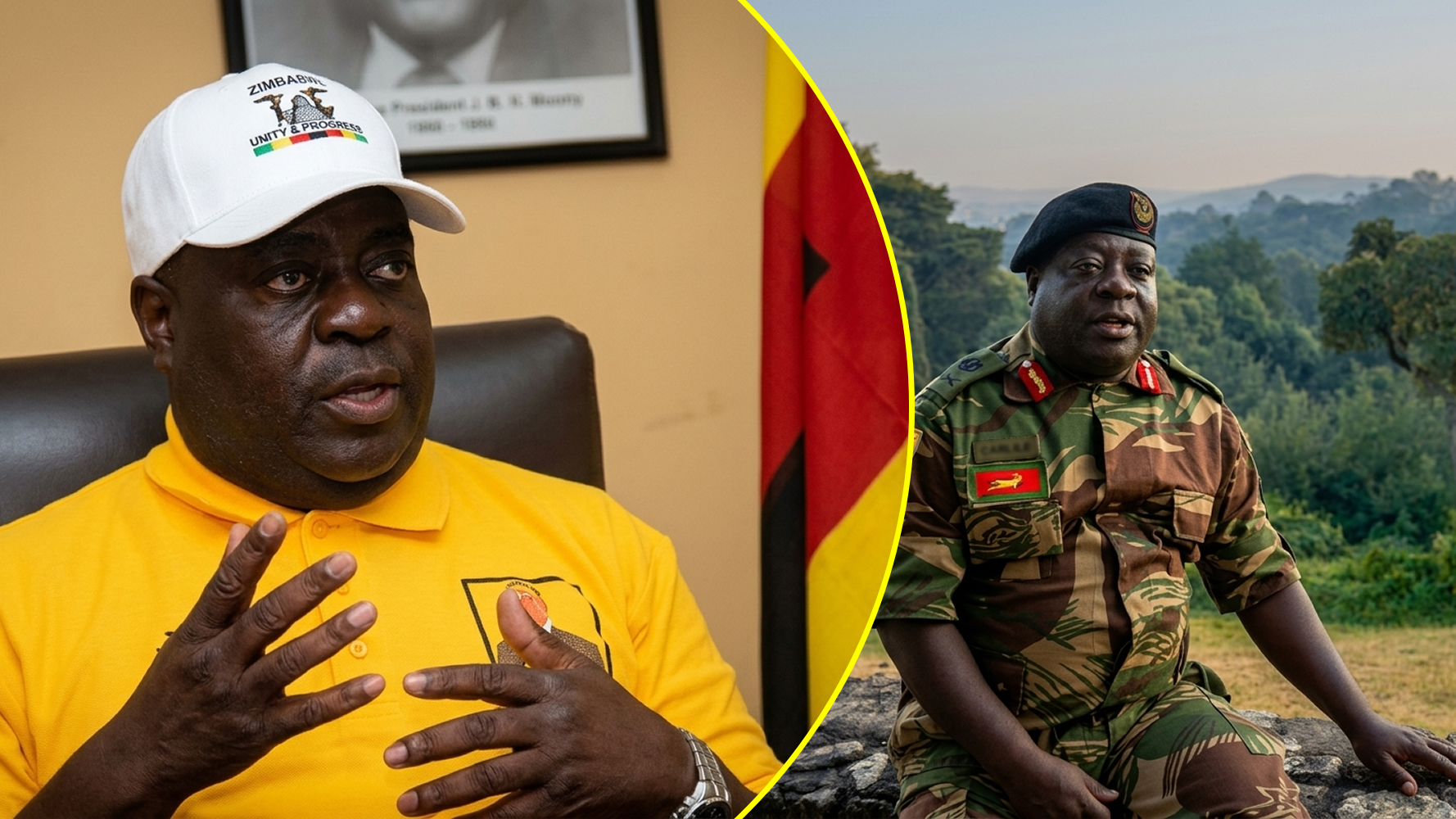
HARARE – Retired Lieutenant-General Engelbert Rugeje has refused a proposed appointment as Zimbabwe’s ambassador to Mozambique, following the death of his predecessor, Victor Matemadanda, and the earlier death of another retired army commander who held the same post, Douglas Nyikayaramba, The News Hawks has reported.
Rugeje, a Zanu PF politburo member and a close ally of Vice-President Constantino Chiwenga, was lined up by President Emmerson Mnangagwa to replace Matemadanda, who died in June while serving as Zimbabwe’s envoy to Mozambique and Eswatini. The proposed posting was also expected to cover the diplomatic responsibilities attached to the two missions.
People familiar with the discussions said Rugeje declined the appointment for political, security and economic reasons. The account places the decision within the long-running struggle between Mnangagwa and Chiwenga, two men who worked together to remove Robert Mugabe in November 2017 before becoming rivals in the contest over Zimbabwe’s future leadership.
The proposed appointment was first linked to Rugeje after Matemadanda’s death. A senior source familiar with discussions at State House said President Mnangagwa was preparing to send the retired general to Maputo.
“His Excellency is assigning Gen Rugeje to Mozambique shortly,” the source said.
Rugeje’s refusal means that a diplomatic posting intended to remove a senior figure from Zimbabwe’s political and security establishment has instead exposed the unease surrounding the mission. The ambassadorial role has been held in succession by former senior military and political figures who were once influential in Harare before being moved into diplomatic service.
The latest account suggests that Rugeje was not persuaded that the assignment would serve his interests. Insiders said he was concerned that the post offered little financial benefit compared with his current work.
“Rugeje says he is doing some consultancy work now and is earning some reasonable amounts, while living a decent lifestyle, but being an ambassador is a route to poverty,” a source said.
The economic concern was summed up more bluntly by people familiar with his position: “there is no money there”.
The political calculation was equally important. Rugeje was one of the senior officers associated with Chiwenga’s military network during the 2017 transition. After Mugabe’s removal, he was taken out of the army and appointed Zanu PF national political commissar in December 2017. He remained in that position until June 2019, when President Mnangagwa said Rugeje had been removed from the position of National Political Commissar ‘pending redeployment’.
The commissar’s office controls party mobilisation, structures and election organisation, but it has also been used to move powerful figures away from the centres of security influence. Rugeje’s appointment followed the military intervention that brought Mnangagwa to the presidency and Chiwenga to the vice-presidency.
Rugeje’s time in the party post was marked by an internal contest over who should control the ruling party’s machinery. Chiwenga used his influence to support Rugeje, while Mnangagwa wanted Matemadanda to take the position. Matemadanda eventually replaced Rugeje in June 2019 and served as political commissar until 2021.
Patrick Chinamasa was appointed acting political commissar after Matemadanda’s departure. Mike Bimha later held the post from December 2021 to May 2024, followed by the incumbent, Munyaradzi Machacha.
Rugeje did not return to a major operational military role. After leaving the commissar’s office, he was promised the position of vice-chancellor at the Zimbabwe National Defence University, but the appointment did not materialise. He was also passed over for command of the Zimbabwe National Army after the death of Lieutenant-General Edzai Chimonyo in July 2021.
Instead, retired Lieutenant-General David Sigauke became army commander in July 2021 and served until October 2023. Lieutenant-General Anselem Sanyatwe, another figure associated with Chiwenga’s camp, then took over and served until March last year, before being moved from the military command structure.
These appointments formed part of a wider pattern in which senior commanders linked to Chiwenga were retired, reassigned or moved into civilian posts. The changes reduced the direct influence of the military figures who had played a central role in the 2017 transition and increased Mnangagwa’s control over the state and ruling party.
Rugeje’s supporters saw the moves as a sustained effort to isolate him. He was no longer in command of troops, was removed from the party office in which he had built a political base and did not receive the senior institutional appointments that had been discussed for him.
His proposed posting to Maputo therefore carried a political meaning beyond ordinary diplomatic rotation. It would have placed him outside Zimbabwe’s domestic power centres while giving the presidency control over his next official role. People familiar with the matter said he regarded the assignment as another attempt to sideline him rather than as a promotion that offered meaningful influence.
Security was another concern. Rugeje has survived incidents that people close to him linked to the succession struggle around Mnangagwa and Chiwenga, including a shooting incident and suspected poisoning. His unease was heightened by the deaths of two former occupants of the Maputo post, although the circumstances of those deaths were different.
Nyikayaramba was appointed ambassador to Mozambique in 2019 after leaving active military service. He, just like Rugeje and Matemadanda, had also been one of the senior officers involved in the 2017 military intervention and was regarded as a strong supporter of the ruling party. Before his diplomatic appointment, he served in senior army positions, including as chief of staff for administration at Zimbabwe National Army headquarters.
He died in Harare on 9 February 2021 after contracting Covid-19. He was 64. Reports at the time said he had been on official leave when he became ill and later died at St Anne’s Hospital. His death came during a period when several senior Zimbabwean officials were dying from coronavirus complications.
Other former army generals who also died of Covid-19 in the same year include Retired Lieutenant-General Sibusiso (SB) Moyo, Retired Major-General Paradzai Zimondi, and Major-General (Retired) Clever Shadreck Chiramba.
Nyikayaramba was later declared a national hero and buried at the National Heroes Acre in Harare. His diplomatic posting lasted less than two years, and his death left the Maputo mission without its ambassador. Victor Matemadanda then succeeded him in 2021. His route to the embassy had also followed a dramatic political rise and a sudden removal from influential domestic positions.
Born in Gokwe on 3 March 1960, Matemadanda was a war veteran and a prominent critic of Mugabe. As secretary-general of the Zimbabwe National Liberation War Veterans Association, he became one of the most outspoken figures challenging Mugabe’s rule. He was arrested in 2016 after helping to author a communique that condemned Mugabe’s leadership.
During the November 2017 transition, Matemadanda mobilised war veterans and other political supporters behind the campaign to remove Mugabe and install Mnangagwa. After the change of government, he became Zanu PF national political commissar and took charge of the party’s mobilisation structures.
He also won the Gokwe Central parliamentary seat in 2018 and was appointed deputy minister of defence and war veterans affairs. His public interventions were often forceful, and he became one of the most recognisable defenders of the new administration.
In March 2021, however, Matemadanda was removed from the commissar’s office and lost his deputy ministerial responsibilities. He was then sent to Mozambique as ambassador, with additional accreditation to Eswatini. The posting placed him in charge of relations with two neighbouring countries while moving him away from the ruling party’s internal command structure.
During his diplomatic service, Matemadanda worked on the identification, preservation and reburial of Zimbabwean liberation fighters who died or were buried in Mozambique. The work included sites associated with the liberation struggle in Chimoio, Tete and Nyangawo.
“Ambassador Victor Matemadanda passed away last night. This is a deeply saddening loss. Dr. Matemadanda served as Zimbabwe’s Ambassador to the Republic of Mozambique and the Kingdom of Eswatini. Sincere condolences go to His Excellency the President, whom he represented with dedication, and to his family, friends, colleagues and the nation at large.”
The death created the vacancy that led to the approach to Rugeje. It also revived attention on the way Zimbabwe’s government has used diplomatic appointments for former military commanders, party officials and political allies.
For Rugeje, the decision to decline the post leaves him outside the formal diplomatic chain while preserving his current private work and lifestyle. It also prevents the government from placing another Chiwenga-aligned former general in an embassy that has become closely associated with the political transition, military retirements and the succession struggle.
The Foreign Affairs Ministry and Rugeje did not respond to requests by The News Hawks for comment on the proposed appointment and his refusal. Until a new envoy is formally named, Zimbabwe’s diplomatic representation in Mozambique and Eswatini remains the subject of close attention within the ruling party and the security establishment.
The Maputo vacancy has consequently become more than a routine change of ambassador. It is the latest episode in the removal of former military power brokers from domestic politics, the continuing rivalry between Mnangagwa and Chiwenga.