


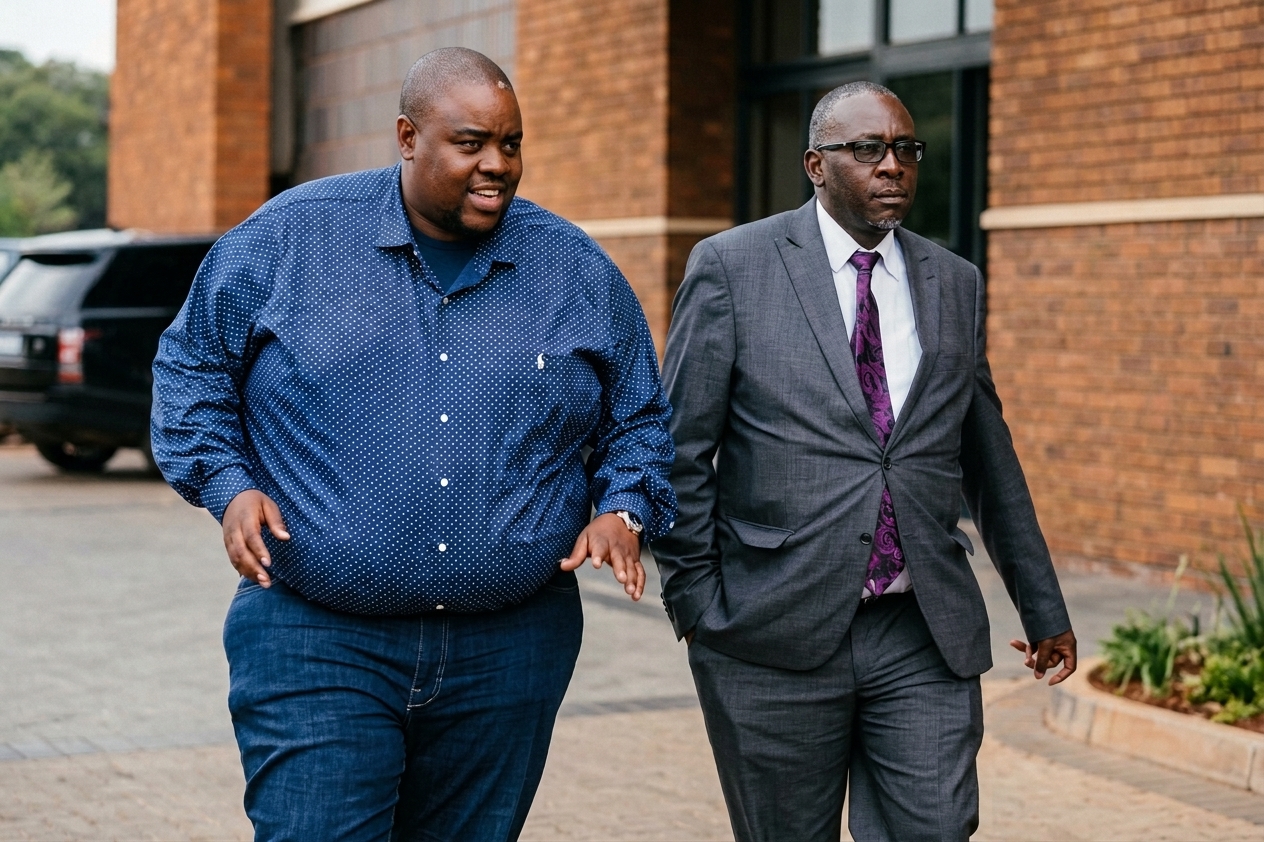
Advocate Dr Lewis Uriri has rejected a gift package worth US$350,000 from businessman Wicknell Chivayo, refusing a new Range Rover Sport and cash for himself and his wife after deciding that the offer could affect the appearance of his professional independence.
Chivayo had publicly announced that Uriri should collect a brand-new 2026 Range Rover Sport Autobiography valued at US$250,000. He also offered the senior lawyer US$50,000 in cash for fuel and promised another US$50,000 to Uriri’s wife, who is also a senior lawyer. The combined value of the offer was US$350,000.
The announcement was made in a lengthy public tribute in which Chivayo praised Uriri as a “lawyer par excellence”. He credited the advocate with defending him fearlessly in several legal battles over the years and presented the gifts as a way of recognising that work.
Uriri and his wife have now declined all three gifts. In a carefully worded response, the advocate said the announcement had arrived without warning and that the distance between the two men made the offer especially sensitive.
“Your announcement came as a complete surprise, without prior notice or discussion,” Uriri said.
“Given the distance that has developed between us since our last conversation, the substantial nature of the gifts, and their express connection to past professional services, I must approach this gesture with particular care.”
Uriri said the last conversation between them had taken place in June 2024. He added that he had not carried out any professional work for Chivayo since then and that the earlier legal work mentioned in the tribute had already been paid for in full.
“The historical work to which your tribute refers was performed in my professional capacity and paid for in full. My remuneration was for services actually rendered,” he said.
The advocate said lawyers were expected to protect their integrity, independence and the confidence placed in the legal profession. He said accepting valuable personal gifts after a professional relationship had ended could create the impression that a further financial obligation existed between the lawyer and client.
“Applying those standards to these circumstances, I consider it necessary to decline benefits that could reasonably create a perception of personal financial obligation extending beyond a concluded and fully remunerated professional engagement,” he said.
“My wife and I attach great importance to preserving both our professional standing and public confidence in our independence.”
Uriri made clear that the decision was final, despite acknowledging the generosity behind the gesture.
“We appreciate the generosity expressed and your acknowledgment of my past work. Our decision is nevertheless firm: we will not accept the vehicle or either of the cash gifts,” he said.
“We wish you well and trust that you will understand and respect our position.”
The lawyer behind Chivayo’s major court battles
The offer came from a businessman who has relied on Uriri in some of the most important legal disputes of his career.
In 2018, Uriri represented Chivayo personally in a criminal case involving allegations of fraud, money laundering and breaches of Zimbabwe’s Exchange Control Act. The charges were connected to money received in relation to the Gwanda solar project. Chivayo denied wrongdoing and faced repeated delays as prosecutors amended the charge sheet.
During one of the hearings, Uriri told the court that the defence would challenge the charges after they had been changed three times.
“We formally put it on record that the accused is excepting to the charges,” Uriri said.
The lawyer argued that the State should put its case in order before the matter proceeded. Chivayo later successfully applied for discharge at the close of the State’s case and was acquitted of the fraud charges.
Uriri also represented Intratrek Zimbabwe, Chivayo’s company, in its long-running dispute with the Zimbabwe Power Company over the 100-megawatt Gwanda solar project. The project had been awarded to Intratrek after a competitive tender. The company argued that the contract had been unlawfully terminated and sought specific performance or damages of US$22 million.
The dispute moved through the High Court and the Supreme Court. The courts upheld the validity of the contract and rejected the challenge brought against the earlier judgment. Uriri was among the advocates who argued the case for Intratrek and Chivayo’s business interests.
Those cases explain why Chivayo described Uriri as a lawyer who had stood by him in difficult legal battles. They also explain why Uriri’s refusal has attracted attention. The advocate is not a stranger to Chivayo’s affairs, but he has drawn a firm line between fees earned for legal work and personal benefits offered after that work has ended.
A lawyer with a record of challenging power
Uriri’s career has also included cases in which he challenged decisions made by powerful institutions, including the executive branch of government.
He became nationally known after representing President Emmerson Mnangagwa in the Constitutional Court challenge brought by Nelson Chamisa after the 2018 presidential election. Chamisa sought to overturn the result of the election, alleging that the poll had been affected by irregularities and that the declared outcome should not stand.
Uriri argued for Mnangagwa as the petition was heard in August 2018. He said the opposition case contained bold allegations and political rhetoric but did not produce the forensic evidence needed to overturn the result. The Constitutional Court dismissed the petition with costs, leaving Mnangagwa as president.
The case placed Uriri at the centre of one of the most closely watched legal proceedings in Zimbabwe’s recent political history. Yet his later work showed that representing the president did not prevent him from criticising the administration when he believed constitutional limits had been crossed.
After the election case, Uriri represented suspended University of Zimbabwe vice-chancellor Levi Nyagura in a corruption matter. During the proceedings, he challenged the creation of a special anti-corruption investigative unit under the Office of the President. He argued that the unit had been created without Parliament and threatened the independence of the National Prosecuting Authority.
That record has shaped Uriri’s public reputation as an advocate who accepts difficult cases but remains protective of the independence of the Bar. He practises at Harare’s independent referral bar and is Head of Chambers at The Temple Bar. He is also the founding President of the Zimbabwe Inns of Court.
His practice covers commercial, corporate, investment and constitutional litigation. He works on referral from attorneys and chartered accountants in tax advisory matters. He is listed as an arbitrator with the Commercial Arbitration Centre in Harare and is one of Zimbabwe’s four designated representatives to the World Bank’s International Centre for Settlement of Investment Disputes.
Two other high-profile refusals
Uriri’s decision follows two other public rejections of valuable offers made by Chivayo to people holding influential positions in Zimbabwe.
Nqobile Magwizi, the president of the Zimbabwe Football Association, declined a 2026 Range Rover Sport valued at about US$250,000. Magwizi later disclosed that he had also declined an offer of a Toyota Land Cruiser made during election-related work the previous year.
He said he consulted his governance advisers before turning down both vehicles. His decision was based on the FIFA Code of Ethics, which bars football officials from accepting gifts that could create a conflict of interest or appear to influence their official duties.
Chivayo’s business interests have included financial support for Premier Soccer League clubs, including Highlanders and Scottland. Magwizi said accepting a personal vehicle from a businessman linked to football would have created a serious conflict, or at least the appearance of one, because ZIFA oversees and regulates the sport.
He also addressed claims that vehicles had been promised to ZIFA councillors in exchange for support during the presidential election process. Magwizi said he had never been offered such a vehicle and had not solicited or encouraged any such arrangement. Both he and Chivayo denied the allegations.
Guti’s refusal was presented as a question of spiritual principles and the legacy left by her late husband. Church officials said the ministry accepted giving to God but insisted that donations should follow its teachings and should not compromise its principles.
“There was no mind and will of God there. … So, I followed my father,” Guti said.
The church also said the family had learned about the personal offer through social media rather than through a formal approach. The matter was therefore treated as something that could not be accepted simply because it had been announced publicly.
“The church accepts and encourages people to give to their God. But they must do so following strictly the teachings from our father, which are all drawn from the word of God. The word of God is sufficient for us. It is the Kingdom of God with all the treasures in it,” a senior church official said.
“We are an indigenous church founded on the principle of righteousness. Our father, Professor Guti, was promoted to glory, but he left us with the Kingdom of God, which has everything that you can think of. The Kingdom of God is enough for us.”
Chivayo’s public gifting campaign
The refusals have come as Chivayo’s public gifting campaign has grown into one of the most recognisable features of Zimbabwe’s celebrity and political culture. His gifts have included Mercedes-Benz vehicles, Toyota sport utility vehicles and Range Rovers, often accompanied by large cash payments.
Recipients have included musicians, gospel singers, footballers, church leaders and people linked to the governing Zanu-PF party. The gifts are commonly announced on social media, with recipients told where to collect vehicles from dealerships in Harare.
The businessman has built a public image around displays of wealth, luxury vehicles and high-profile relationships. He has said that his main businesses involve government tenders, renewable energy, engineering, procurement and construction, while his company has also been linked to telecommunications through a Starlink partnership.
His wealth and political connections have attracted scrutiny. In 2024, the Zimbabwe Anti-Corruption Commission opened an inquiry after claims were made about a tender to supply election materials. Chivayo denied the allegations and said an audio recording connected to the claims was fake. The Zimbabwe Electoral Commission denied having dealings with him in that matter.
Against that background, Uriri’s rejection carries a message that is both personal and professional. He represented Chivayo in court when the businessman faced criminal charges and later acted for his company in a major commercial dispute. Chivayo publicly praised that work with an offer worth hundreds of thousands of dollars.
Uriri answered by insisting that legal service ends with the work performed and the agreed fee paid. He and his wife have now declined the vehicle and both cash payments, choosing to preserve the distance that he says must exist between professional representation and personal reward.