


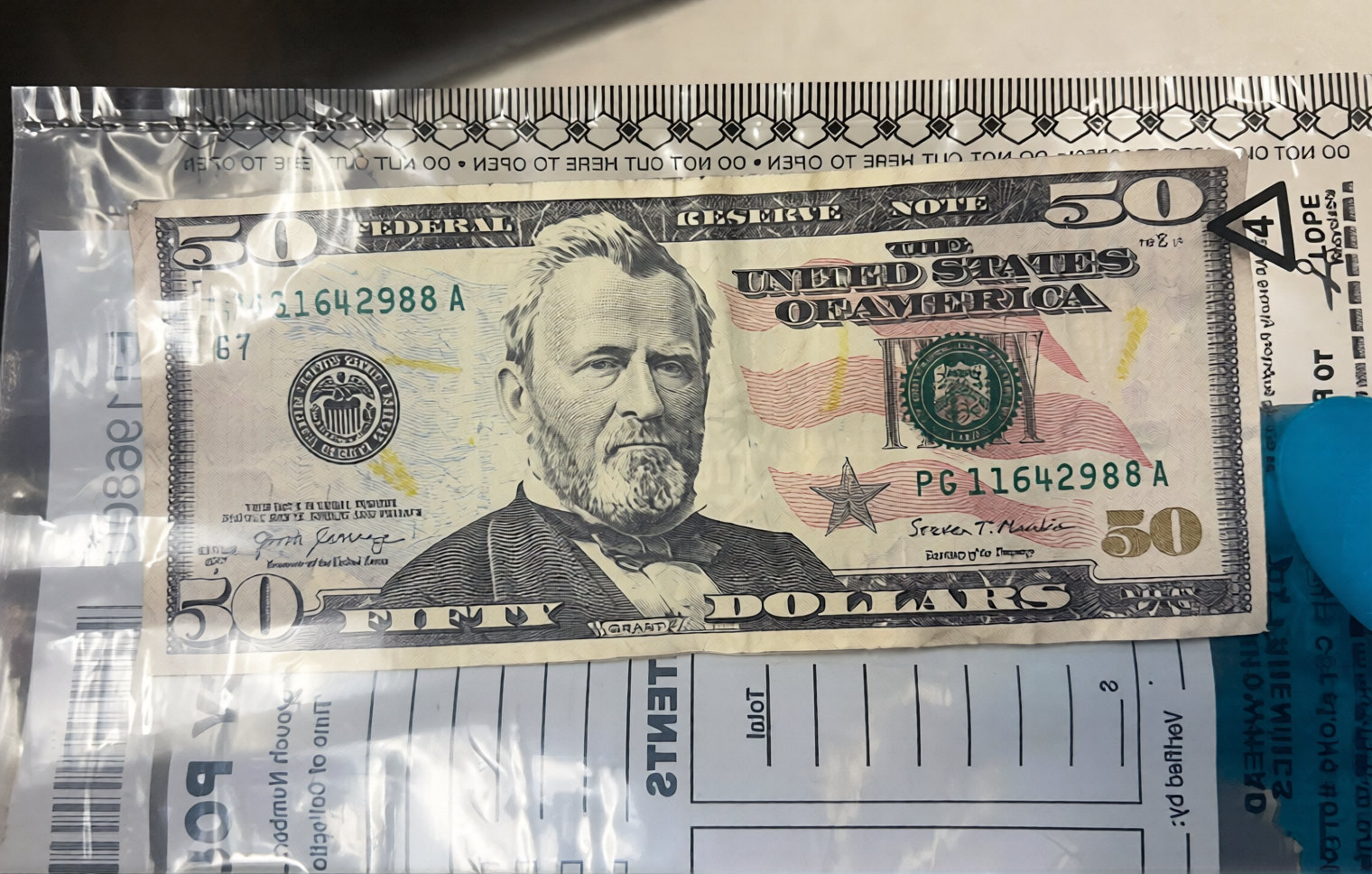
A Hwange man who allegedly tricked a chicken seller out of US$35 by claiming that he had a US$50 note at home has been jailed for fraud, as police in other parts of Zimbabwe move against suspects accused of using counterfeit or disguised cash to obtain genuine United States dollars as change.
The cases, reported in September, have brought renewed attention to a familiar form of deception in which criminals use the promise of a larger banknote, a bundle of smaller notes or a fake high-denomination note to persuade traders and attendants to hand over real money. In Zimbabwe, counterfeit notes are commonly referred to as zviduura, or chiduura when referring to a single note.
In Hwange, Innocent Mwale, also known as Obodo, 39, of E26 Madumabisa, pleaded guilty to fraud as defined in Section 136 of the Criminal Law (Codification and Reform) Act [Chapter 9:23]. He was sentenced to 14 months in prison, with six months conditionally suspended for five years.
A further two months were suspended on condition that Mwale pays back US$35 to the complainant, Ms Ropafadzo Machenjedze, by October 11. The sentence leaves him with an effective six-month prison term.
The court heard that Mwale approached Machenjedze, 34, at her home in Railways, Hwange, at about 7pm on September 3. He ordered two broiler chickens valued at US$15 and then told her that he had a US$50 note at his home. He asked her to give him US$35 in change, promising to return with the larger note.
Believing that he would come back with the money, Machenjedze handed over the change. Mwale then went to a house near the National Railways of Zimbabwe surgery, apparently pretending to collect the US$50 note. Instead, he allegedly slipped out through the back door and disappeared.
Machenjedze realised that she had been deceived and reported the matter to the police. Mwale was later arrested. Nothing was recovered, and the complainant suffered a loss of US$35. The court was also told that Mwale was known in the community for his involvement in criminal activities.
The Hwange case came as three people were arrested after a separate cash-exchange trick at a service station in Chinhoyi’s light industrial area. The incident happened on September 14, when the suspects allegedly approached an attendant in a white Toyota RAV4 and offered to exchange US$10 notes for US$100 notes.
Police identified the suspects as Freedom Chipano, 43, Nyasha Chabata, 33, and Shamaine Nyandoro, 35. The attendant reportedly handed them five US$100 notes, amounting to US$500.
The suspects allegedly responded with a tightly bound bundle of bond notes. A single US$10 note had been placed on top of the bundle and the money was secured with a rubber band, creating the appearance that the entire bundle contained United States dollars. The trio then fled towards Chegutu along the Chinhoyi-Chegutu Road.
Police were alerted and officers in Zvimba intercepted the vehicle before the suspects could get away. All three were arrested. The Toyota RAV4 was identified as registration number AFN 1446.
The Zimbabwe Republic Police said the arrests followed a swift response to the report. In a statement on the incident, police said: “On 14/09/26, Police in Chinhoyi swiftly responded to a report of fraud at a service station in the light industrial area of Chinhoyi, resulting in the arrest of three suspects, namely Freedom Chipano (43), Nyasha Chabata (33) and Shamaine Nyandoro (35).”
The statement added: “The suspects, who were travelling in a white Toyota RAV4 vehicle, registration number AFN 1446, allegedly approached a service station attendant and offered to exchange US$10 notes for US$100 notes. The attendant handed the suspects five US$100 notes, totalling US$500.”
Police further said the suspects handed over a bundle of bond notes with a US$10 note on top before fleeing towards Chegutu. Officers in Zvimba later intercepted and apprehended them.
In another case, a 34-year-old man, Isheanesu Dzimano, was arrested in connection with suspected counterfeit US$100 notes used at two business centres in Chief Nyashanu’s area. Police said Dzimano was acting with three other unidentified suspects during the incidents on September 1.
At about 6.45pm, the group allegedly entered a shop at Tanyiswa Business Centre and bought groceries worth US$11. They reportedly paid with a suspected fake US$100 note and received US$89 in change before driving towards Murambinda.
The shop owner immediately alerted officers at Mutiusinazita Police Base. About 15 minutes later, at around 7pm, the suspects allegedly struck at Mavhungire Business Centre. They bought beer worth US$18, again using a suspected counterfeit US$100 note, and received US$82 change.
The group then drove away in a white Toyota Fortuner. Police followed up and later found the vehicle parked at Muzokomba Business Centre. When officers arrived, three suspects allegedly fled, while the driver was arrested.
A search of the vehicle reportedly led to the recovery of three different registration plates, suspected counterfeit United States currency amounting to US$1,100 in US$100 notes, and suspected counterfeit Zimbabwean currency.
The arrests mirror an earlier police warning that counterfeit US$100 notes were being circulated in Mashonaland West, particularly in Chinhoyi. Police said the people involved were approaching retail shops, service stations, beer outlets and vendors while posing as ordinary customers. They bought low-cost goods or sought to exchange notes, then relied on the need for change to obtain genuine cash.
Police also said the group linked to that warning included both men and women and used different vehicles, including Toyota Fortuners and other expensive cars. The warning urged businesses to examine US$100 notes carefully before accepting them, handing over goods or giving change, and to familiarise themselves with the security features of United States currency and other banknotes.
The recent cases show how quickly the method can move from a small household transaction to a high-value exchange at a fuel station or a series of purchases across several trading centres. In Hwange, the promise of one US$50 note was enough to separate a chicken seller from her change. In Chinhoyi, a rubber-banded bundle was used to give a false impression of value. In Chief Nyashanu, suspected counterfeit US$100 notes were allegedly used twice within minutes.
With one suspect now serving a prison sentence and several others in police custody, traders and cash handlers are being forced to treat every unusual request for change as a potential fraud attempt.