


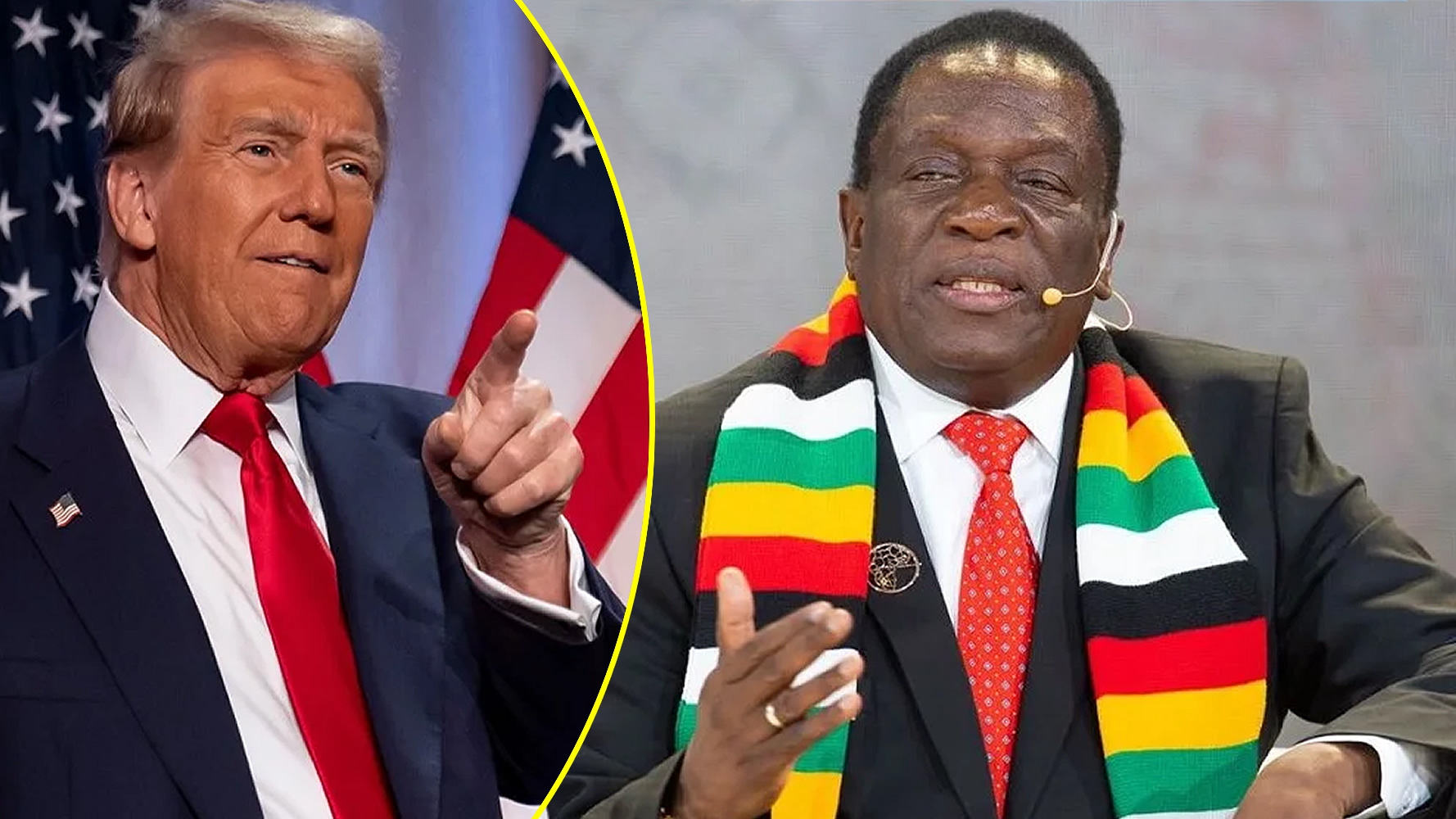
Zimbabwe’s health system is facing a fresh funding crisis after the United States announced that it would wind down its health assistance to the country, following Harare’s decision to abandon negotiations over a proposed US$367 million bilateral health agreement.
The decision puts pressure on clinics, civil society organisations and public health programmes that have depended on American support for years. It also threatens services used by about 1.2 million Zimbabweans living with HIV, including antiretroviral treatment, testing, counselling, laboratory monitoring and medicine distribution.
US Ambassador Pamela Tremont confirmed that Washington would end its health assistance after President Emmerson Mnangagwa’s government rejected the proposed memorandum of understanding. “We will now turn to the difficult and regrettable task of winding down our health assistance in Zimbabwe,” she stated.
The ambassador said the Zimbabwean government had “assured us it is prepared to sustain the fight against HIV/AIDS”. She ended her statement with the words: “We wish them well.”
The announcement came after Zimbabwe halted negotiations over the agreement. A letter dated 23 December 2025 and written by foreign affairs secretary Albert Chimbindi instructed the finance and health ministries to stop discussions on the president’s orders.
The disagreement centred on the terms attached to the proposed funding. Zimbabwean officials objected to provisions concerning national health data, biological samples and the management of major HIV and tuberculosis programmes. They also raised concerns about the way the proposed agreement could give US agencies influence over health infrastructure and information collected from Zimbabwean citizens.
Government spokesman Ndavaningi Mangwana said the arrangement did not offer a fair exchange for the information and biological material that Zimbabwe would be expected to provide.
“At its core, the arrangement was asymmetrical. Zimbabwe was being asked to share its biological resources and sensitive health data with no corresponding guarantee of access to medical innovations such as vaccines, diagnostics or treatments that might result from that data,” Mangwana said.
“This is not a rejection of partnership, but an insistence that partnership be genuine,” he added.
Officials also objected to what they described as a connection between health cooperation and access to critical minerals. Zimbabwe holds deposits of minerals used in high-technology manufacturing, renewable energy and electric vehicles. The alleged link between medical funding and natural resources added to the government’s objections to the agreement.
The immediate concern is the effect on HIV services. American-funded programmes have supported the purchase and distribution of antiretroviral medicines, HIV testing, viral-load monitoring, prevention work, condoms, laboratory supplies, data systems and community outreach. They have also helped clinics provide services to groups that often struggle to obtain care in the public health system.
A previous US funding freeze, imposed in January 2025, showed how quickly the disruption could spread. President Donald Trump’s executive order paused foreign assistance for 90 days while programmes were reviewed. In Zimbabwe, the freeze affected about US$300 million that had been earmarked for the country in 2024 and formed a substantial share of development-partner funding expected in the 2025 national budget.
The impact was felt beyond HIV treatment. USAID-funded work covered malaria, tuberculosis, maternal and child health, agriculture, food security, humanitarian assistance, gender programmes, youth projects and civil society activities. Funding was channelled through implementing partners, meaning that the consequences reached organisations that were not formally part of the US government but relied on its grants to pay staff, run clinics and deliver medicines.
Simon Masanga, permanent secretary in the Public Service, Labour and Social Welfare ministry, acknowledged that many programmes depended on those partners.
“We do not work directly with USAid because their funding goes to implementing partners, who are engaged in various ongoing projects across the country,” he stated. “We will, however, engage USAid to understand the impact of the suspension on their programmes, which are at various levels of implementation across the country.”
Within days of the 2025 freeze, workers lost their jobs and clinics closed. Population Solutions for Health and New Start centres providing free HIV testing, counselling, voluntary medical circumcision, antiretroviral refills and pre-exposure prophylaxis were among the facilities affected.
Chiedza Makura, a 37-year-old HIV nurse and mother of three, said she learned that she had been dismissed through a WhatsApp message sent on the evening of 28 January. She had earned US$500 a month and was responsible for collecting blood samples, screening patients for tuberculosis, supporting tuberculosis prevention, monitoring viral loads and helping patients obtain their antiretroviral medicines.
“I felt shuttered,” Makura said. “My job was my only source of income. I still do not know what to do.”
The cuts also affected clinics serving transgender people, sex workers, gay men, people who use drugs, prisoners and other groups at heightened risk of HIV infection. These facilities offered services that included HIV testing, treatment refills, sexually transmitted infection screening, cervical cancer screening, PrEP and post-exposure prophylaxis.
Gumisayi Bonzo, a director at Trans Smart Trust, said all nine transgender staff who referred patients to clinical services had lost their jobs.
“All nine transgender staff who were referring transgender people for clinical services at PSH clinics lost their jobs,” Bonzo said.
Hazel Zemura, director of All Women Advocacy, said the closures removed safe places where patients could receive several services under one roof.
“These are safe spaces where HIV key-affected populations go for ART refill, STI screening and treatment, viral load testing, cervical cancer screening, PrEP and post-exposure prophylaxis (PEP),” she said.
The interruption has damaged more than the delivery of tablets. Community workers who reminded patients to attend appointments, helped them deal with stigma and followed up on missed treatment have also been affected. Prevention programmes, support groups and mental-health services have been reduced or stopped in some areas.
The United Nations agency responsible for HIV work reported that some organisations supported by USAID and the US Centers for Disease Control and Prevention resumed work after the initial freeze, while others remained paused. Public health facilities continued providing essential services, with Global Fund support available in 21 of Zimbabwe’s 64 districts.
There were still stocks of antiretroviral medicines, HIV test kits, viral-load supplies and other laboratory commodities in facilities and warehouses. But the human resources and logistics needed to distribute those supplies were under pressure. The interruption also affected the country’s District Health Information Software 2 system, which is used to record and monitor health services.
Condom distribution was disrupted, while prevention services for key populations were interrupted. Access to PrEP, testing, counselling, antiretroviral services, opioid agonist therapy and harm-reduction programmes became more difficult in communities that already face stigma and discrimination.
The funding cuts have also reached households. Support workers have reported the loss of food hampers, nutritional assistance, psychological support and education materials for children living with HIV. When those services disappear, families must make difficult choices between transport to a clinic, food, school fees and other daily needs.
Zimbabwe has made major progress in its HIV response. The country reached the UNAIDS 95-95-95 targets among adults in 2023. That means 95 per cent of people living with HIV knew their status, 95 per cent of those who knew their status were receiving treatment, and 95 per cent of people on treatment had achieved viral suppression.
An estimated 1.3 million people in Zimbabwe are living with HIV. That progress has depended on government programmes, community organisations and long-term support from international donors. The US has provided more than US$1.9 billion in health assistance to Zimbabwe since 2006, supporting programmes that helped expand treatment and keep patients connected to care.
Doctors and public health specialists have warned that an abrupt end to the assistance could interrupt treatment, increase transmission, encourage drug resistance and place additional pressure on already overstretched public facilities.
“An abrupt discontinuation of such support could risk treatment interruption, increased transmission, the emergence of drug resistance, and additional strain on the health system,” the Zimbabwe College of Public Health Physicians cautioned.
The organisation called for the two governments to return to negotiations and resolve disagreements over data governance and the management of health programmes. It said technical safeguards could address some of the concerns raised by Zimbabwe.
President Mnangagwa’s spokesman, George Charamba, rejected the doctors’ intervention.
“What they have done is to injudiciously pronounce themselves in respect of a matter which is beyond their knowledge base,” Charamba said. “If they have anything constructive to give, they must do it through their parent ministry.”
The consequences are already visible among community volunteers. Sithabile Garan’anga, a sex worker who worked as a PrEP champion and lay counsellor, said she had been trained to help people remain on treatment and connect them with care.
“It was tough work, but rewarding,” she said. “Now, I cannot help anyone, even though I know how to.”
Another community worker described the loss of support groups for children living with HIV as particularly painful. “Support groups were everything,” Angela said. “Now I see these children walking aimlessly as we are no longer conducting any support group activities. It’s stressful and disturbing. These children had found a family in our groups. Now, all of that is gone.”
People who once received medicines free of charge have reported travelling longer distances or turning to private clinics where they must pay. Shortages of condoms and PrEP have been reported, while some clinics have stopped treating minor conditions that were previously handled during routine visits.
The withdrawal of US health funding therefore reaches far beyond a dispute over one agreement. It affects the staff who provide care, the laboratories that monitor treatment, the community groups that prevent new infections and the families that depend on linked health and social support.
Zimbabwe’s government has said it is exploring other sources of funding, including the health tax collected through airtime, and has been engaging China and the Gates Foundation. The Global Fund remains an important supporter of the national HIV response. But the scale of the gap left by the United States will make the transition difficult.
Calvin Fambirai, executive director of the Zimbabwe Association of Doctors for Human Rights, said the country’s dependence on donors had become a serious vulnerability.
“There is a need to strengthen domestic financing for health to ensure that shocks such as the withdrawal of US support are mitigated,” he said.
Martha Tholanah, an HIV activist, said the government must now move from assurances to action.
“The way it has been done in such an abrupt manner is disruptive, unfair and cruel,” she said. “Our government needs to act. We need to see action, as words alone will not be enough to reassure citizens.”
As the United States begins winding down its health assistance, NGOs are searching for replacement funding, clinics are trying to keep services open and HIV patients are waiting to see whether the treatment systems that sustained them will remain intact. The government’s promise to carry the response alone now faces its most severe test.