


The $367 Million US Health Deal Collapse: What Data Did Washington Really Want From Our DNA?
Zimbabwe has made a stunning move by walking away from a US$367 million health funding deal with the United States, citing “sovereignty” and “data concerns.” To the average citizen, rejecting such a massive sum during a health crisis seems suicidal. However, an investigative report will pull back the curtain on the “lopsided” conditions that President Mnangagwa’s government found so offensive. What exactly was the US demanding in exchange for this aid?
Sources suggest the deal required the sharing of sensitive biological samples and national health data. The Zimbabwean government fears that its citizens’ genetic information could be used for foreign research without local benefit, a practice often referred to as “biopiracy.” This article will explain, in simple English, the concept of biopiracy and why Harare is so wary of such arrangements. We will also investigate the “hidden” clauses regarding the management of HIV/AIDS and TB programmes, which would have given US agencies unprecedented control over local health infrastructure.
While the government frames this as a win for sovereignty, we will also analyse the devastating human cost. With HIV groups already panicking about drug shortages, we will ask: is the protection of data worth the potential loss of lives? This article will simplify the complex geopolitical tug-of-war between Harare and Washington, showing that in the world of international aid, nothing—especially not your DNA—is ever truly free.
The Unravelling of a $367 Million Deal
The United States has announced it will begin winding down health assistance to Zimbabwe after President Emmerson Mnangagwa walked away from negotiations over a proposed bilateral health agreement. This diplomatic rupture puts 1.2 million HIV patients at immediate risk, unless the Zimbabwean government steps up to fill the funding gap.
In a press statement issued after ZimLive revealed the breakdown in talks, US Ambassador Pamela Tremont confirmed the consequences would be swift and sweeping. “We will now turn to the difficult and regrettable task of winding down our health assistance in Zimbabwe,” she stated.
Tremont, who met Zimbabwe’s foreign minister Amon Murwira last week, added that the Zimbabwean government had “assured us it is prepared to sustain the fight against HIV/AIDS.” She concluded with a pointed remark, “We wish them well,” a comment that many observers interpreted as a transfer of responsibility rather than a pleasantry.
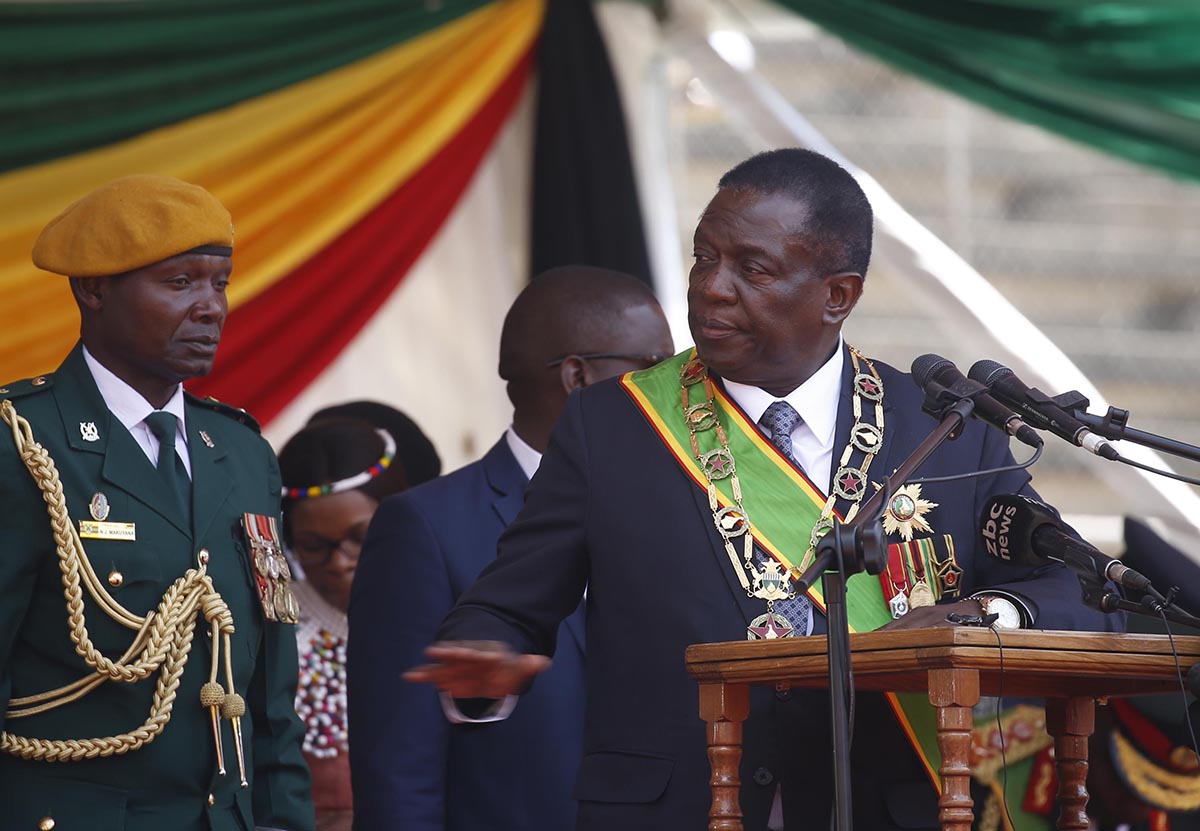
The memorandum of understanding (MoU) was being promoted by Washington as the future framework for US health support to Zimbabwe under its America First Global Health Strategy (AFGHS). However, Harare found its conditions unacceptable on multiple fronts. A letter first reported by ZimLive, dated December 23, 2025, and written by foreign affairs secretary Albert Chimbindi, instructed the secretaries for finance and health to halt all discussions immediately, on direct orders from the president.
“The president has directed that Zimbabwe must discontinue any negotiation with the USA on the clearly lopsided MoU that blatantly compromises and undermines the sovereignty and independence of Zimbabwe as a country,” the letter stated.
Biopiracy and the Battle for Data Sovereignty
Diplomatic sources indicated that President Mnangagwa objected specifically to US demands for access to Zimbabwe’s national health data, which officials characterised as intelligence overreach. This concern over data sharing is at the heart of the dispute. The Zimbabwean government fears that granting extensive access to its citizens’ health data could lead to what is known as biopiracy. Biopiracy refers to the unethical or unlawful appropriation of genetic resources or traditional knowledge, often without fair compensation or benefit-sharing with the original custodians.
In this context, the fear is that Zimbabweans’ genetic information could be used for foreign research, potentially leading to medical innovations or patents, without the country or its citizens receiving any direct benefit or recognition. This raises profound questions about data sovereignty – the idea that data is subject to the laws and governance structures of the nation in which it is collected. For Zimbabwe, allowing external entities unfettered access to such sensitive information is seen as a direct challenge to its national autonomy.
Government spokesman Ndavaningi Mangwana articulated this concern, stating, “At its core, the arrangement was asymmetrical. Zimbabwe was being asked to share its biological resources and sensitive health data with no corresponding guarantee of access to medical innovations such as vaccines, diagnostics or treatments that might result from that data.” He further clarified, “This is not a rejection of partnership, but an insistence that partnership be genuine.”
The Critical Minerals Connection
Adding another layer of complexity to the dispute, the US offer also linked health cooperation to access to critical mineral resources. This revelation has fuelled suspicions that the health aid was not purely humanitarian but was intertwined with broader geopolitical and economic interests. Zimbabwe possesses significant reserves of critical minerals, which are vital for various high-tech industries, including renewable energy and electric vehicles. The perceived linkage between health funding and mineral access has intensified concerns about the true intentions behind the US offer.
This connection has been a point of contention, with Zimbabwean officials viewing it as an attempt to leverage humanitarian aid for strategic resource control. The government spokesman Ndavaningi Mangwana’s statement about the asymmetrical nature of the arrangement gains further weight when considering this alleged link. It suggests a broader strategy by the US to secure access to valuable resources under the guise of health assistance, a narrative that resonates with historical patterns of resource exploitation in Africa.
The Human Cost: HIV/AIDS and TB Programmes at Risk
The immediate and most pressing concern following the collapse of the deal is the potential impact on Zimbabwe’s public health programmes, particularly those addressing HIV/AIDS and tuberculosis. The US has been a significant contributor to these programmes, providing more than $1.9 billion in health support to Zimbabwe since 2006. American-funded programmes are credited with helping Zimbabwe achieve the UNAIDS 95-95-95 targets, which aim for 95% of people living with HIV to know their status, 95% of those diagnosed to be on antiretroviral treatment, and 95% of those on treatment to have a suppressed viral load.
The 1.2 million Zimbabweans currently receiving HIV treatment through US-supported programmes now face an uncertain future as those programmes are wound down. The Zimbabwe College of Public Health Physicians (ZCPHP), the country’s leading professional body for public health specialists, has warned of serious human costs. “An abrupt discontinuation of such support could risk treatment interruption, increased transmission, the emergence of drug resistance, and additional strain on the health system,” the College cautioned in a statement.
Critical pillars of Zimbabwe’s HIV response, including antiretroviral medicines, laboratory commodities, disease surveillance systems, and supply-chain support, remain heavily dependent on external financing, particularly from United States government programmes such as the President’s Emergency Plan for AIDS Relief (PEPFAR). The ZCPHP urged both governments to re-engage constructively, arguing that many of the contentious issues were technical rather than ideological. “Concerns around data governance and implementation frameworks can often be addressed through technical clarification and negotiated safeguards,” the College suggested, offering to provide independent technical expertise to support renewed talks.
However, President Mnangagwa’s spokesman, George Charamba, sharply rebuked the doctors, accusing them of overstepping their mandate. “What they have done is to injudiciously pronounce themselves in respect of a matter which is beyond their knowledge base,” Charamba said. “If they have anything constructive to give, they must do it through their parent ministry.”
A Continental Pushback: Zambia and Kenya’s Experiences
Zimbabwe is not alone in its apprehension regarding US health deals. Other African nations have also expressed concerns about similar agreements. For instance, Zambia has reportedly pushed back on a US health funding deal to protect its interests, echoing Zimbabwe’s stance on sovereignty and data control. A leaked draft of a $1 billion memorandum of understanding between the US and Zambia revealed mandatory targets, sharing of data, and reported access to mining concessions, leading to accusations of ‘shameless exploitation’.
Similarly, a Kenyan court suspended the implementation of a “landmark” $2.5 billion health aid deal signed with the US over data privacy concerns in December 2025. This indicates a growing trend across the continent where African nations are becoming increasingly vigilant about the terms and conditions attached to foreign aid, particularly when it involves sensitive national data and resources. Public health experts in Africa have voiced concerns that US health deals risk shifting control of data and pathogens away from the continent, highlighting the broader implications of these bilateral agreements.
The Geopolitical Tug-of-War
The dispute between Zimbabwe and the US is a microcosm of a larger geopolitical struggle for influence and resources in Africa. Washington’s America First Global Health Strategy aims to secure health partnerships across the continent, with 16 African countries having already signed similar agreements, unlocking a combined $18.3 billion in new health funding. The US views these deals as crucial for global health security and for promoting its strategic interests.
However, African nations are increasingly asserting their sovereignty and demanding equitable partnerships. The rejection of the US deal by Zimbabwe, and the pushback from countries like Zambia and Kenya, signal a growing awareness and resistance to what is perceived as lopsided agreements. The continent is seeking to protect its genetic resources, health data, and critical minerals from foreign exploitation, advocating for partnerships that genuinely benefit their populations and contribute to local development.
The Zimbabwean government has not publicly stated where it intends to source replacement funding, nor detailed a timeline for transitioning patients to alternative support. This lack of a clear alternative plan adds to the anxiety surrounding the decision. The ZCPHP framed the dispute as more than a bilateral issue, warning that weakening Zimbabwe’s health system could have regional and global implications. “A stable health system in Zimbabwe contributes to broader efforts to prevent and contain infectious diseases,” the College said. “Sustained cooperation, grounded in mutual respect and a shared commitment to public health, remains the most prudent path forward.”
In conclusion, Zimbabwe’s rejection of the US$367 million health deal is a complex issue rooted in concerns over national sovereignty, data security, and the equitable distribution of benefits from scientific research. While the immediate human cost, particularly for HIV patients, is a grave concern, the government’s stance reflects a broader African pushback against what many perceive as exploitative foreign aid arrangements. The unfolding situation in Zimbabwe will undoubtedly serve as a critical case study in the ongoing global debate about biopiracy, data sovereignty, and the ethics of international health partnerships.