


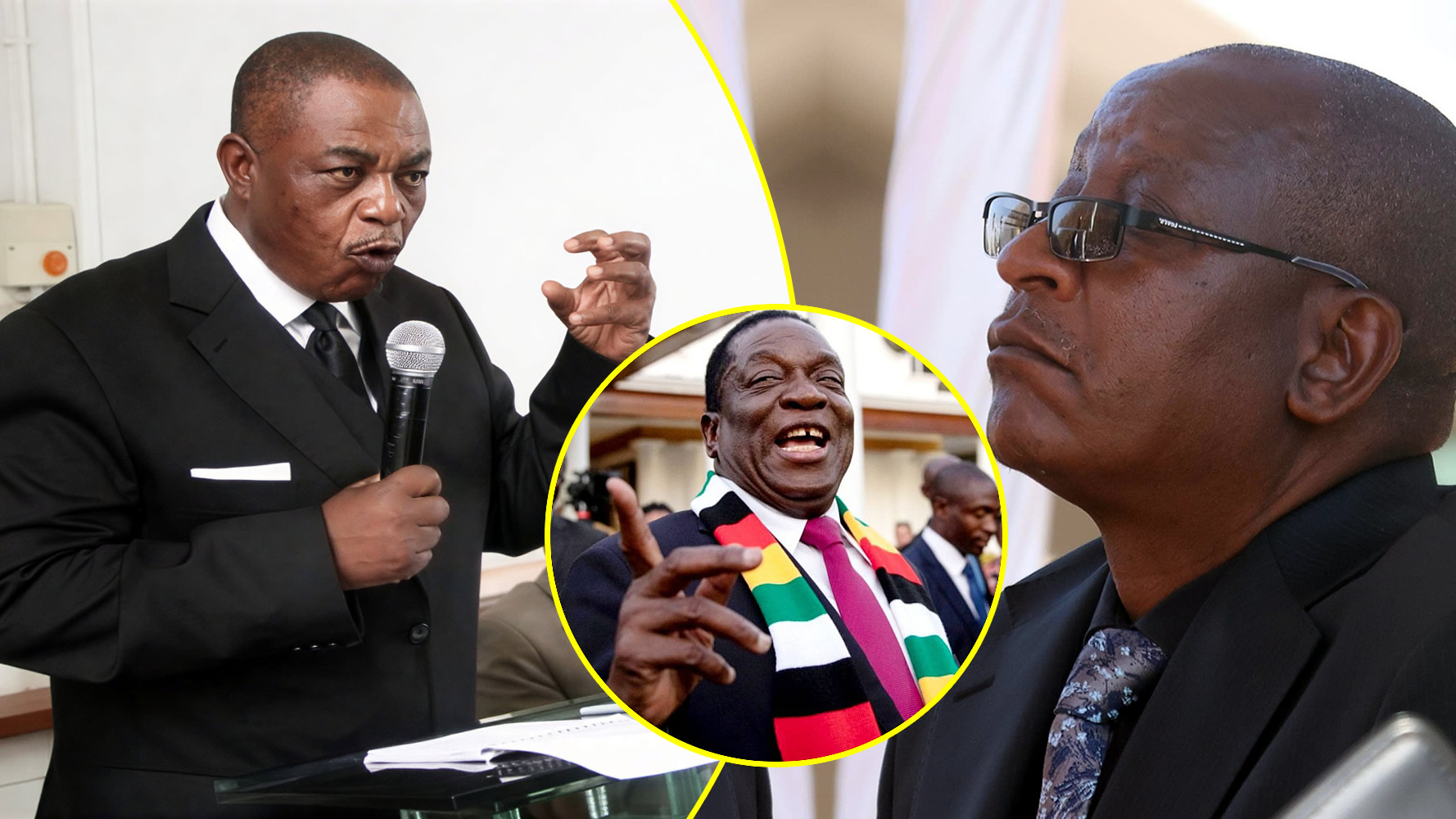
HARARE – To the casual observer, it looked like a minor disagreement between two senior government officials. Justice Minister Ziyambi Ziyambi made a seemingly academic point, claiming the liberation struggle was not primarily about “one man, one vote.” Days later, Vice President, General (retired) Constantino Chiwenga, the nation’s second-in-command, publicly corrected him, insisting that the right to vote was the very “soul” of the war. However, this was no mere history lesson. It was the first public shot in a secret, high-stakes battle raging within the ruling ZANU PF party, a conflict that could redefine Zimbabwe’s political landscape and determine who leads the nation after 2028.
This investigative report decodes the language of the ruling party, revealing that this was not a simple spat over historical interpretation. It was a calculated move in a political chess game, exposing a deep-seated factional rift over a proposed constitutional amendment that threatens the very foundation of Zimbabwe’s electoral system. At the heart of the matter is a controversial plan to scrap direct presidential elections, a move that would fundamentally alter the principle of universal suffrage that has been a cornerstone of the nation’s post-independence identity.
The Spark: A Minister’s Controversial Comments
The public phase of this internal war began when Justice Minister Ziyambi Ziyambi, while briefing journalists on the proposed Constitution of Zimbabwe Amendment Bill (Number 3), made a statement that appeared to rewrite the history of the liberation struggle. He argued that the war was not fundamentally about achieving universal suffrage.
“We went to war because the coloniser took our land and our rights, and we wanted to liberate ourselves from the coloniser so that we can govern and decide how we govern,” Ziyambi stated. He pointed out that from 1980 to 1990, Zimbabwe did not have direct presidential elections, and cited international examples to bolster his point. “The very authors of one man one vote or of elections don’t have direct elections. In the United Kingdom, for instance, you vote for MPs, and the majority party proposes a Prime Minister.”
These comments, seemingly innocuous, were a direct challenge to the foundational narrative of the liberation war, a narrative that has for decades been built on the promise of democratic empowerment for all citizens. It was a narrative explicitly stated in ZANU’s own policy document from 21 August 1963, which clearly listed “one man, one vote” as a core principle.
The General’s Rebuke: Defending the Liberation’s ‘Soul’
The response from Vice President Chiwenga was swift and unequivocal. Speaking at the funeral wake of a national hero’s wife, he delivered a powerful counter-narrative, framing the issue in stark, almost sacred terms. He left no room for ambiguity.
“The liberation struggle was primarily fought for two fundamental reasons: the principle of ‘one man, one vote’ and the return of our land,” Chiwenga declared, his words carrying the weight of his past as the army general who led the 2017 military intervention that brought President Emmerson Mnangagwa to power. “It is imperative that our youth recognise the sacrifices made by our heroes to ensure that every voice counts.”
Chiwenga’s intervention was a direct and public refutation of a fellow cabinet minister. He was not just correcting the historical record; he was drawing a line in the sand. By positioning himself as the guardian of the liberation legacy, he was sending a clear message to those within the party who sought to alter the country’s constitutional framework. The message was simple: the vote is non-negotiable.
The Hidden Agenda: A ‘Chinese-Style’ Model for Succession?
Sources deep within ZANU PF reveal that Ziyambi’s comments were not a gaffe but a deliberate attempt to test the waters for a radical constitutional overhaul. The proposed amendment bill contains a provision that would empower Parliament to elect the president, effectively ending the system of direct public voting for the nation’s leader. This is being referred to by some as a “Chinese-style” electoral model, where a small, controllable body of elites, rather than the general populace, chooses the head of state.
This move is widely seen as part of a broader strategy by a faction loyal to President Mnangagwa to manage the contentious issue of succession. With Mnangagwa’s second and final term constitutionally mandated to end in 2028, the amendment would not only extend his term to 2030 but also provide a mechanism to handpick a successor, bypassing the unpredictability of a general election and, crucially, potentially sidelining Vice President Chiwenga, who is widely believed to harbour presidential ambitions.
The tension boiled over in a fierce cabinet meeting, where Chiwenga reportedly clashed angrily with Attorney-General Virginia Mabhiza after she cited South Africa as a model for the proposed changes. Sources described an irate Chiwenga cutting her off, declaring that South Africa was “not independent” and should not be used as an example. The confrontation became so heated that President Mnangagwa had to intervene, reportedly telling his deputy, “I’m the president!”
This clash reveals the deep ideological and personal fractures within the party. Chiwenga, the man who commanded the tanks in 2017, now finds himself championing the democratic principles he was once accused of subverting. He is leveraging his liberation war credentials and his influence within the military and among war veterans to block a move he sees as a betrayal of the very struggle he fought in.
The Power Centres at Play
This internal conflict is not just a two-man show. It involves a complex web of power centres within ZANU PF, each with its own interests and allegiances.
|
Power Centre
|
Role and Position
|
|
The Presidency (Mnangagwa Faction)
|
Seeking to consolidate power, manage succession, and potentially extend their leader’s term beyond the constitutional limit. The proposed amendment is their primary tool.
|
|
The Military & War Veterans (Chiwenga’s Base)
|
Positioning themselves as the custodians of the liberation legacy. They view the direct vote as a sacred right and a key component of their leader’s path to power.
|
|
The ‘Young Turks’ (4ED Groups)
|
A collection of newer, often business-aligned groups who are vocally supportive of President Mnangagwa’s continued rule and the ‘ED2030’ agenda.
|
|
The Legal Technocrats
|
Figures like Justice Minister Ziyambi and the Attorney-General are tasked with providing the legal framework and justification for the proposed constitutional changes.
|
This succession matrix is a high-stakes game where every public statement is a calculated move. The sudden debate over the meaning of “one man, one vote” is not a historical discussion; it is a proxy war for the future of Zimbabwe. The General’s sudden transformation into a champion of the ballot box is a strategic manoeuvre to outflank his rivals and rally his base.
As the Constitution of Zimbabwe Amendment (No. 3) Bill heads to Parliament, the nation watches with bated breath. While ZANU PF holds a two-thirds majority, the public clashes and deep divisions suggest that its passage is not a foregone conclusion. The secret fight over “one man, one vote” is now out in the open, and it has become the most significant internal crisis to face the ruling party since the dramatic events of 2017. The soul of the liberation struggle, as Vice President Chiwenga called it, hangs in the balance.