


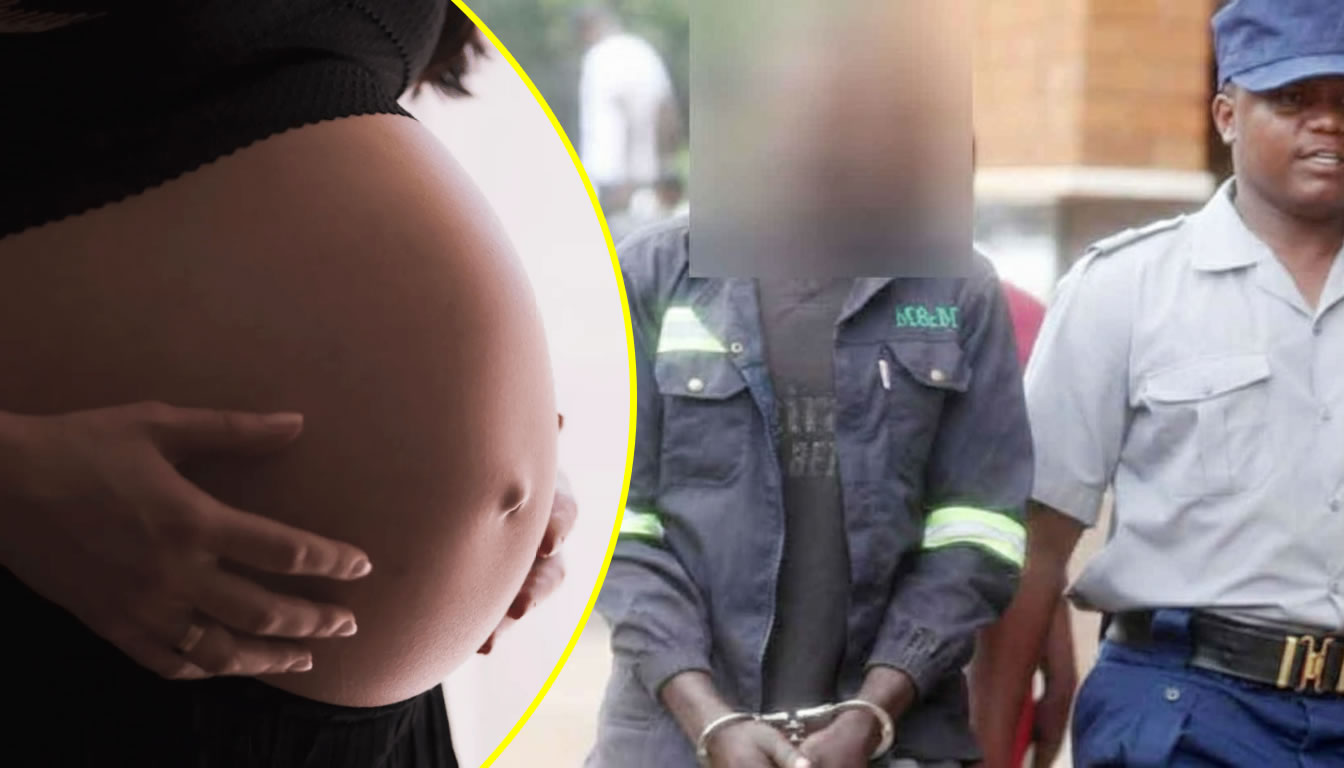
In the quiet suburbs and rural homesteads of Zimbabwe, a horrifying pattern of domestic betrayal is being brought into the light. Recent court cases have exposed a series of stomach-churning incidents where the very men tasked with protecting their daughters have become their most brutal predators. These are not just stories of crime; they are accounts of absolute power being used to silence the most vulnerable, often resulting in pregnancies that serve as permanent, living reminders of a father’s ultimate betrayal. The frequency with which these cases are now surfacing suggests that what was once a hidden, whispered shame is a full-blown national crisis that demands an urgent and uncompromising response.
One of the most recent cases to reach the courts involves a 40-year-old man from Waterfalls, Harare. The details of the case, which appeared before Harare regional magistrate Sandra Mupindu, paint a picture of a calculated and predatory father. The court heard that the nightmare began in September last year, shortly after the girl’s parents separated and her mother moved out of the family home. The teenage girl and her younger brother were left in the care of their father in a modest two-roomed house—a setting that should have been a safe haven during a difficult transition but instead became a chamber of horrors.
On 1 October, the father returned from work to find his daughter asleep in the bedroom, while her brother was sleeping in the kitchen. In a chilling moment of premeditation, the father entered the bedroom and asked his teenage daughter a single, haunting question: was she still a virgin? When the girl confirmed that she was, the father briefly went into the kitchen before returning to the bedroom to rape her. This calculated approach, beginning with a question that probed the girl’s vulnerability, demonstrates a level of predatory intent that is truly disturbing.
After the assault, the father used the most potent weapon in his arsenal — fear. He told the girl not to disclose the incident to anyone, warning her that if he were arrested, there would be no one to take care of her and her brother. This psychological manipulation ensured the girl’s silence as the abuse continued. By November, the teenager had missed her period. When she confided in her father, he callously comforted her, telling her that it was “normal” for her cycle to be irregular. He raped her again in December, showing a total lack of remorse or concern for the biological consequences of his actions.
The truth only emerged early this month when the girl, suspecting she was pregnant, went to a clinic to buy a pregnancy test. A vigilant nurse questioned the teenager on why she needed the test, and it was in that moment of professional intervention that the girl finally revealed the horrific abuse she had suffered at the hands of her father. The nurse immediately contacted the girl’s mother, who escorted her daughter to the police to file a report. The 40-year-old father was arrested and has since appeared in court, where he was not asked to plead. This case highlights how essential it is for frontline workers, such as nurses and teachers, to be trained to recognise the signs of domestic abuse and to ask the difficult questions that victims are often too terrified to volunteer.
This case in Waterfalls is, tragically, part of a much larger and more disturbing trend across the country. In Beitbridge, a 41-year-old man was recently sentenced to 20 years in prison for a crime that mirrors the predatory nature of the Waterfalls incident. In August 2023, the man sent his other children away to Shurugwi for the school holidays, leaving him alone with his 12-year-old daughter. The planning involved in clearing the house of witnesses speaks to a cold, calculated mindset that is common among such offenders.
According to the National Prosecuting Authority of Zimbabwe, the father from hell plied the child with alcohol until she was intoxicated and fell asleep. He then proceeded to brutally rape his own daughter while she was in an unconscious and vulnerable state. When the young girl woke up, she was in severe pain and discomfort. She tried to confide in her father’s girlfriend, but the father promised to take her to the hospital, only to renege on his word to keep his crime hidden. This secondary betrayal—denying medical care to a suffering child to protect one’s own skin—adds another layer of cruelty to the crime.
The authorities only became involved in March 2024, after receiving a tip-off about the victim’s deteriorating health. On 17 April 2024, after being moved to a safe haven, the girl finally found the courage to reveal the horrific details of the assault. The father was arrested two days later, and in a final act of cowardice, he attempted to escape from police custody. He was rearrested and subsequently sentenced to 20 years for the rape, with an additional fine of US$250 or six months in jail for the escape attempt. The sentence, while significant, barely begins to address the physical and emotional scars left on a 12-year-old child who was betrayed by the one person she should have been able to trust implicitly.
The long-term nature of such abuse is perhaps most vividly illustrated by a case from Plumtree, where a 42-year-old man from Chief Hikwa’s area in Dombodema was sentenced to 20 years in prison. His crime was a decade-long betrayal that resulted in the birth of a child who is both his biological son and his grandchild. The abuse began in 2013, when the victim was just 13 years old. Living in a single room with her parents and siblings, the girl was assaulted by her father one night while her mother was away.
The National Prosecuting Authority of Zimbabwe (NPAZ) detailed how the father used the same tactics of intimidation seen in the Waterfalls case. “He threatened the complainant by saying that, if she reported him she would lose a breadwinner. He therefore, repeatedly raped her and she fell pregnant. The accused person continued to rape the accused person during her pregnancy,” the NPAZ stated. The sheer duration of this abuse—continuing even while the victim was carrying his child—is a testament to the monster that can hide behind a fatherly facade.
The victim gave birth to a baby girl in 2016 and eventually fled to Botswana to escape her abuser. She remained there for several years, raising her daughter in a foreign land to keep her safe. It was only when she returned to Zimbabwe last December with her now eight-year-old child that she finally reported the matter. The fear that her father might subject her own daughter to the same horrors she had endured gave her the strength to speak out. The Plumtree Magistrate’s Court sentenced the man to 20 years, a reflection of the severe and lasting trauma he inflicted. This case underscores the reality that for many victims, the only way to find safety is to physically distance themselves from their abusers, often at the cost of their own heritage and family ties.
These cases highlight a systemic failure of protection within the domestic sphere. The recurring theme is the use of the “breadwinner” status as a tool for silence. Fathers, who are culturally and legally positioned as the providers and protectors of the family, are using that very position to exploit their children. The threat of poverty and the fear of breaking up the family unit are powerful deterrents that keep these crimes hidden for years, sometimes decades. In a country where economic stability is often precarious, the threat of losing a provider is a heavy burden for a child to carry.
The role of community members and professionals in breaking this silence cannot be overstated. In the Waterfalls case, it was a nurse’s intuition and questioning that led to the discovery. In the Beitbridge case, it was a tip-off from a member of the public concerned about a child’s health. These interventions are often the only lifeline for victims who are trapped in a cycle of abuse and threats. It requires a community that is willing to look beyond the “private” nature of the family and to intervene when the safety of a child is at stake.
However, the legal system’s response remains a point of intense debate. While 20-year sentences are significant, many activists argue that they do not fully account for the lifelong psychological damage and the biological complications of incestuous pregnancies. The victims are left to navigate a world where their primary source of security has become their primary source of trauma. There is also the issue of the children born from these unions—innocent lives that begin in a storm of controversy and legal complexity. The state must provide not just justice in the form of prison sentences, but also long-term support for the victims and their children.
The investigative process reveals that these are not isolated “incidents” but are often part of a prolonged pattern of behaviour. The Plumtree case, which spanned over a decade, shows how a predator can operate within a family unit for years without detection, even when living in close quarters. It raises difficult questions about the silence of other family members and the social pressures that might prevent them from intervening. Is it possible that others knew and said nothing? Or is the manipulation so complete that even those closest to the victim are blinded to the truth?
As Zimbabwe grapples with these revelations, the call for more robust child protection mechanisms and a shift in cultural attitudes towards domestic authority is growing louder. The “father from hell” is a label that is appearing with alarming frequency in national news, serving as a grim reminder that the home is not always the sanctuary it is supposed to be. For the victims in Waterfalls, Beitbridge, and Plumtree, the road to recovery is long, but the first step—breaking the silence—has finally been taken. The courage required to stand in a courtroom and point a finger at one’s own father is immense, and it is a courage that should be met with the full support of the state and the community.
The brave young women and girls who have come forward are not just seeking justice for themselves; they are exposing a dark underbelly of society that thrives on silence and fear. Their stories are a call to action for every Zimbabwean to be more vigilant, for every professional to be more inquisitive, and for the legal system to be uncompromising in its pursuit of those who betray the ultimate trust of a child. We must move beyond the shock of the headlines and address the root causes of this violence—the power imbalances, the economic dependencies, and the cultural silences that allow such monsters to exist. Only by shining a bright, unwavering light on these dark corners can we hope to end this silent scourge and ensure that no more daughters have to fear the very men who gave them life. The future of the nation’s children depends on our ability to transform this outrage into lasting, systemic change.