


In the final months of his life, she sat beside his hospital bed carrying a secret of her own.
The Zimbabwean writer was gravely ill with AIDS-related pneumonia. Dambudzo Marechera was emaciated, bedridden and psychologically fragile. Flora Veit-Wild, the German scholar who had become his lover, carer and later the leading custodian of his literary work, had taken an HIV test after learning of his condition.
The result left her in panic.
“The news sets me into a state of panic. Three weeks later I get my test results: I am HIV-positive.”
She did not tell Marechera.
Veit-Wild later explained that she feared the news would add unbearable guilt to the suffering of a man who was already close to death. She kept quiet while sitting with him in hospital, helping him through his final days and watching him struggle to make sense of unfinished work and unsettled affairs.
Marechera died at Parirenyatwa Hospital in Harare on 18 August 1987, aged 35. He was buried at Warren Hills Cemetery. His death brought to an end the life of one of Zimbabwe’s most celebrated and difficult literary figures, but it also marked the beginning of Veit-Wild’s long effort to preserve the writing he left behind.
Their relationship had begun four years earlier, in October 1983, at the offices of Zimbabwe Publishing House in Harare. Veit-Wild had recently moved to Zimbabwe with her family and was studying the country’s developing literary culture. Marechera was 31, homeless and drifting between temporary places to stay. He was drinking vodka from a bottle and carrying the reputation of a writer whose talent was matched by his instability.
He had already won international attention for The House of Hunger, which received the Guardian Fiction Prize. But the success had not brought him a settled life. After being expelled from New College, Oxford, he returned to Zimbabwe and struggled with poverty, alcohol and homelessness. His health and mental state worsened as his life became increasingly unsettled.
When he first saw Veit-Wild, he made an immediate impression. Looking at her clothes, he said: “Oh, my lawd, your garments cannot be from here. You would rather expect them in a Bloomsbury setting than in prissy old Salisbury.”
What began as a professional interest soon became an intense affair. Veit-Wild drove into the city to collect Marechera. They drank gin and tonics at the Oasis Hotel, argued about European politics and met at the University of Zimbabwe swimming pool at night. They also visited the Seven Miles Hotel, where their private encounters unfolded against a background of secrecy, alcohol and growing emotional tension.
Veit-Wild was married to Victor Veit and had children. Marechera was eventually invited to stay on the family’s property in the affluent Harare suburb of Highlands. He lived in a garden cottage, ate meals with the household and took part in long conversations about literature. Victor knew about the affair and recognised Marechera’s extraordinary ability, even as the writer depended on the family for shelter, money and emotional support.
The arrangement was far from peaceful. Marechera distrusted Veit-Wild’s position as a white European academic in post-independence Zimbabwe. He questioned whether she was using him for her career and at one point accused her of working for the Central Intelligence Organisation. During one argument, he smashed the window of her car.
In another confrontation, he told her: “All you want is my black dick and then you run back to your people.”
The relationship was shaped by attraction, anger, racial tension and fear. Marechera worried that he was being treated as an exotic figure by a privileged outsider. Veit-Wild was drawn to his intelligence, his unpredictability and the force of his writing. The affair lasted about 18 months, but its effects continued for the rest of her life.
By the time Marechera became seriously ill, the household was also facing the consequences of the HIV epidemic. Treatment options were extremely limited in the 1980s, and the disease carried a heavy social burden. Veit-Wild’s husband, Victor, later responded to the family’s diagnoses without blaming her or Marechera.
“Victor’s answer was simple: ‘It could have happened to me too. Nobody is to blame. No one knew about AIDS at the time.'”
That response became one of the clearest expressions of the complicated bond between the three adults. Their lives had become tied together through marriage, sex, friendship, literary ambition, illness and grief. There was no simple division between victim and villain in Veit-Wild’s account of the relationship.
In Marechera’s final days, Veit-Wild took him to clinics and tried to bring order to his affairs. Even in hospital, he remained determined to write. He repeatedly asked for paper and a pen so he could prepare a final will and make arrangements for his unpublished manuscripts.
After his death, Veit-Wild gathered the scattered work. She edited and helped publish posthumous books including The Black Insider, Cemetery of Mind and Scrapiron Blues. She went on to become a professor of African literatures and cultures at Humboldt University in Berlin and a major authority on Marechera’s life and writing.
Her work helped ensure that poems, stories, plays and notebooks that might otherwise have disappeared reached new readers. Marechera’s reputation grew after his death, and his writing became central to discussions about Zimbabwean literature, exile, colonial violence, race, sexuality and the pressures faced by artists who refuse to conform.
But behind the public image of the scholar and editor was a woman living with the physical and emotional consequences of the affair. Veit-Wild later wrote about her HIV infection, her battle with non-Hodgkin’s lymphoma in her early fifties, depression, the breakdown of her marriage and the burden of having watched Marechera die.
For years, she was known primarily as the biographer, editor and guardian of his legacy. Her own story remained largely hidden. In 2009, when asked publicly about the relationship and its possible connection to her HIV infection, she declined to comment and said she would speak “when the time is right”. She added: “it is time I wrote my own story”.
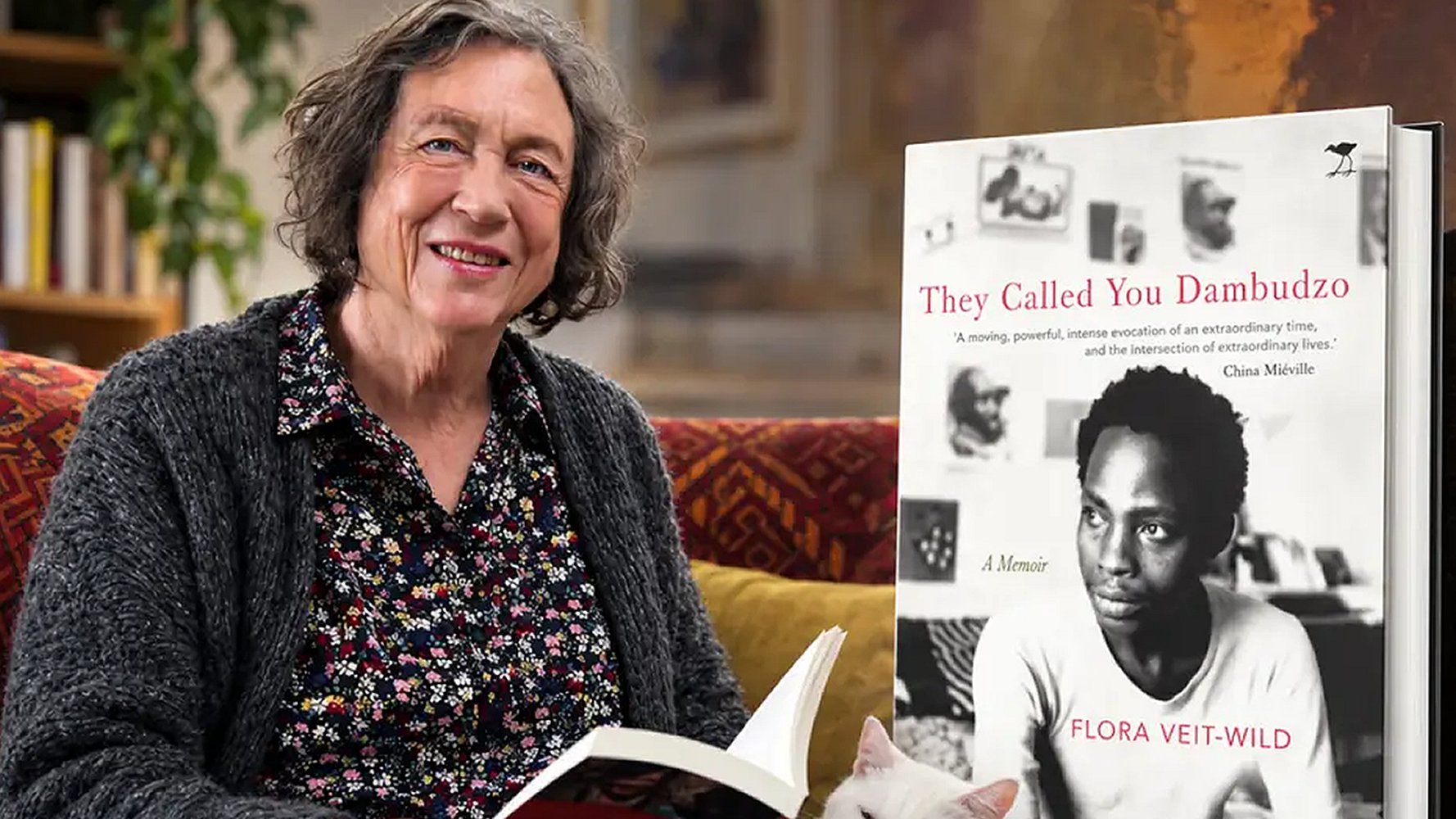
She eventually did so in They Called You Dambudzo: A Memoir, presenting the relationship in all its intimacy and damage. She did not reduce Marechera to a monster or herself to a helpless victim. Instead, she described a love that brought intellectual discovery and lasting pain, while confronting the choices she made during his illness.
Her silence in the hospital was one of those choices. Marechera was dying, and she believed that telling him about her diagnosis would force him to carry a guilt he could not survive. She therefore sat beside him without revealing that she had received the same devastating news.
The secret remained with her after his death. So did the manuscripts, the memories and the responsibility of keeping his name alive. Marechera left behind a powerful body of work and a life marked by brilliance, poverty, alcohol, unstable relationships and illness. Veit-Wild inherited both the grief of losing him and the task of making sure the world did not lose his writing as well.
Decades later, her account remains inseparable from his literary legacy. The story of Marechera is not only the story of a celebrated writer who died young. It is also the story of the woman who loved him, believed he had passed HIV to her, kept quiet while he was dying and then spent the rest of her public life preserving the work of the man who changed hers for ever.