


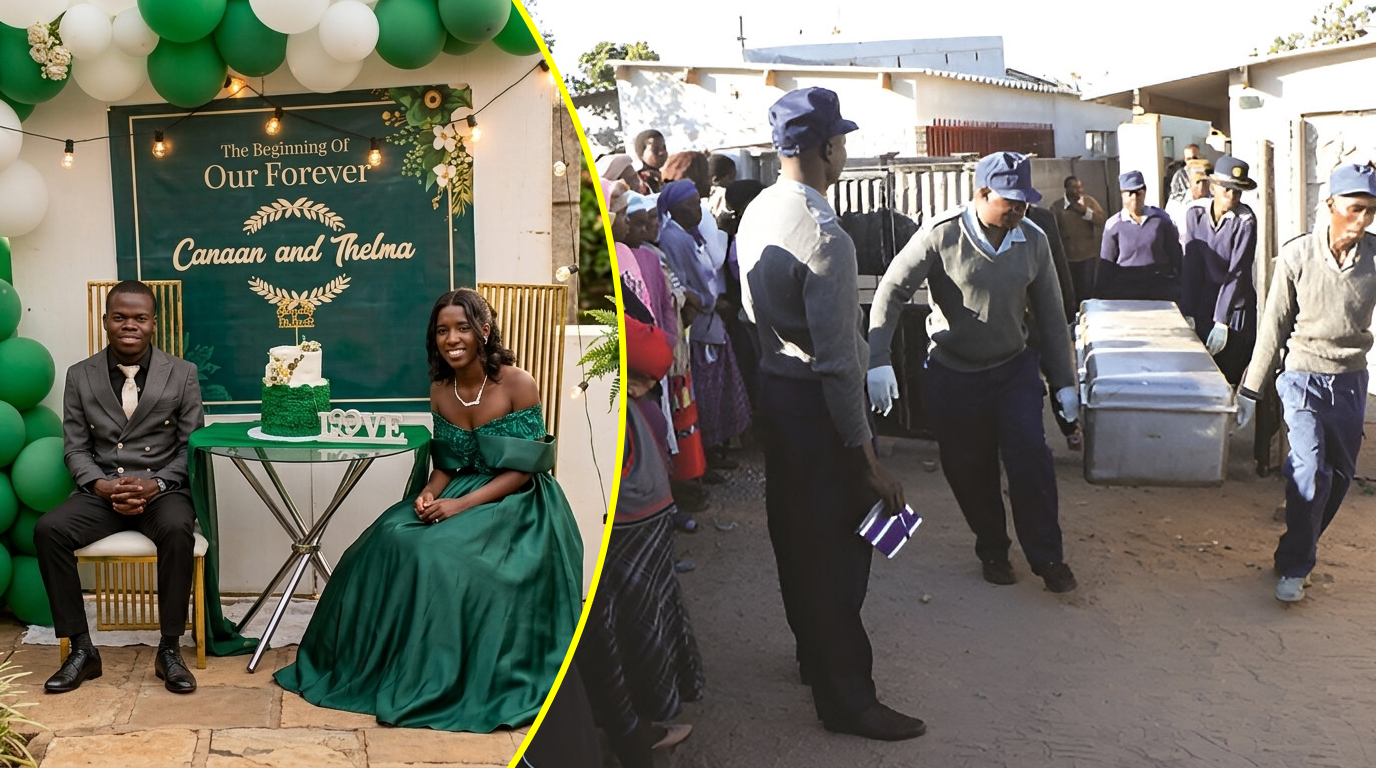
A 23-year-old Harare man left behind a several-page handwritten note accusing church leaders and members of his wife’s family of contributing to his distress, just 18 days after he paid lobola and expected to begin married life.
Canaan Mumba, from Budiriro 4, paid roora for Thelma Hliwayo on 5 September. His family says he believed the customary marriage formalities had opened the way for him to take his wife home. Instead, he was reportedly told that the couple could not live together or have sex until they had held a white wedding.
Mumba was later found dead after ingesting rat poison. The death has left relatives mourning a young man who had only recently completed one of the most important traditional steps towards marriage.
“We have been robbed of a loving man and promising leader of our family,” the spokesperson said.
“Cain wanted to take his wife soon after paying lobola arguing that waiting for a white wedding would pave way for the devil. His church leaders denied him and he became bitter. We did not expect that it would end in this way. To him Roora Day was bigger than a white wedding and it affected him.”
The family said negotiations had taken place over the couple’s living arrangements. They expected Hliwayo to be handed over to Mumba on a Tuesday night, but that did not happen. Soon afterwards, Mumba died.
His note, written across several pages of a notebook, is addressed to relatives, friends, workmates, church members and law enforcement officers. It begins with a series of apologies.
“To mhamha, I’m sorry,” he wrote.
“To gogo & all other great relatives, I’m sorry.”
“To my siblings, brothers & sisters I’m sorry.”
“To my friends, old & new, I’m sorry.”
“To my co-workers, I’m sorry.”
“To all other church members, the deacons, elders and all other congregants I’m sorry.”
The tone changes when he turns to the people he believed had played a role in the events leading to his death. He specifically excluded “The Tauzen family & Thelma Nomatter”, saying they had “a stern hand in my untimely demise”. He also named Thelma’s mother, Linah, and other people he described as co-conspirators.
Mumba then addressed the police directly. He said he could not tell officers how to conduct their work, but claimed he could point them towards clues.
“To the law enforcement, I can’t tell you how to work cases, but I can help you with some clue where to start,” he wrote.
He directed investigators towards premarital counselling held in Waterfalls before and after the lobola ceremony. He named Pastor Tauzen and his wife, saying they should not “fool anyone” about the influence they had brought to the counselling and to the marriage arrangements.
“Pastor Tauzen and his wife must not fool anyone about of the influence you brought to premarital counsel yaaitirwa ku Waterfalls kwama The Tauzens, most nights before and after lobola,” the note says.
Mumba said the pastor and his wife had acted as church leaders during the premarital counselling and planning, but were also Hliwayo’s parents and the people she listened to most closely. He wrote that either all three knew something, or two of them were hiding information from the wider public.
“Their position before and after roora rangu inini naThelma, they acted as pastors in the pre-marital counsel and all the plans but they were not literally, they are Thelma’s parents and the only people she listens to and either the three of them knows something or it’s just two of the three who are hiding something they don’t really want the world to know one of the three must be victim or they are all villains.”
He said he was sorry he could not remain alive to help trace and investigate what had happened. The note adds: “It’s a shame I couldn’t stay to help physically in tracing, and investigating, sorry, I had pain to relieve and a damaged reputation.”
Mumba also warned against harming church deacons or relatives from Thelma’s side. He said some friends from the church had offered him comfort and support during the dispute and wanted justice.
“Do some other findings but I ask for no harm to come to deacons of the church and Thelma’s parting relatives, friends from the church offered me comfort and support in this difficulty, they also wish to see justice served.”
He told his workmates that they had not known the difficulties he was facing because he had concealed them. He said he had lied about his wellbeing and had told colleagues that he was living with the woman he had married.
“My co-workers no one knows about the difficulties I was facing, I lied to them about my well-being and that I was living with the woman I married, I’m sorry guys, I couldn’t take it anymore,” he wrote.
The note also contains instructions about his mobile phone. Mumba said the phone was healthy and undamaged and that he would leave behind the password. He told those he trusted to switch on mobile data so the password would automatically be sent to them.
He asked relatives to go through his WhatsApp and text messages from the beginning. He said some of his messages had been written out of love, some while he was trying to compromise, and others during the growing conflict around the marriage.
The note includes a further warning about anyone who might testify against him in favour of the people he had named. “If anyone testifies against me in favour of the short listed suspect they are suspect to be suspected too bcz every other one from church are against what is happening to me,” he wrote.
His farewell is brief. He asked that three songs by Alen Ketani be played in his memory: “Regai Ndizorore”, “Ndoda Kuuya Ikoko” and “Zvinowanda Panyika”. He said all three songs could be found on his phone.
“Farewell Friends & Family,” he wrote before signing off: “Yours In Pain, Canaan”.
The final message was directed to his mother: “Tell Mommy, I really loved her, but she has no one to fear now cz I’m ‘gone’.”
The circumstances surrounding Mumba’s death have emerged during a week in which police reported several fatal or near-fatal disputes involving couples and relatives across Zimbabwe. Between 21 and 23 September, incidents in Zhombe, Mukumbura, Mvurwi, Kariba and Harare left children and adults dead or seriously injured.
In Maisa Village, Zhombe, police said 23-year-old Emily Takadii allegedly had a disagreement with her husband over allegations of infidelity on 21 September. She allegedly gave poison to her sons, six-year-old Shyne Tavatya and nine-year-old Sean Tavatya, before ingesting the same substance. The boys died after being admitted to Kwekwe District Hospital, while Takadii remained in critical condition.
In Mukumbura, 50-year-old Robert Tashinga allegedly attacked his wife, Nollent Sinosi, 36, with an axe after a disagreement over infidelity allegations. Sinosi died at the scene and Tashinga fled, according to the police account.
In Mvurwi, police arrested 27-year-old Kudakwashe Rangarirai over the death of his two-year-old stepson, Prince Owen Mugari, and an attack that left his 23-year-old wife critically injured. Police said Rangarirai then ingested poison and was admitted to hospital. His wife was taken to Parirenyatwa Group of Hospitals in Harare.
In Nyamhunga, Kariba, police arrested 33-year-old Emmanuel Mpofu on an attempted murder charge after he allegedly severely assaulted his 25-year-old wife following allegations of infidelity. The woman was receiving treatment at Kariba Hospital.
“The ZRP is investigating the circumstances in which a couple, Nyasha Mhungu (35) and his wife, Olga Muzhingi (30) were found dead in a bedroom at a house in Glen View 3, Harare after a marital dispute on 23rd September 2026. More details to follow,” police said.
The cases prompted Commissioner Paul Nyathi to urge couples and families to seek help before domestic disagreements turn violent or lead to loss of life.
“The Zimbabwe Republic Police is concerned with cases of murder, attempted murder and suicide involving couples and family members arising from domestic disputes. Some of the incidents have resulted in loss of lives and serious injuries,” Nyathi said.
“The Zimbabwe Republic Police urges couples and family members to seek peaceful and lawful means of resolving their differences,” he added.
Nyathi encouraged people facing marital or domestic problems to seek counselling and involve trusted third parties, including traditional leaders, church leaders and professional counsellors.
Mumba’s death has also prompted public discussion about the power church leaders hold in the private lives of congregants. Musician Baba Harare, born Braveman Chizvino, said pastors could guide and support people but should not be treated as infallible authorities over every decision.
“Pastors are human. They can offer guidance and support, but they are not infallible, and we should never treat them as though they are Christ. It is okay to ask questions, seek another perspective, and make decisions about your own life,” he said.
He also warned against religious communities that pressure members to cut themselves off from their families.
“I also believe that joining a church should not mean cutting yourself off from your maternal or paternal family. Where those relationships are safe, there should be room for both your family and your faith community in your life. If a church insists that you abandon your loved ones or makes one ‘spiritual father’ the only voice you are allowed to trust, that is a serious red flag.”
His final warning was direct: “No church rule is worth a life. Men’s mental health matters too.”
In Budiriro 4, Mumba’s relatives are left with a note that asks police to examine messages, counselling sessions and the relationships surrounding his marriage. It also leaves behind a record of a young man who believed he had completed the traditional path into married life, but died before he could bring his wife home.