


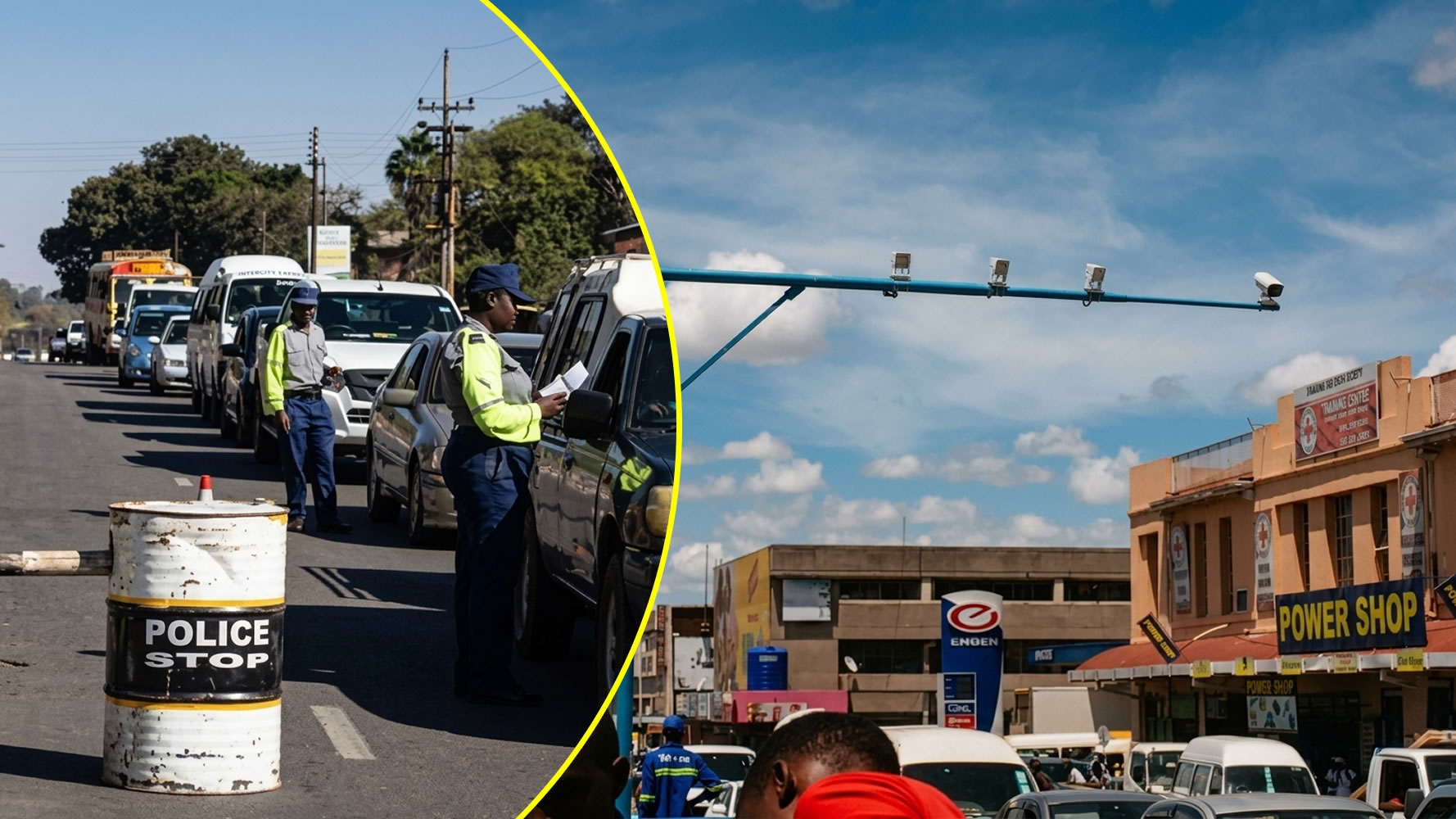
HARARE — Motorists in Harare are beginning to face fines after an artificial intelligence-powered traffic management system captured more than four million road violations across the capital.
The electronic traffic management system, installed at strategic intersections and other busy points, has been recording offences ranging from running red traffic lights to speeding, illegal turns and dangerous passenger loading. Authorities say some motorists have now been called in to pay, marking a new phase in the Government’s campaign to improve driving standards through automated enforcement.
The system is also programmed to identify drivers who travel against the flow of traffic, pick up or drop off passengers at undesignated places, use mobile phones while driving and travel without fastened seatbelts. Unlike conventional traffic operations, in which an officer stops a driver at the roadside, the cameras record the vehicle, the alleged offence and the circumstances in which it occurred.
Zimbabwe Republic Police spokesperson Commissioner Paul Nyathi said the number of recorded offences had risen sharply from 2.3 million in mid-August to more than four million by the end of September. The increase represents a rise of nearly 74 percent in a matter of weeks, highlighting the scale of violations being recorded on Harare’s roads.
The figures have prompted authorities to intensify efforts to track down motorists linked to the vehicles. However, the camera record is not treated as an automatic fine. Each incident is being checked before enforcement action is taken, with officials examining whether the traffic signal was operating correctly, whether road signs and markings were visible and whether other circumstances affected the movement of vehicles at the time.
Permanent Secretary in the Ministry of Home Affairs and Cultural Heritage Ambassador Raphael Faranisi previously said the verification process was necessary because a camera might record a vehicle at an intersection where a police officer was directing traffic. He also pointed to situations in which road markings were unclear.
“As of last week, we had recorded about 1,1 million vehicles that had violated traffic laws, and these were recorded on the various traffic cameras installed across the city,” Ambassador Faranisi said. “However, we are still validating these offences. Probably at the time the violation was committed, the intersection was being controlled by a police officer. Then, in some instances, maybe the markings on the road were not clear enough, so those are some of the verifications that we are working on.”
The earlier figure has since grown by millions as the network continues operating. Government officials say the validation process is intended to ensure that enforcement is directed at genuine offences rather than every event automatically flagged by the technology.
The traffic-camera programme forms part of a wider Smart Traffic Management and Surveillance Programme being implemented by the Ministry of Home Affairs and Cultural Heritage in partnership with TelOne. The first phase covers a group of strategic camera sites in Harare, with plans to expand the system substantially and extend automated traffic monitoring to more urban centres.
The cameras are intended to strengthen enforcement at locations where traffic officers cannot monitor every lane and every vehicle. They can record a vehicle passing through a red light, crossing lanes illegally or moving at excessive speed even when no officer is immediately present. The system can also provide a time-stamped record of conduct that might otherwise go undetected in heavy traffic.
For public transport operators, the crackdown is expected to bring particular attention to illegal passenger loading and dropping off. Kombis and other passenger vehicles frequently stop at undesignated points to pick up travellers, a practice that can block lanes, create sudden pedestrian movements and force other motorists to brake or change direction. The new system places those actions within the same enforcement framework as speeding and red-light violations.
Mobile-phone use behind the wheel is another offence being targeted. Drivers who look down at a handset or hold a phone while moving can lose concentration at busy junctions, where pedestrians, cyclists and turning vehicles compete for space. Seatbelt offences are also being recorded, extending the system’s focus beyond traffic flow to behaviour that affects the severity of injuries when crashes occur.
The push comes as Zimbabwe faces continuing concern over road deaths and injuries. The Government has said a road crash occurs roughly every 15 minutes, while an average of five people die and about 38 are injured on the country’s roads each day. Transport and Infrastructural Development Minister Felix Mhona has said road crashes cost Zimbabwe about US$400 million a year through deaths, injuries, damaged property, lost production and disruption to supply chains.
Launching the 2026 Heroes and Defence Forces Holidays Road Safety Enforcement and Educational Awareness Campaign in Mazowe, Minister Mhona said human behaviour remained central to the country’s road-safety crisis.
“Our theme this time around was informed by the disturbing fact that up to 94 percent of road crashes on our roads in Zimbabwe are a direct result of inappropriate human decisions,” Minister Mhona said. “We, therefore, realised that the time has come for us to speak directly to our road users through this message, which I believe will resonate with many and positively influence the manner in which we ply our roads this holiday.”
The AI system is now adding a permanent layer of surveillance to the road-safety response. Its operation means that a driver who escapes a roadside stop may still be identified later through the vehicle’s registration details. Authorities are preparing for the formal commissioning of the system by President Emmerson Mnangagwa, while departments involved in enforcement and payment arrangements continue finalising the process.
As more motorists are contacted, the success of the programme will be measured not only by the number of fines collected but also by whether driving behaviour changes at the monitored intersections. Government wants the cameras to discourage dangerous conduct before it results in a collision, while the verification stage is designed to keep faulty or unclear records from becoming penalties.
For now, the rapidly rising total is a stark record of what has been happening on Harare’s roads. More than four million violations have been captured, and the first offenders are already being pursued. Motorists who continue to ignore traffic lights, speed limits, lane directions, passenger-loading rules, mobile-phone restrictions and seatbelt requirements are being placed on notice that traffic enforcement in the capital is no longer limited to the officer they can see.