


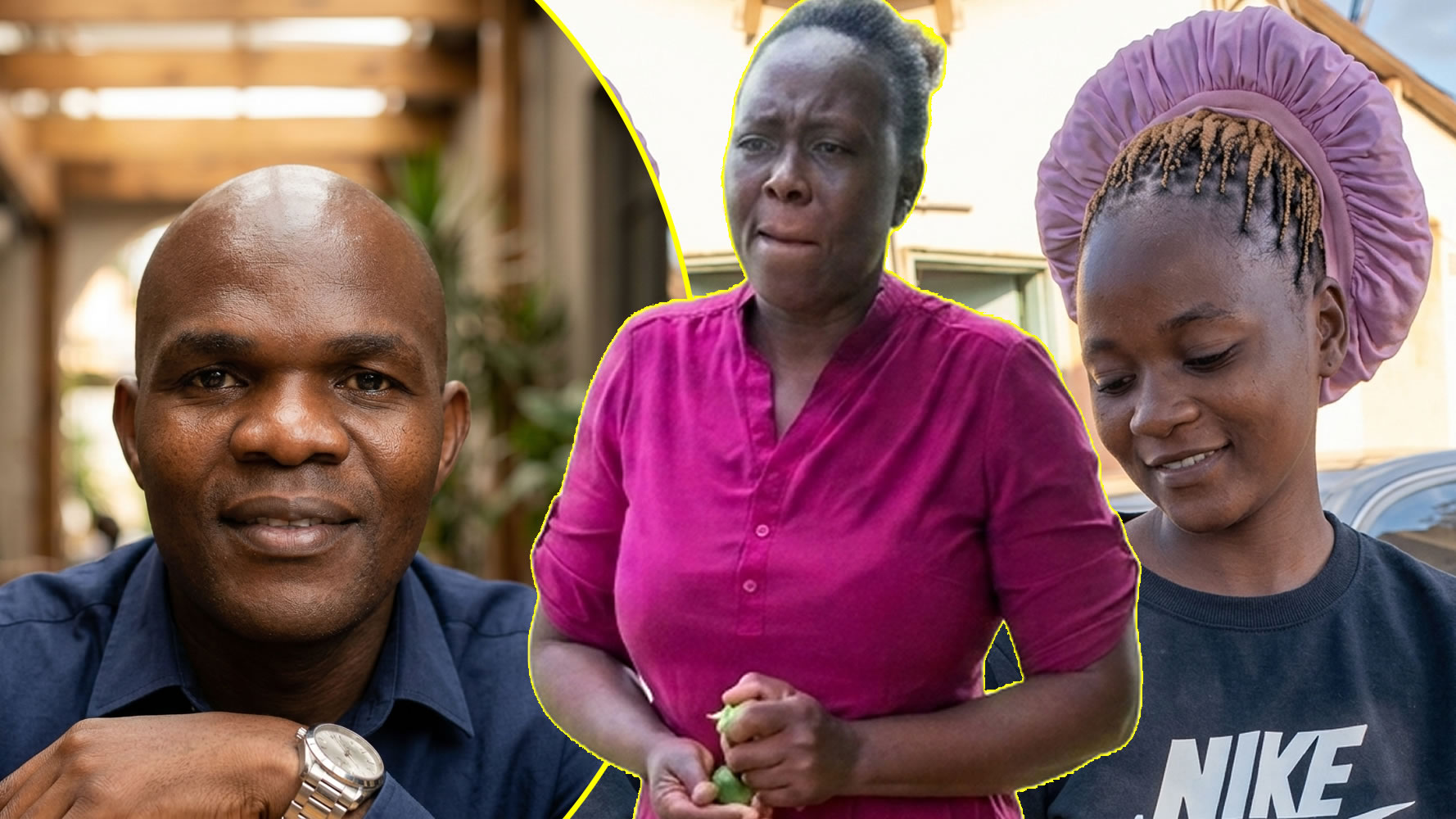
A former prisons officer who stabbed his wife and their pregnant daughter to death after a domestic violence complaint has been sentenced to 50 years in prison by the Chinhoyi High Court.
Justice Manyangadze handed Obert Namurokosi 25 years for each of the two murder counts arising from the killings in Victory Park, Kadoma, on 3 May 2026. The sentencing record, however, names the offender as Albert Namurokosi, creating a slight discrepancy over the first name used in the court documents.
The victims were his wife, Cynthia Namurokosi, 45, and their daughter, Takudzwa Namurokosi, 23, who was heavily pregnant. Earlier police reports described Takudzwa as nine months pregnant, while the later court account referred to her as eight months pregnant.
The court heard that the killings followed a domestic violence case that had led to Obert’s arrest on 2 May. He spent the night in police cells at Ingezi Police base in Kadoma after Cynthia reported him to authorities.
Cynthia then left the family home and went to her daughter’s house at House No 929 in Victory Park, where Takudzwa lived with her young family. The decision was intended to give her a safe place away from her husband.
But after his release, Obert followed her there. The State told the court that he arrived at about 1.30pm on 3 May, broke into the house and attacked Takudzwa with a knife.
Takudzwa managed to escape through the kitchen door, but Obert pursued her. He stabbed her again in the shoulder before she collapsed behind the house. A post-mortem examination conducted on 8 May recorded haemothorax, lung laceration and a stab wound to the back as the causes of her death.
When Cynthia asked her husband why he was attacking their daughter, he turned on her and stabbed her once in the neck. She died at the scene. Her daughter’s body was later found behind the house.
A neighbour, Tracy Dangaiso, was warned not to intervene during the attack. Obert then fled from the property before later turning himself in at a police station. He was arrested and charged with two counts of murder.
The case had first drawn attention because of the violence of the attack and the fact that Cynthia had sought refuge only a day after reporting her husband. Police said Obert had followed her while carrying a kitchen knife and attacked both women inside or near the daughter’s home.
Police spokesperson Paul Nyathi said at the time: “He stabbed his daughter several times before attacking his wife, whom he stabbed on the neck. Both victims succumbed to the injuries.”
The court also heard Obert’s account of a marriage that had been troubled for several years. He said problems began after he fathered a child outside the marriage and that there were later disputes involving infidelity. He also told the court that the couple had faced difficulties during the previous five years.
Neighbours had previously described Obert as a violent man whose arguments with Cynthia sometimes became physical. One neighbour said: “Obert was always fighting with his wife, the fights were sometimes physical. I always wondered why Cynthia did not report him to the police. Unfortunately, I did not know the family that well.”
Another neighbour said Obert had also attacked a colleague in the past. A case was filed against him and he was ordered to pay US$400 in compensation. He settled the amount by handing over his fridge to the colleague.
The neighbour said Obert had taken early retirement and spent his pension money without sharing it with Cynthia, who worked as a teacher and supported herself. A disagreement over money and plans to build a house was said to have deepened the conflict between the couple.
“Obert took early retirement at his workplace, then spent all his pension fund alone and did not share a single penny with his wife,” the neighbour said.
“However, one day Obert told his wife to take out a loan because they also wanted to build a house but she refused, saying they could have used his pension money to do so. This is when things escalated. Obert became physical with his wife and she ran away to her daughter, who was nine months pregnant and also had one child.”
The Kadoma case comes as police and support organisations continue to record serious domestic violence across Zimbabwe. In Bulawayo, Memory Makathini was killed in July in Nkulumane after her husband, Ackim Bongani Dube, was accused of attacking her with an axe. Their children were also reportedly assaulted with a metal rod. Dube appeared in court on a murder charge and was remanded in custody.
In September, police reported two further cases linked to domestic disputes. In Zhombe, six-year-old Shyne Tavatya and nine-year-old Sean Tavatya died after their mother, Emily Takadii, was accused of giving them a poisonous substance following a dispute with her husband. Takadii also reportedly ingested the substance and was in critical condition.
In Mvurwi, police arrested Kudakwashe Rangarirai after his two-year-old stepson, Prince Owen Mugari, died and his 23-year-old wife was seriously injured during a domestic dispute. Rangarirai was receiving treatment in hospital while his wife was admitted in critical condition.
Zimbabwe has a National Strategy to Prevent and Address Gender-Based Violence for 2023 to 2030. The strategy recorded a 60 per cent increase in reported gender-based violence during the Covid-19 period and identified shortages in services, delays in cases and limited access to legal help as continuing problems.
Police have urged people to resolve disputes peacefully and have repeatedly called on communities to reject domestic violence and murder. The Kadoma judgment now brings a lengthy prison sentence in a case that began with a complaint, a night in police custody and a woman seeking safety at her pregnant daughter’s home.