


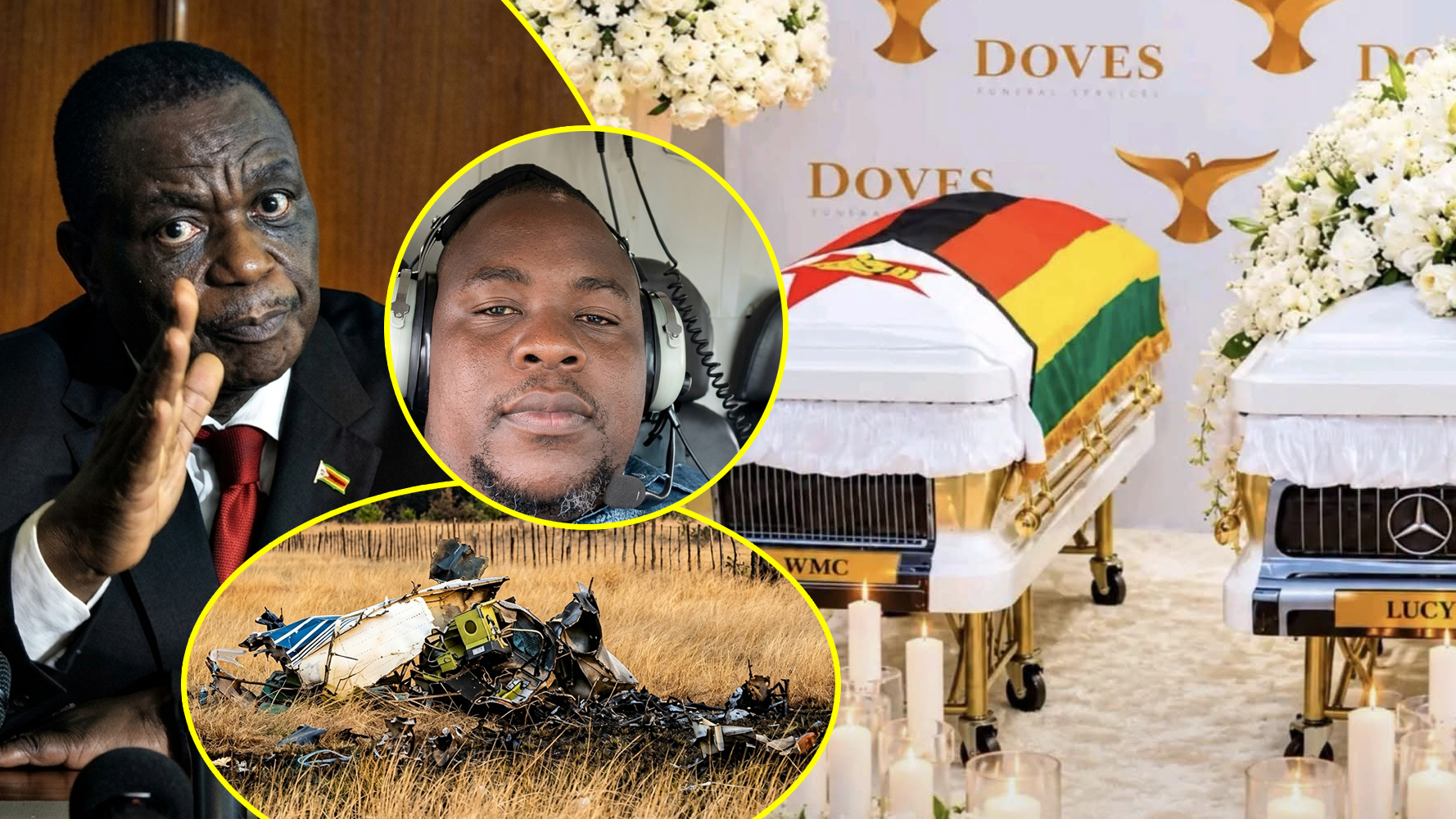
Wicknell Chivayo’s sudden death has removed one of the most visible business figures in President Emmerson Mnangagwa’s political circle as Zanu PF’s 23rd Annual National People’s Conference opens in Chinhoyi today amid a bitter dispute over leadership, party rules and the country’s constitutional direction.
As delegates gather at Chinhoyi University of Technology (CUT) for the conference, which opened today, October 12, and runs until October 17, the loss of Wicknell Chivayo has become part of a much larger political story. His death in a helicopter crash has come at a moment when Mnangagwa’s allies are trying to consolidate support inside the ruling party, while Vice-President Constantino Chiwenga and other senior figures resist proposed changes to party structures and leadership rules.
Chivayo, a businessman known for conspicuous displays of wealth and public donations, was widely viewed within party circles as a leading backer of the campaign to extend Mnangagwa’s political influence beyond the current term. The title “2040 agenda” has been used for that push. But the struggle now under way inside Zanu PF is not simply a vote on a future date: it is also a contest over who controls the party, how its president is chosen and what role the party’s constitution will play.
That fight has sharpened in the days before the conference. A Zanu PF politburo meeting scheduled for Friday was called off after senior officials gathered in Harare. Party representatives publicly attributed the postponement to competing programmes. But the row over proposed changes to the party constitution had become a central issue, with disagreement over the amendments and the procedure for bringing them forward.
The changes were presented as an effort to align Zanu PF’s rules with national constitutional amendments enacted earlier this year. The
Constitution of Zimbabwe Amendment (No. 3) Act, 2026, signed on July 7, changed the method for electing the President from a direct popular vote to a joint vote by members of Parliament. It also extended the current presidential and parliamentary term by 2 years, carrying Mnangagwa’s tenure to 2030.
Those changes have not ended the argument over succession. Instead, the latest dispute has moved into Zanu PF itself, where the party’s constitution and internal leadership arrangements are now under pressure. “Yes, the Constitution was changed to extend President Emmerson Mnangagwa’s rule, but the issue is now inside Zanu PF, the constitution itself within Zanu PF,” a party insider said.
The proposed party amendments have provoked resistance from Chiwenga’s camp and from other senior figures, including Zanu PF secretary-general Jacob Mudenda. The dispute is reported to involve both the substance of the draft and the process for approving it. Opponents say the party must allow time for consultations before amendments are taken to its central committee. Supporters of the changes say provincial party bodies have called for alignment with the national constitution.
Political analyst Reason Wafawarova said the abandoned meeting was significant. “Currently, what we know is that the meeting was aborted before it had even started. That is a clear indication that something was not right,” he said.
Another analyst, Phillian Zamuchiya, said: “It is highly unusual for a politburo meeting to be postponed after senior officials have already assembled.” He added: “The timing, the circumstances and the unconvincing explanation suggest something far more politically serious than a diary clash”.
The immediate political consequences of Chivayo’s death are being discussed against this backdrop. Sources said he had been expected to provide money and gifts to party members before the conference, which opened today, October 12, and runs until October 17. One source described the impact of his death in blunt terms: “Chivayo was supposed to give some handouts ahead of the conference and everyone has panicked after his death.” The same source added: “Tungwarara’s ill health has made the situation worse, as has the defiance of Chiwenga.”
Chivayo’s public record of gifting had already become entangled with national politics. In April, he offered to give US$10,000 to each of the country’s 360 legislators, a total of US$3.6 million, while Parliament was preparing to consider constitutional changes. The proposal drew criticism and concerns that the payments could influence debate. Chivayo withdrew the offer after the backlash and denied that it was intended to sway the vote.
His gesture was not the first time his donations had attracted attention in the political arena. Ahead of the passage of the 2026 amendment, Chivayo gave vehicles and money to legislators, prompting accusations that the handouts were aimed at influencing their position. His generosity was also a familiar feature of his public image: he gave away cars and cash to musicians, religious leaders, sports figures and people seeking help, often publicising the gifts on social media.
That visibility helped make him an influential presence around Mnangagwa and Zanu PF. President Mnangagwa described him as a friend and publicly mourned his death. For party insiders who expected him to support the campaign ahead of the Chinhoyi gathering, his absence leaves a gap in both resources and mobilisation. It is not only the conference that has changed since his death; the balance among the networks of businesspeople and political operatives that surround the President is also being reassessed.
The situation has been compounded by uncertainty over presidential adviser Paul Tungwarara, who was flown to South Africa last week. Tungwarara confirmed that he had been airlifted but rejected reports that he had travelled because of a medical emergency. In a video statement, he said: “Yes, I was airlifted, but I was airlifted for other reasons, not being sick. I am coming back.” He has been associated with the political mobilisation around the 2040 campaign and described himself as part of an informal group of business figures that includes Chivayo, Kudakwashe Tagwirei and gold dealer Scott Sakupwanya.
Tungwarara’s public response has not stopped questions about his absence from Chivayo’s burial. Chivayo and his wife, Lucy Muteke, were laid to rest at Glen Forest Memorial Park in Harare on October 8, after dying in the September 30 helicopter crash in rural Marondera. Vice-President Chiwenga did not attend the burial. His absence was particularly noticeable in the political atmosphere surrounding the funeral, given the earlier public connections between the two men and their increasingly visible differences.
The Bell 430 helicopter went down at about 5pm while travelling towards Harare. The aircraft had six occupants, including Chivayo, Muteke and two pilots. Police confirmed the crash, and government officials said there were no survivors. The cause had not been established in the immediate aftermath, and authorities said investigations were continuing.
Chivayo’s burial was held with military honours after Mnangagwa declared him a provincial hero. The couple’s coffins were lowered together at Glen Forest. A procession of luxury cars, including several Rolls-Royces, travelled from the family’s home in Gletwyn to the cemetery, where hundreds gathered along the route. The scale of the farewell reflected the public persona Chivayo had built: a wealthy businessman who gave generously, cultivated relationships with senior figures and attracted intense scrutiny over his business dealings and political access.
As the conference gets under way in Chinhoyi, Mashonaland West provincial chairperson Mary Mliswa-Chikoka has urged party members to keep order. Her warning reflects concern that the internal dispute could become visible during the gathering. About 7,500 people are expected to attend. This year’s theme is “From Resolutions to Results: Consolidating Economic Development and Deepening Empowerment Towards Vision 2030”.
“We must maintain discipline and dignity. We cannot afford to have elements within our ranks acting out of line,” Mliswa-Chikoka said. “We are a party with a soul, a party of people with a soul and we must ensure that we conduct ourselves in a disciplined manner. We cannot afford to have individuals whose actions are unruly.”
Her appeal comes as rival camps trade accusations over the party’s constitutional process. Former Mashonaland West chairperson Temba Mliswa has called for the removal of Justice Minister Ziyambi Ziyambi, who leads the legal affairs portfolio and has been involved in preparing the proposed party changes. “Ziyambi and his team must go!” Mliswa said. He also warned against any arrangement that could create competing centres of authority: “Two centres of power cannot be accepted.”
The argument reaches back to the events of November 2017, when the military removed former President Robert Mugabe and Mnangagwa took office. The contest that led to Mugabe’s departure had exposed deep divisions within Zanu PF, and the party’s return to CUT has revived memories of the period. In July 2017, during a Presidential Youth Interface Rally at the university, former First Lady Grace Mugabe publicly criticised presidential spokesperson George Charamba in a confrontation that became a prominent moment in the widening split between the G40 and Lacoste factions.
The conference, which opened today, is officially framed around development and Vision 2030. Yet the dispute over constitutional change and succession threatens to dominate the proceedings. Chiwenga’s opposition, the push by Mnangagwa’s allies to reshape party rules, and the loss of Chivayo’s political and financial support have all converged in the days before delegates arrived.
Zamuchiya said the two leaders could still reach a temporary compromise to avoid a public breakdown at the conference. “Mnangagwa and Chiwenga may reach a compromise that preserves party unity at least temporarily,” she said. “This could involve postponing the constitutional amendments at Chinhoyi or proceeding with them alongside credible political guarantees for Chiwenga”.
For now, the central contest is over the future of Zanu PF’s internal rules and the succession that will follow Mnangagwa. Chivayo’s death has removed a highly visible supporter at a moment when money, loyalty and party authority are all in play. As delegates gather in Chinhoyi, the question facing the ruling party is whether it can keep its leadership conflict behind closed doors—or whether the conference will bring the divisions into full view.