


She welcomed him after prison: Grandmother’s remains found in pit latrine after 15 months
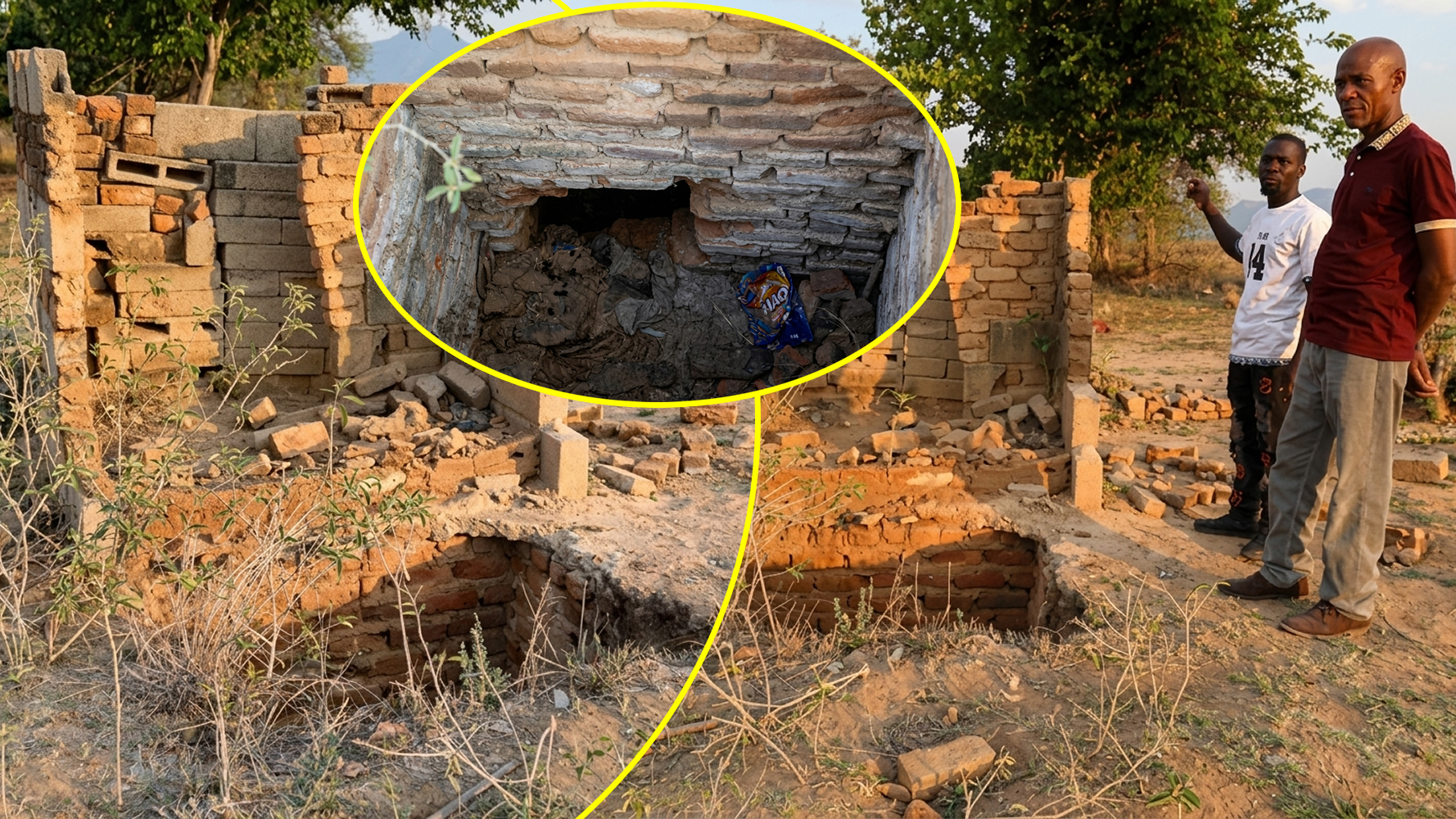
The search for 73-year-old Rhoda Mapako Muranda ended on October 13, 2026, when her grandson Jasper Abel Muranda found human bones in the pit of a toilet at her homestead in Maenzanise Village, under Chief Makoni.
The remains were discovered about 15 months after she disappeared. Her 32-year-old grandson, Trymore Mapako, has been arrested and charged with murder. Police allege that he killed her in July 2025 and hid her remains in the family’s Blair toilet. He appeared before the Rusape Magistrates’ Court and was remanded in custody until October 30.
The discovery followed months of uncertainty for a family that had been told the elderly woman had moved away. According to relatives, Mapako said she had gone to Mutare and later Odzi to live with a partner. But as time passed, she missed family events and could not be reached by phone, while questions about her whereabouts remained unanswered.
Jasper said his grandmother had told him on July 21, 2025, that she intended to attend a funeral the next day. When he returned home on July 22, she was gone. Her phone was switched off, and Mapako told him she had gone to the funeral.
“When I returned the next day, she was not at home. I tried to call her, but her phone was switched off. Trymore lied to me that she had attended a funeral that morning, yet he knew very well that he had killed her,” he said, adding that as days passed without their granny returning home, they became increasingly concerned, prompting his father to make a missing person report to the police.
Jasper said the explanation changed as the family continued asking questions. Mapako told relatives that his grandmother had eloped with a partner and was living happily in Mutare and Odzi. The family became more troubled when she did not attend the funeral of her son the following month.
The case came into focus again when Jasper returned from Masvingo, where he had been working, determined to find out what had happened. He said he had experienced recurring dreams in which his grandmother appeared to direct him to the place where she had been buried. He shared the dreams with his father, but said his concerns were initially dismissed. As they continued, he left his job and went back to the homestead.
“In the dreams, we would be together at the homestead, with granny instructing me to dig, and whenever I complied, I would find her underneath. She would whisper to me that Trymore had buried her there,” he said, adding that he would share the awkward dreams with his father, whose reaction was dismissive.
About 2 weeks before the discovery, Jasper confronted Mapako and demanded to know where his grandmother was. He said Mapako continued to insist that she was in Mutare. Jasper told him about the dreams and challenged his account. According to Jasper, Mapako became visibly distressed before admitting that the remains were in the toilet, while denying responsibility for her disappearance.
“He insisted that she was in Mutare, but I challenged his account. I told him our granny was appearing to me in my dreams, indicating where he had buried her remains. Trymore started sweating heavily and breathing hard. He eventually confessed that her remains were in the toilet, but denied responsibility for her disappearance,” he said.
Jasper said he did not know whether to believe the admission. On October 13, he borrowed a hoe from a neighbour and began searching around the homestead with his younger brother. As they dug near the toilet, Mapako became angry, Jasper said, and he confronted him again. Jasper said Mapako then admitted that he had killed their grandmother and put her remains in the pit.
At first, Jasper thought the bones he saw might belong to an animal. Then he noticed teeth and a skull with a deep cut. He said he realised the remains were human and contacted his father. Dunmore Muranda arrived the following day with police, who directed the family to retrieve the remains.
“I first saw bones that looked like ribs, but I thought they belonged to an animal. Then I saw teeth and a human skull with a deep cut, and it dawned on me that these were granny’s remains,” he said, adding that he immediately informed his father, who arrived the following day with the police.
Jasper said Mapako told him the killing happened on July 22, 2025, the day after Jasper’s last visit. He recounted the alleged confession this way: “He said whenever he got married, she would behave like his second wife, causing his wives to quit. He claimed that his wives suffered miscarriages, and blamed it on the deceased,” said Jasper.
Jasper also described what Mapako allegedly said about disposing of the body: “He allegedly killed her that morning, chopped her body parts, packed them in plastic bags before throwing them in the pit latrine,” said Jasper, adding that he spent months searching for the deceased, prompting his return from Masvingo, where he was working to establish the truth about her disappearance.
The family had been looking for Rhoda since the previous year. Her son, Dunmore, said he last spoke to her on July 19, 2025, and was told she was missing 3 days later. His suspicions grew when he called her number about 6 months after she disappeared and Mapako answered.
“He lied to me that he had found it in her purse. It was suspicious, but we did not act immediately. We simply took the phone from him,” he said.
Dunmore said Mapako had lived with Rhoda for 14 years. He said she had welcomed him home after he was released from prison, despite a previous violent episode that had left her and another grandchild injured. According to Dunmore, Mapako had attacked them with an axe, was convicted of attempted murder and served 4 years in prison.
“Years ago, he attacked her and another grandchild (six), with an axe. He was convicted of attempted murder and served four years in prison. When he was released, she welcomed him. She loved him as her grandson. I would tell her to let him go due to his violent tendencies, but she would not listen,” he said, adding that Trymore cleaned the house after killing her and applied red floor polish to conceal bloodstains.
Dunmore said the family was still waiting for forensic work and DNA testing, and that a pelvic bone remained missing. Traditional leaders had told relatives that the burial could not take place until the missing remains were accounted for. Forensic and DNA tests were scheduled for October 30.
“The traditional leadership instructed that we cannot bury her while some bones are still missing. We are also waiting for pathological and DNA tests. The family and community are grieving,” he said.
The discovery has also brought renewed attention to earlier concerns about Mapako’s behaviour in the village. A villager, Isaac Maenzanise, accused him of setting fire to his grandmother’s huts. Maenzanise also made a separate allegation about an incident involving a married neighbour the week before the remains were found.
“Last week, he attempted to rape a married neighbour. He gave the woman’s husband lots of alcohol before making advances towards her,” he said.
Headman Gandanzara described the case as the worst incident he had encountered in the area. Mapako remains in custody, and police investigations are continuing as the family waits for the forensic results and seeks the missing bone before making burial arrangements.