


NAIROBI – The estate of Zimbabwean businessman Wicknell Chivayo is entering a disclosure process that could bring his cross-border business interests into sharper view, including any companies, shareholdings or investments connected to Kenya. His family has signed an undertaking for joint administration that requires information on the estate’s assets, liabilities, company interests, trusts and business dealings to be shared. However, the document does not establish that Chivayo owned a Kenyan contractor or held a stake in a public project.
Chivayo and his wife, Lucy Muteke, died with 4 other people when a helicopter crashed near Marondera on September 30, 2026, a crash that killed all 6 people on board. His death has left 2 minor children, a high-profile estate, a pending matrimonial dispute and a range of claims linked to his public business and private spending. The estate was registered with Zimbabwe’s Master of the High Court, which oversees deceased estates and their administration.
Earlier this week, Chivayo’s former wife, Sonja Louise Madzikanda, and his sister, Esther Chivayo, signed a co-executorship undertaking. It sets out how they are to act jointly and share information as the estate is administered. Among the records to be disclosed are company shareholdings, investments, trusts and business interests. Newly discovered documents are to be shared within 2 business days, or immediately where urgent action is needed to protect estate property.
The undertaking also sets out safeguards for potential conflicts of interest. Where a company is jointly linked to Esther and the estate, Sonja is to represent the estate in decisions about its interest, while Esther steps aside from those decisions. A reciprocal arrangement applies to matters where Sonja’s or the children’s interests could conflict with the estate. Separate accounts held in the names of the children are identified as belonging to them, rather than to the estate. The joint-administration undertaking also requires the women to establish procedures for records, bank mandates, payments and the safeguarding of assets.
The new agreement gives the family a framework to map the business network, but it does not itself reveal what the inventory will contain. The estate was registered with the Master’s Office, and an initial meeting was held, but the office did not disclose the contents or value of the estate. The administration process must now establish which assets belonged to Chivayo personally, which were held through companies or trusts, what is owed to creditors and what claims may be made against the estate.
Kenya links under scrutiny
Questions about Kenya have centred on IMC Construction Kenya, described in earlier accounts as a company wholly owned by Chivayo, and on claims that it was connected to a consortium seeking to expand Jomo Kenyatta International Airport (JKIA) in Nairobi. Kenya’s government rejected the claim that Chivayo or IMC had submitted a bid or taken part in the project. No official record cited in the current court proceedings establishes that he owned a stake in the airport contract.
The airport plan has nevertheless become the subject of a transparency case. On June 23, Kenya signed a design-and-build contract with China Road and Bridge Corporation worth 154.2 billion Kenyan shillings. The government said the scheme would include a new terminal and upgrades to existing infrastructure. Earlier public figures had put the project at about 375 billion shillings, a figure the government rejected. The Kenyan Ministry of Roads and Transport’s contract announcement sets out the award, contractor and scope of the work.
The Consumers Federation of Kenya went to the High Court seeking disclosure and questioning the procurement, financing and beneficial ownership of the project. On October 17, Justice Gregory Mutai declined to stop the upgrade but ordered the government to produce the contract and award notice and to preserve project records, including correspondence, approvals and financial documents. The judge noted that the claims linking Chivayo to the JKIA project were based on media accounts and that no evidence connecting him to the project had been presented to the court. The court’s directions on disclosure and preservation of project records concern public disclosure and ownership questions; they do not establish that Chivayo’s company was part of the winning contract.
That distinction matters to the estate search. The signed undertaking calls for disclosure of business interests and shareholdings generally, but it does not name IMC Construction Kenya or direct a Kenya-specific investigation. Any Kenyan company or investment that is ultimately found to be linked to Chivayo would have to be identified and assessed as part of the wider accounting. The record available so far confirms that the airport contract went to a different contractor and that the government denied IMC’s involvement.
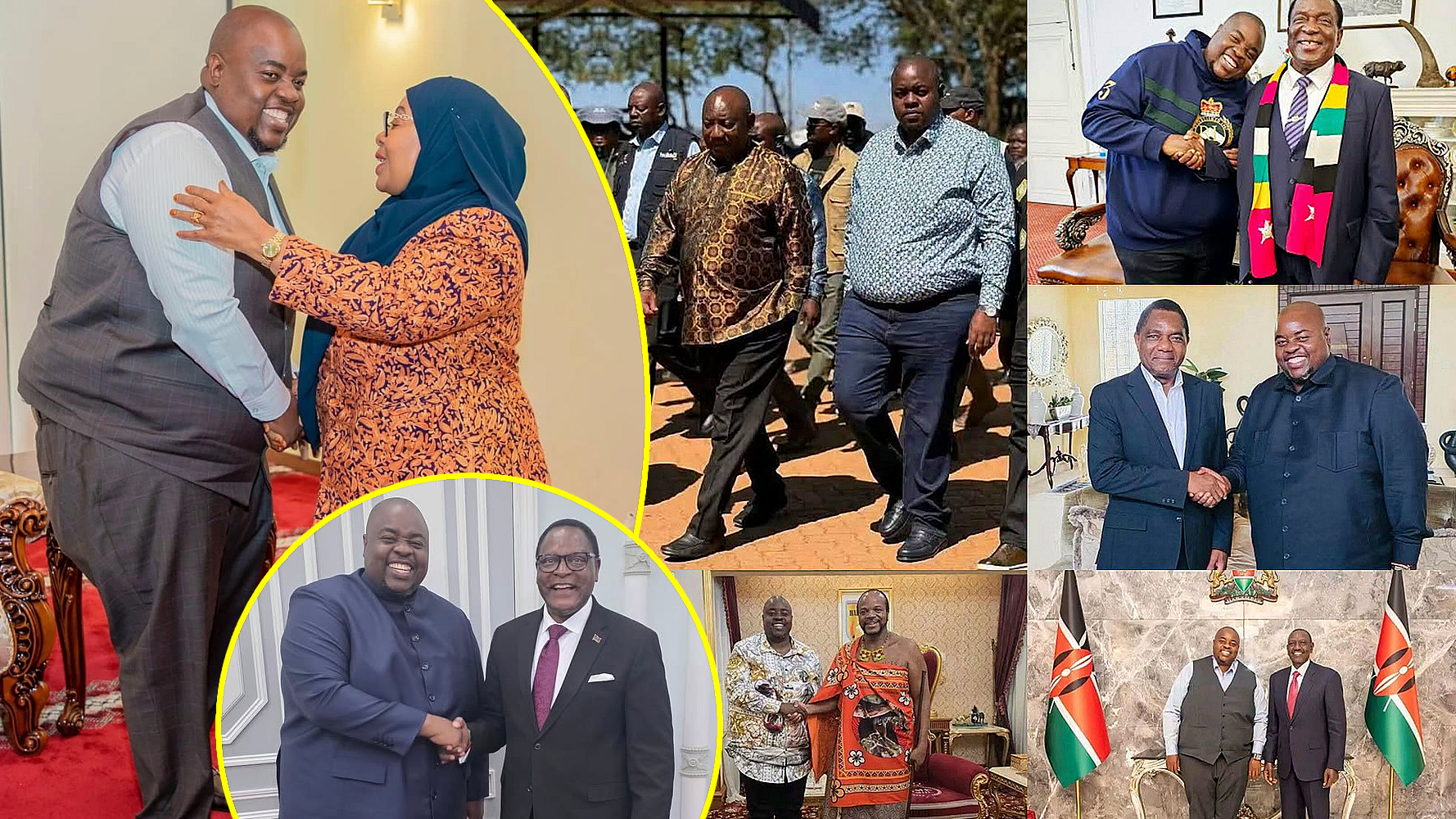
Chivayo had made his personal access to Kenyan leaders visible. He shared images of visits to State House and other official settings, and was photographed with President William Ruto. In August, Ruto was seen driving him towards a helicopter after a traditional engagement ceremony for Ruto’s daughter, Charlene, at the President’s Kilgoris residence. After the crash, Ruto described Chivayo as a “dear friend”. Chivayo had also referred to Kenya as his “second home”. Those public connections help explain why his Kenyan relationships are now being revisited, but they do not by themselves prove ownership of a company or involvement in a government award.
Estate faces claims and unresolved disputes
The Kenya questions are one part of a much wider reckoning. Chivayo’s ex-wife has a US$25 million matrimonial-property claim that was awaiting a Supreme Court decision when he died. The claim included a lump-sum payment, monthly maintenance, living costs, properties in Harare and Johannesburg, and luxury vehicles. The proceedings were removed from the court roll after his death, pending representation of the estate. His lawyer, Advocate Sylvester Hashiti, said: “The matter was removed from the roll on account of appellant’s demise until such a time he is substituted by his executor or executrix who will represent him in court as concerns any claims against his estate.”
The family’s arrangement now places both Madzikanda and Esther in the process of administering the estate, while setting out who should make decisions where personal interests may overlap with estate matters. The children’s interests are also explicitly addressed in the undertaking. The eventual accounting will therefore have to bring together property, business holdings, liabilities and the pending family dispute before any distribution can be determined.
The liabilities could be substantial. Three Harare dealerships — Exquisite Cars, Enterprise Car Sales and Faramatsi Motors — have been reported as owed a combined US$5.1 million for vehicles supplied to Chivayo. Figures attributed to sources familiar with the arrangements put the amounts at US$1.4 million for Exquisite, US$1.3 million for Enterprise and US$2.4 million for Faramatsi. The reported balances were linked to credit arrangements under which cars could be taken before payment was completed. The reported dealer balances and credit arrangements also include a dispute over the amount owed to Exquisite Cars.
One source familiar with those arrangements said: “Most of his income came from the government. So these payments to the car dealers followed cycles of disbursements by the treasury, and the car dealers were comfortable with their arrangement.” Exquisite Cars owner Victor Vikela disputed the reported amount owed to his business, saying it was greatly exaggerated and that whatever Chivayo owed it “has been written off.” The amounts therefore remain claims to be reconciled against invoices, payments and any other records obtained by the estate administrators.
The vehicle debts sit alongside Chivayo’s highly publicised gifts of luxury cars, cash and other support to musicians, religious leaders and public figures. He claimed to have given away more than US$100 million, while accounts of gifts made publicly put the total above US$50 million. The estate review will have to distinguish between money given away, assets bought outright and purchases financed through credit.
Business interests and assets to be traced
Chivayo’s best-known Zimbabwean business was Intratrek, which received the contract for the 100-megawatt Gwanda solar project in 2015. The project was initially valued at about US$172.8 million. Zimbabwe Power Company paid an advance of about US$5 million in 2016, but the project was delayed and became the subject of lengthy disputes. Revised terms later reduced the engineering and construction cost, and Intratrek was given a further 24 months to complete the plant. The project’s award, advance payment and delayed progress make it one of the most significant business interests to be examined alongside any overseas companies.
Chivayo also faced scrutiny over contracts for election materials connected to the 2023 election. Zimbabwe’s anti-corruption commission investigated allegations around contracts awarded to South African company Ren-Form, then closed its inquiry in 2025, saying it had found no evidence linking Chivayo or the Zimbabwe Electoral Commission to wrongdoing. He had previously been prosecuted over the Gwanda advance payment and was acquitted in 2023. These episodes form part of the public record around the businesses and public contracts associated with him, but they are distinct from the question of what assets or liabilities belong in the estate.
The visible portfolio associated with Chivayo has included properties in Harare, Cape Town and Eswatini, as well as private aircraft. He was also reported to have completed the purchase of a property in England valued at US$12 million shortly before his death. Another estate question surrounds a large Harare property in Gletwyn: a 2017 sale agreement set a US$2.555 million price, but the transfer was reported not to have been completed after a dispute over the property’s tax valuation. Details about the property, aircraft and outstanding purchase claims show why the inventory will need to establish ownership, payments made and any outstanding claims before such assets can be counted as part of the estate.
The crash that killed Chivayo and Muteke cut short a public life built around government contracts, conspicuous giving and visible access to political leaders across the region. Now the task facing those administering his estate is less about the public image than the records behind it: company registers, bank accounts, trusts, contracts, purchase agreements, credit balances and obligations across more than one country.
For the 2 children, creditors and claimants, the final figure will not be the sum of assets displayed or publicly claimed during Chivayo’s lifetime. It will depend on what the administrators can document, what liabilities are recognised and whether any foreign business interest can be traced to the estate. The Kenyan connection remains a question for that wider accounting, not a confirmed stake in the airport project.