

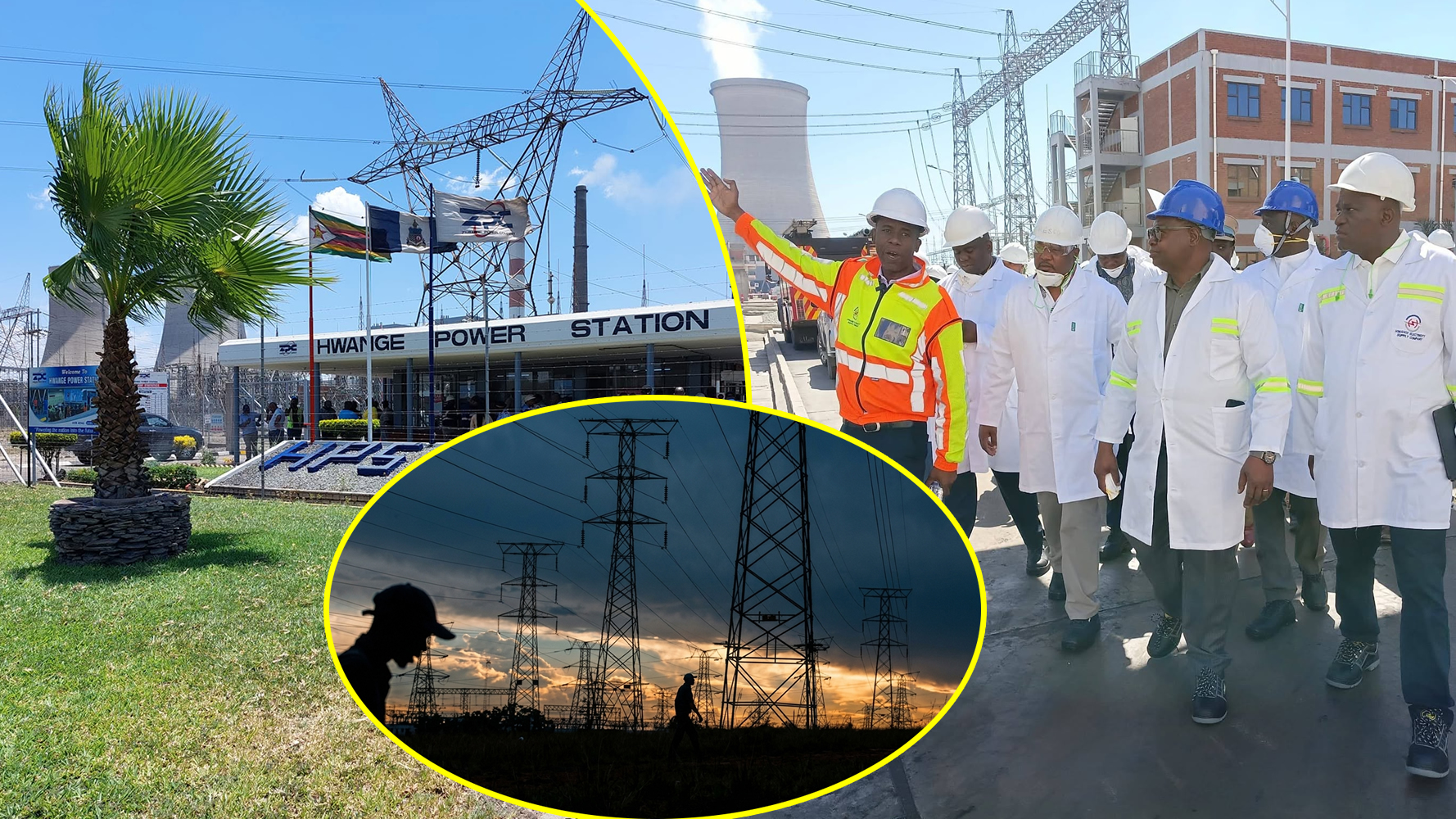
Zimbabwe is heading into the festive season with two of its biggest power units scheduled to be offline for weeks, leaving the country more dependent on Kariba water, electricity imports and private generators just as demand remains close to the level its power system struggles to meet.
The Zimbabwe Electricity Supply Authority (ZESA) said in a notice dated 12 November that Hwange Power Station Units 7 and 8 would enter planned maintenance from 15 November (today). Unit 7 is expected back on 4 January 2027. Unit 8 is due to return on 26 January.
That means both units are expected to be out at the same time from mid-November until early January. After Unit 7 returns, Unit 8 would remain offline for another three weeks. The timing places the work across Christmas and New Year, when homes, shops and essential services still rely on a stable supply even if some factories and offices reduce activity.
ZESA described the work as preventive maintenance intended to keep the units reliable. “The maintenance programme forms part of the utility’s routine asset management strategy aimed at sustaining plant performance, improving operational reliability and ensuring the continued availability of generating units for the national grid,” the utility said.
The shutdown is significant because Units 7 and 8 are the newest large units at Hwange and together represent a substantial portion of the station’s capacity. Each is rated at 300 megawatts of net output by the Zimbabwe Power Company. Their gross design rating is 335 megawatts apiece. The difference reflects two ways of measuring output: net capacity is the electricity available after power-station equipment uses some of the electricity generated.
Hwange has eight generating units. Its original six units comprise four rated at 120 megawatts each and two at 220 megawatts each, for a combined 920 megawatts. The two expansion units add 600 megawatts of net capacity, bringing the expanded station’s total to about 1,520 megawatts on that basis.
On the net-capacity measure, the 600 megawatts represented by Units 7 and 8 amount to roughly 39.5 per cent of Hwange’s expanded installed capacity. Using the gross design ratings instead, the two units total 670 megawatts out of 1,590 megawatts for the full station, or about 42 per cent. However, these percentages describe Hwange’s rated capacity, not the share of all electricity Zimbabwe generates, and they do not establish how much power the units were producing immediately before maintenance.
Their actual contribution changes with operating conditions. A June 2026 generation snapshot put Hwange’s output at 1,006 megawatts, while Kariba supplied 520 megawatts and independent power producers supplied 58 megawatts. Together, those sources accounted for 1,584 megawatts of reported domestic generation at that point. A separate July figure put Zimbabwe’s peak demand at 1,901 megawatts. The figures are from different dates, and imports also contribute to supply, but they show the narrow margin between the electricity the country can produce and the amount it needs during peak periods.
Zimbabwe’s installed capacity is larger than its dependable supply. The national energy plan lists about 2,962 megawatts of installed generation capacity, including coal-fired power, Kariba hydropower and smaller private plants. Yet dependable capacity has been put at between 1,200 and 1,600 megawatts, against peak demand of around 2,000 megawatts. Ageing equipment, maintenance, water limits and the availability of imports all affect how much of the headline capacity can be delivered at a given time.
The country has relied on cross-border purchases to fill part of that gap. In 2025, gross electricity imports were reported at 1,129.7 gigawatt-hours. Domestic independent producers supplied 574.5 gigawatt-hours during the year. Those annual totals cannot predict how much power will be available on a particular evening, when demand rises and generating units or transmission links may be unavailable.
Kariba faces a lower water allocation
ZESA says it plans to increase generation at Kariba during peak periods while continuing to manage the lake carefully. Kariba is Zimbabwe’s largest hydropower station, with an installed capacity of 1,050 megawatts. But the plant’s nameplate capacity does not mean it can operate at that level indefinitely: electricity production depends on water releases, reservoir conditions and operating decisions shared across the Zambezi River system.
The latest reservoir figures available from the Zambezi River Authority put Lake Kariba at 479.98 metres on 10 November 2026, with 20.52 billion cubic metres of live storage, or 31.67 per cent. On the same date in 2025, the lake was at 476.67 metres and usable storage was 8.09 per cent. The comparison shows a stronger position than a year earlier, but the lake was still falling during the latest reported period. Between 1 and 10 November 2026, the recorded level slipped from 480.19 to 479.98 metres.
Water limits for the coming year have become a fresh concern. The Zambezi River Authority approved a total allocation of 23 billion cubic metres for power generation in 2027, divided equally between Zimbabwe’s ZPC and Zambia’s ZESCO. That is down from the revised 2026 allocation of 36 billion cubic metres, or 18 billion for each utility. The 2027 allocation is about 36 per cent lower than the revised 2026 total.
ZRA Acting Chief Executive Peter Kapinga said: “The allocation is based on forecasts of strong El Niño conditions and below-normal rainfall prevailing during the 2026/2027 rainfall season,” The US Climate Prediction Center had issued an El Niño advisory in November and forecast a strong-to-very-strong event through the first quarter of 2027. The outlook is a risk signal for water availability; it is not a measurement of rainfall already received in the Kariba catchment.
The water allocation is not itself a published megawatt cap or a timetable of power cuts. ZRA sets the water available for generation, while the two national utilities determine how their power stations operate and how electricity is distributed. The figures released so far point to a tighter water budget in 2027, but no separate ZRA schedule setting a specific 2026–27 Kariba output limit in megawatts was found.
ZESA says it intends to draw on regional imports through the Southern African Power Pool and to use electricity from independent producers under power-purchase agreements. It also cites solar plants being connected to the grid, embedded generation and a seasonal easing in demand. The notice did not give the contracted import volumes, the amount of new power expected from independent producers or a forecast of how much Kariba can supply during the Hwange outage.
A familiar cycle of outages and contingency plans
The coming maintenance follows earlier interruptions at Hwange. In September 2025, Unit 3 was scheduled for a 44-day statutory maintenance outage. That work took place during a period when consumers were already facing severe cuts, with outages reported to last as long as 20 hours in some areas. In November 2025, ZESA said it had set aside US$12 million for day-ahead purchases from the regional power pool during maintenance on Units 7 and 8, while the power company said optimisation work would add 120 megawatts.
Zimbabwe also experienced a major grid disturbance in July 2026 after a fault on a 330-kilovolt transmission line disrupted the interconnection and triggered instability across the system. Supply was restored within about four hours. The incident was separate from the planned Hwange maintenance, but it showed how a transmission problem can affect power availability even when generating units are operating.
ZESA’s current contingency measures rely on several sources working together: Kariba output at peak times, imported electricity, independent power producers and solar generation. Any one of those sources can add supply, but the notice did not quantify how much each is expected to contribute during the two-unit outage. It also did not publish a schedule of expected load-shedding hours.
The utility urged customers to conserve electricity. “Customers are encouraged to use electricity efficiently during this period and supply interruptions should be reported to our National Contact Centre on 704,” ZESA said. It added: “ZESA Private Limited remains committed to delivering reliable and sustainable electricity to all customers. We appreciate the understanding and cooperation of our customers and stakeholders as we undertake this essential maintenance programme to strengthen the long-term reliability of the national power system.”
The pressure on the system has a longer history than the latest maintenance notice. Zimbabwe’s planned Gwanda solar project was meant to add 100 megawatts of generation. A first procurement effort was cancelled after a dispute over the winning bid’s price. A later engineering, procurement and construction agreement was signed in 2015 between the Zimbabwe Power Company and Intratrek Zimbabwe, with a contract value reported at about US$172.8 million.
The project did not produce electricity in the years that followed. A parliamentary committee raised concerns about procurement and advance payments after examining the project. The contract was terminated in 2018, and the parties then spent years in disputes over whether it remained in force. In 2023, the Supreme Court upheld the validity of the agreement and ordered the parties to perform their contractual obligations; it did not award the US$22 million in damages that had featured in public accounts of the case.
Accounts of the advance paid for early project work have varied, from about US$5 million to more than US$5.8 million. At Wicknell Chivayo’s funeral in October 2026, his younger brother Joachim, known as G6, spoke about the payment. “He woke me up in the morning and said, ‘The deal has gone through. US$5 million has been paid,'” he told mourners. He also said: “I was seeing him on Facebook wearing US$90 000 shoes and going to America.”
The remarks revived scrutiny of the project and the use of public funds, but the quoted account did not establish that the Gwanda advance paid for the shoes or a trip to Dubai. No power from the Gwanda plant has been available to help meet Zimbabwe’s demand during the Hwange maintenance. In September 2026, a new restart plan was reported, with the contract value revised to US$132 million and a 24-month completion period. The project’s history remains a reminder that planned capacity does not assist the grid until a plant is completed, connected and generating.
Hwange’s maintenance is scheduled, and ZESA says it is intended to protect long-term reliability. The immediate challenge is keeping supply steady while two large units are offline, without placing unsustainable pressure on Kariba or relying on imports that may not always be available. The utility has set out its mitigation measures, but has not published the expected megawatt contribution from each one or a detailed festive-season supply forecast.