
Police Capture Chitungwiza Mechanic After 18-Day Manhunt Over Mother’s Hammer Killing
CHITUNGWIZA – A quiet morning in Unit L turned into a scene of horror that has left a close-knit neighbourhood struggling to understand how a reserved, hardworking mechanic ended up accused of taking his own mother’s life.
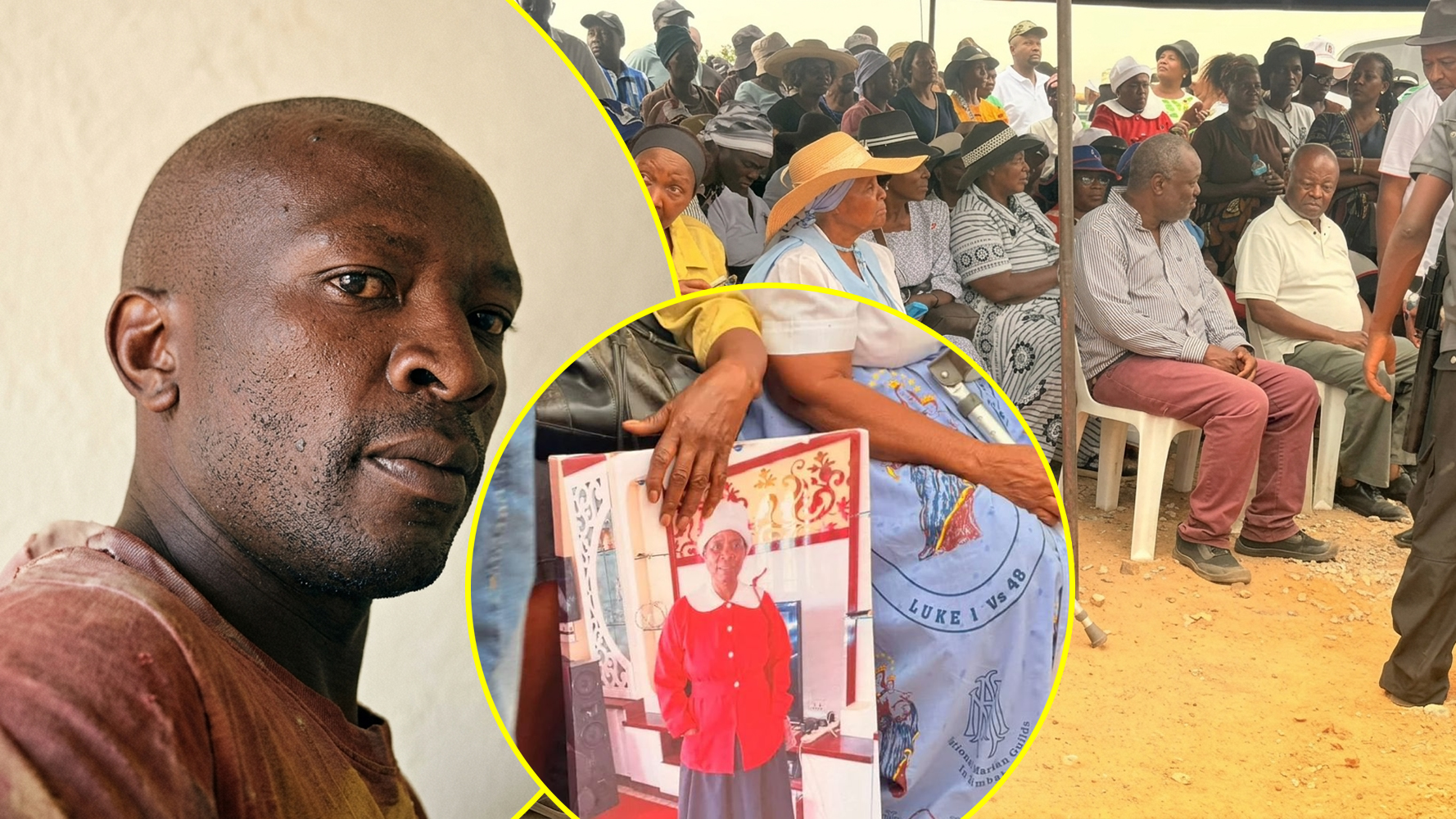
Police have arrested 44-year-old Bob Nobert Luwaca, ending an 18-day manhunt following the death of his 72-year-old mother, Rosemary Luwaca, at their family home in Chitungwiza. Zimbabwe Republic Police (ZRP) national spokesperson Commissioner Paul Nyathi confirmed that Luwaca was finally taken into custody on 23 November 2026, weeks after he vanished from the scene of the attack.
“Reference is made to the ZRP appeal for information on the whereabouts of a murder suspect, Bob Nobert Luwaca (44), who was being sought in connection with a murder case involving the killing of his mother in Chitungwiza. ZRP confirms the arrest of Bob Nobert Luwaca. He will appear before the courts in due course,” Commissioner Nyathi said in an official statement.
Luwaca is expected to appear before the Chitungwiza Magistrates’ Court once investigating officers complete their docket. He faces a charge of murder under Section 47 of the Criminal Law (Codification and Reform) Act.
A Morning That Turned Deadly
The sequence of events that led to the tragedy began on the morning of Thursday, 5 November 2026. Known locally around Unit L as “Bobby” and by the nickname “Vonbarche”, Luwaca earned his living repairing motor vehicles and selling second-hand vehicle fasteners at the bustling Unit L market.
According to accounts from neighbours who witnessed the events unfold, Luwaca had spent the earlier part of that morning drinking illicit beer—locally referred to as tumbwa—with a friend at the Unit L Shopping Centre around 10am. Shortly afterwards, he walked back to the family residence he shared with his mother.
Upon arriving home, he found Rosemary asleep in her bedroom. A neighbour recounted that Luwaca woke the 72-year-old woman up and began shouting at her, loudly accusing her of bewitching him. Police reports indicate that a domestic dispute erupted inside the house before Luwaca went into his own room, picked up a heavy six-pound hammer, and returned to his mother’s bedroom. While she was still in bed, he struck her twice on the head with the tool.
Police officers who later attended the scene recovered the bloodstained six-pound hammer inside another room at the property.
A Chilling Confession at the Shops
“I have killed my mother,” Luwaca told Chakaodza, according to a neighbour familiar with the encounter.
Alarmed by the statement, Chakaodza rushed straight to the Luwaca residence to check on the elderly woman. Inside her bedroom, he discovered Rosemary lying face down and lifeless on her bed in a pool of blood, having suffered deep cuts to her forehead and just above her right ear. By the time the alarm was raised and police arrived, Luwaca had disappeared.
“The suspect fled from the scene after committing the offence,” Commissioner Nyathi stated as police launched an urgent public appeal for information regarding his whereabouts.
Sudden Behaviour Change and Talk of Goblins
For those who had lived and worked alongside Luwaca for more than a decade, the brutality of the attack stood in sharp contrast to the man they thought they knew. Neighbours and fellow traders at the Unit L market described him as a quiet, reserved man who kept to himself and focused on his mechanical work.
“I have been his neighbour since 2009. Bobby never showed any violent traits. We are shocked by the incident,” said neighbour Nomsa Gwengo.
However, workmates revealed that in the days leading up to 5 November, Luwaca’s behaviour had taken a troubling turn. Colleagues noticed that he had begun consuming illicit alcohol and had become increasingly fixated on fears of witchcraft, claiming that goblins were tormenting him.
Takawira Gunha, a close friend and fellow worker at the market, recalled that Luwaca had spoken openly about being troubled by goblins and insisted someone was bewitching him. Gunha noted that his friend had even talked about killing the person he held responsible.
Another colleague, Patience Dinembira, echoed those observations, pointing out how drastically his demeanour had shifted from the calm mechanic she had worked with for years.
“We never expected this from Bobby. He used to be a very calm person. We used to work well together. However, he started abusing drugs recently. I think that’s what led to this. In the past few days, he was saying he wanted to kill someone who was bewitching him. Then we woke up to his mother’s murder, allegedly perpetrated by him,” Dinembira said.
While Dinembira suspected drug abuse was behind the sudden change, another long-time acquaintance, Kennedy Chinyemba, maintained that Luwaca had been drinking illicit brews rather than using harder narcotics. Regardless of the exact substance involved, those closest to him agreed that his paranoia and anger had escalated rapidly before that Thursday morning.
A Desperate Search Before the Burial
While police searched for the fugitive, Rosemary’s devastated relatives mounted their own frantic effort to track him down—not only to get answers, but in the hope that he might be found before his mother was laid to rest. Luwaca was Rosemary’s third-born child and lived with her at the Unit L house.
The morning after the killing, Luwaca made brief contact with his family using his late mother’s mobile phone. He telephoned his brother and asked for US$50 to be sent to him via EcoCash. Over the following days, he intermittently reached out to a few relatives, though he never stayed in one place long enough to be caught.
“Bobby has occasionally been getting in touch with some relatives. He has reached out to a few people, but we have not yet managed to locate him,” his cousin, Colleta Muzembe, explained during the search.
Acting on a tip-off, Luwaca’s uncle, Marshall Muzembe, led family members on a chase north of Harare, tracking the suspect to Domboshava and nearly intercepting him near Glen Forest before he slipped away again.
“Yesterday, we managed to track him to Domboshava, where he was reportedly seen. We almost caught up with him at Glen Forest, but unfortunately, we missed him. As his uncles, we had even pleaded with his late mother to forgive him and help us find him before her burial, so that he could at least witness her final farewell. We desperately want him to be found. He is still using his mother’s phone, and we hope the police will be able to track him down and arrest him,” Marshall Muzembe said ahead of the funeral.
On Sunday, 8 November 2026, family members, friends, and Unit L residents gathered at Zororo Memorial Park to bury Rosemary Luwaca without her third-born son present.
“As a family, we really do not know what could have led to this. Bobby lived with his mother, and we are still struggling to understand what drove him to do such a thing. We hope he will be found so that we can get answers,” said her nephew, Ignatius Chihota.
Rosemary’s sister, Tanatswa Mhishi, pointed squarely at substance abuse as the destructive force behind the family’s grief.
“I strongly believe this could be a case of drug and substance abuse. We are deeply hurt because things should never have ended this way. Drugs are really destructive,” Mhishi said.
Wider Concerns Over Illicit Brews and Domestic Violence
The tragedy in Unit L comes amid growing alarm across Zimbabwe over the deadly intersection of cheap illicit alcohol, substance abuse, and violent domestic disputes. Unregulated high-strength spirits and backyard distillations, commonly sold on the streets as tumbwa for as little as a dollar, have repeatedly been linked to fatal emergencies and violent crime in high-density suburbs and rural growth points alike.
In June 2026, police in Harare raided an illegal alcohol manufacturing operation in Southerton, seizing illicit beverages and ethanol blending materials worth US$920,000 and arresting 46 people. Despite ongoing crackdowns, cheap, unregulated spirits remain widely accessible across urban centres like Chitungwiza, where health officials have warned of severe psychiatric effects and organ damage linked to chronic consumption.
At the same time, law enforcement authorities have raised red flags over a surge in fatal domestic disputes fuelled by family tensions and accusations of witchcraft. In a separate case in Mashonaland East Province just weeks earlier, on 18 October 2026, a 35-year-old man from Pfende Village in Mahusekwa, Blessed Gatsi, killed his 74-year-old mother and his three-year-old daughter following a witchcraft row before fleeing to Buhera, where police eventually tracked him down and arrested him on 14 November.
Police have continually urged families experiencing domestic friction or mental health crises to seek mediation and report disputes early before confrontations turn lethal. With Bob Nobert Luwaca now behind bars in Chitungwiza, investigators are finalising the case docket ahead of his initial court appearance.