


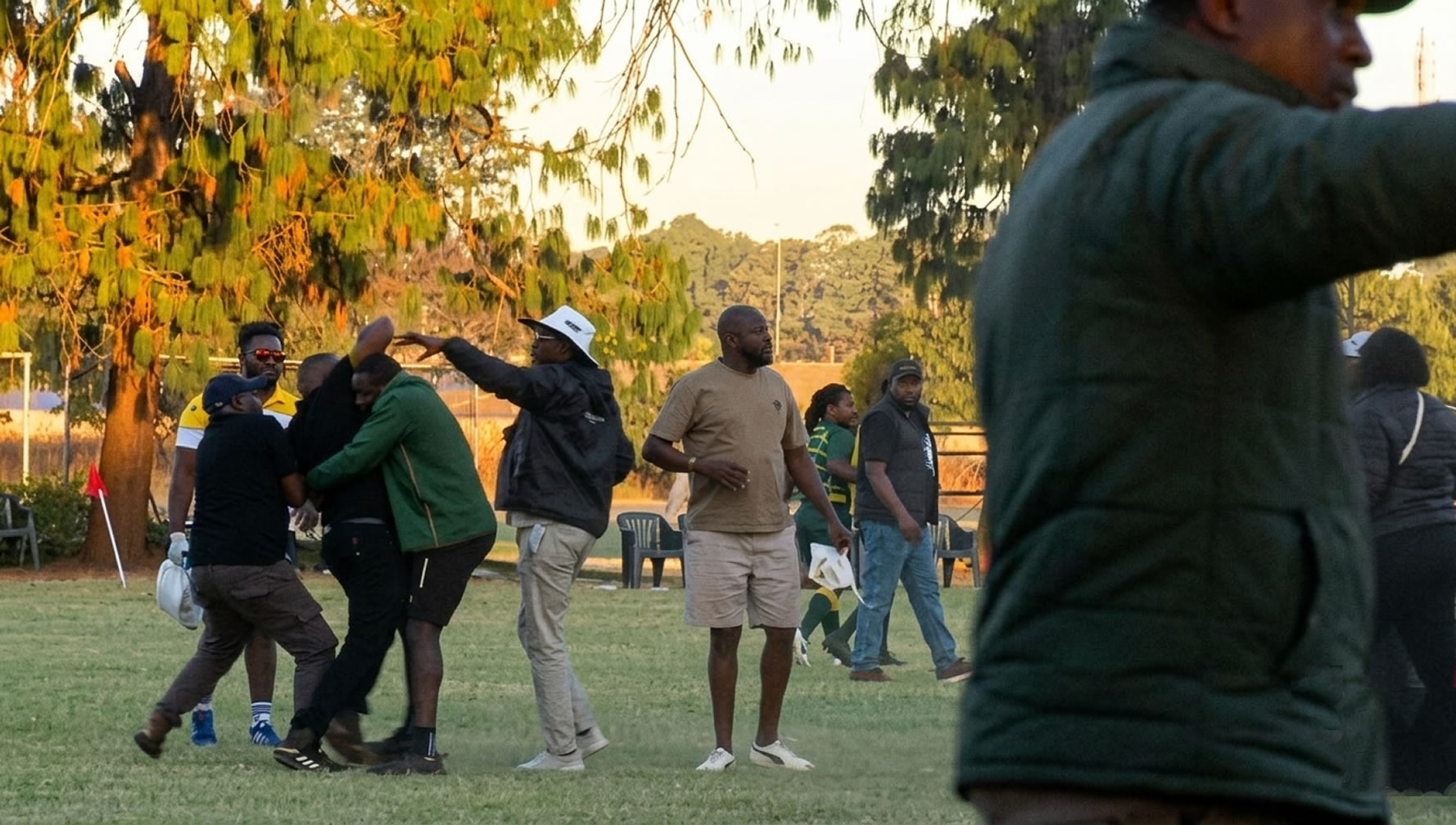
Harare – A chilling incident at a recent schoolboy rugby match between Eaglesvale College and Christian Brothers College (CBC) has cast a long shadow over the integrity of youth sports in Zimbabwe. What began as a fiercely contested fixture culminated in an alarming display of aggression, as a parent allegedly brandished a firearm during a post-match altercation. This event, far from being an isolated sports dispute, has ignited a crucial conversation about public safety, parental conduct, and the escalating tensions that can simmer beneath the surface of competitive school environments.
The incident unfolded on the afternoon of 13 June 2026, at Eaglesvale College in Harare. The air was thick with anticipation as the home team, Eaglesvale, narrowly defeated their rivals, CBC, with a score of 14-13 in a closely fought rugby encounter. However, the celebratory mood was abruptly shattered when, immediately after the final whistle, a group of individuals, reportedly parents and supporters from the visiting Bulawayo-based school, stormed the pitch. Eyewitness accounts describe a rapid descent into chaos, as the pitch invasion quickly escalated into violence .
Among the most disturbing allegations are those of assault. A player from Eaglesvale was reportedly punched, while an assistant referee was said to have been headbutted during the melee. The situation reached a terrifying peak when a parent allegedly produced a firearm. This act, which could have had catastrophic consequences, caused widespread panic among the onlookers. Fortunately, other parents and spectators present at the venue swiftly intervened, restraining the individual and preventing further escalation .
The Zimbabwe Republic Police (ZRP) wasted no time in confirming that investigations were underway. National Police Spokesperson, Commissioner Paul Nyathi, issued a statement on 14 June 2026, acknowledging the gravity of the situation. “The ZRP confirms that investigations are currently underway in connection with a firearm incident and Assault case which occurred at Eaglesvale College, Harare on 13th June 2026,” Commissioner Nyathi stated. He further appealed for calm among all parties involved, including parents, students, administrators, and stakeholders, as police inquiries continued . At the time of writing, no arrests have been publicly announced, and official details regarding the alleged assault or firearm incident remain under wraps, pending the ongoing investigation.
This incident, while shocking, is not entirely unprecedented within the broader context of school sports in Southern Africa. There has been a growing concern over what many describe as a “toxic” culture in elite schools, where immense pressure is placed on young athletes, particularly in sports like rugby. This pressure often extends to parents, who, in some instances, appear to live vicariously through their children’s sporting achievements. Such an environment can foster unhealthy expectations and intense rivalries, sometimes leading to volatile behaviour .
Indeed, the phenomenon of parental misconduct at youth sporting events is a well-documented challenge globally. Studies indicate that negative spectator behaviour by adults is a significant issue, with some research suggesting that a notable percentage of young athletes report being encouraged by coaches to retaliate during games. While the Eaglesvale-CBC incident involved a firearm, previous incidents of pitch invasions and crowd unrest, albeit without weapons, have been recorded in Zimbabwean football, such as the chaotic scenes at Chahwanda Stadium during a match between Hardrock and Dynamos. These events highlight underlying issues of crowd control and emotional regulation among spectators.
Zimbabwean schoolboy rugby, in particular, boasts a rich history of intense rivalries. Matches between institutions like Prince Edward and Churchill, St John’s and Peterhouse, or Falcon College and CBC, are often more than just games; they are deeply ingrained traditions that carry significant emotional weight for alumni, students, and parents alike. While these rivalries can foster healthy competition and camaraderie, they can also, when unchecked, contribute to an environment where passions run too high, blurring the lines between enthusiastic support and aggressive partisanship.
The psychological impact of such incidents on young athletes and spectators cannot be overstated. Witnessing violence, even if not directly targeted, can have profound and lasting consequences on mental health and future engagement with sports. Children and teenagers, who are still developing their emotional coping mechanisms, can be particularly vulnerable to the trauma of such events. The very spaces meant for healthy competition and character building can, in moments of extreme aggression, become sources of fear and anxiety.
Security protocols at school sporting events have also come under scrutiny. While major festivals, such as the Mwana Group Schools Rugby Festival, often implement heightened security measures, regular fixtures between schools may not always benefit from the same level of protection. This disparity can create vulnerabilities, as seen in the Eaglesvale-CBC clash, where a lack of stringent security allowed an individual to allegedly introduce a weapon into the sporting arena.
The incident at Eaglesvale College serves as a stark reminder of the urgent need for comprehensive measures to prevent similar occurrences in the future. This includes not only enhanced security at sporting venues but also a concerted effort to address the cultural factors that contribute to such volatile behaviour. Schools, parents, and sporting bodies must collaborate to foster an environment where sportsmanship, respect, and safety are prioritised above all else. Educational programmes for parents on appropriate sideline behaviour, clear codes of conduct, and robust disciplinary procedures are essential steps towards reclaiming the spirit of youth sports.
Ultimately, the unmasking of the gun-wielding parent at the Eaglesvale-CBC clash is more than just a sensational headline; it is a critical juncture for Zimbabwean school sports. It demands introspection from all stakeholders and a collective commitment to ensuring that the rugby pitch remains a place of healthy competition and enjoyment, free from the shadow of terror.