


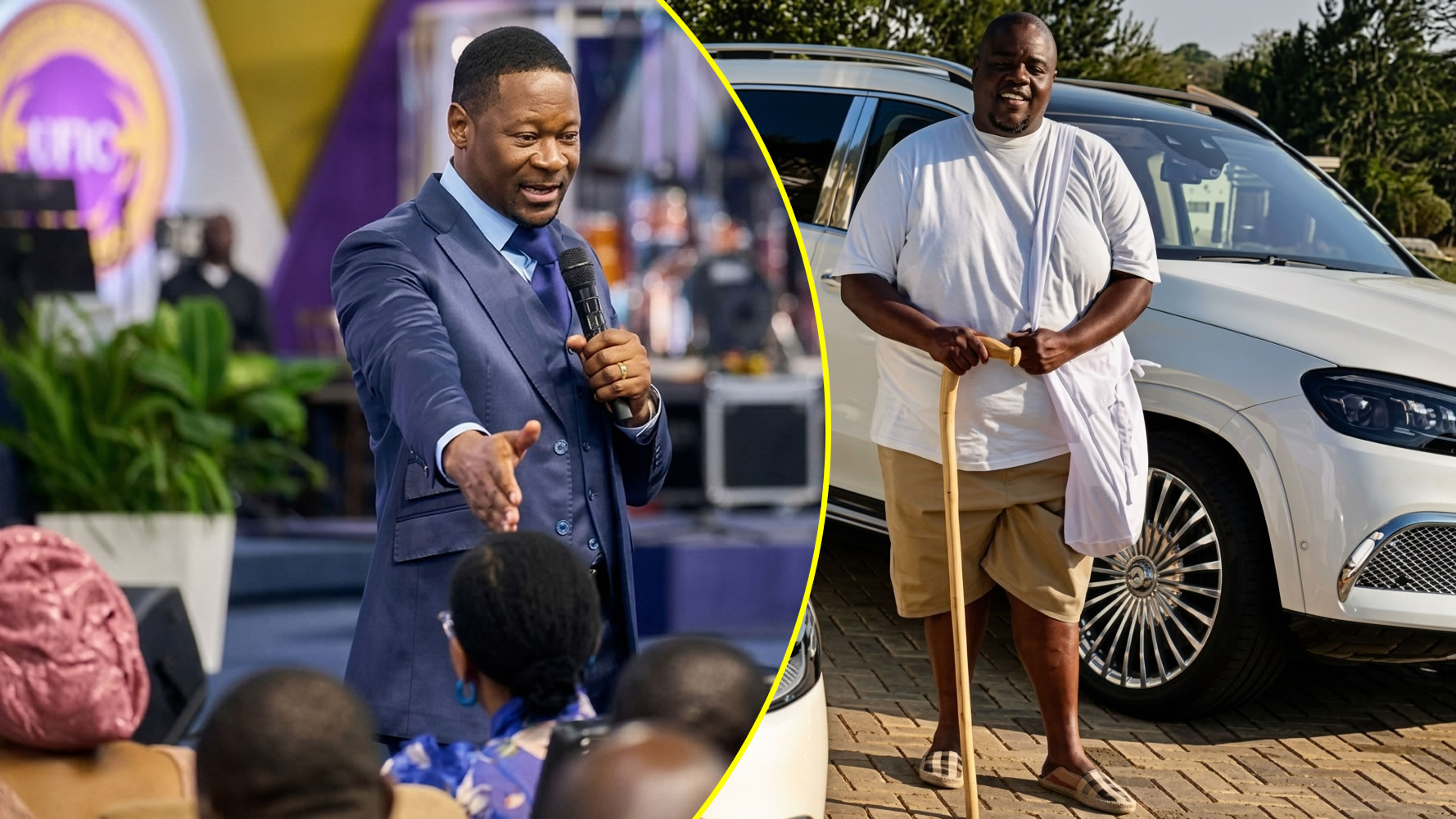
HARARE – In a recent public revelation that has ignited considerable debate across Zimbabwe, controversial businessman Wicknell Chivayo disclosed that prominent gospel preacher Emmanuel Makandiwa politely declined an undisclosed gift, offering instead to pray for the flamboyant tenderpreneur. Chivayo, known for his lavish donations to various public figures, expressed his lack of enthusiasm for the spiritual gesture, stating pointedly, “I didn’t need any prayers from him.” This candid admission has cast a spotlight on the intricate dynamics between wealth, religious influence, and public perception in the nation.
Chivayo’s disclosure came amidst his spirited defence against former MP Temba Mliswa, who had publicly criticised the businessman’s practice of showering politicians and influential individuals with expensive motor vehicles and substantial cash gifts. Mliswa had branded these actions as “excitable actions serving no purpose,” particularly in the context of the Constitution of Zimbabwe Amendment Bill (No. 3) debate. Chivayo, in his characteristic defiant tone, maintained that his gifts were purely voluntary and that recipients were free to refuse them. He cited other notable figures who had previously turned down his generosity without incident, including Eunor Guti, the widow of ZAOGA founder Ezekiel Guti, who reportedly declined a staggering $2 million in cash and a Toyota Land Cruiser 300 Series, and ZIFA president Nqobile Magwizi, who also refused a gift. However, Makandiwa’s rebuff, coming from one of Zimbabwe’s most influential televangelists and founder of the United Family International Church (UFIC), appears to have resonated differently with Chivayo, hinting at a deeper narrative.
The contrast between Makandiwa’s refusal and the eager acceptance by other religious figures is stark. Perhaps the most prominent example is that of Bulawayo-based Pastor Ian Ndlovu of Divine Kingdom Baptist Ministries. Ndlovu and his wife recently became beneficiaries of Chivayo’s largesse, receiving a brand new 2025 Toyota Land Cruiser 300 Series VXR for the pastor and a 2025 Toyota Fortuner 2.8D GD6 for his wife. In addition to the luxury vehicles, Ndlovu also reportedly received a cash gift, with some sources indicating a total value of approximately $430,000. This acceptance, however, was not met with universal acclaim. Instead, it triggered a wave of public outcry and severe criticism, particularly given that Ndlovu’s church members were, at the same time, being asked to donate substantial amounts, such as $8,000, to cover the cost of transferring the title deed for their church land.
The backlash against Pastor Ndlovu was swift and unforgiving. Critics questioned the ethical implications of a religious leader accepting such opulent gifts from a figure whose wealth is widely perceived as questionable, especially when many Zimbabweans grapple with severe economic hardships and a struggling healthcare system. The controversy was further fuelled by outspoken religious leaders like Apostle Chiwenga, who did not mince his words, reportedly labelling Ndlovu as Chivayo’s “sidechick” and an “inzenza,” a derogatory Shona term implying a loose or morally compromised individual. This incident underscored the growing public scrutiny of the financial dealings of religious leaders and their associations with politically connected business figures.
At the heart of these controversies lies Wicknell Chivayo’s own reputation. Widely known as a “tenderpreneur,” his substantial wealth is largely perceived to be derived from lucrative, often opaque, government contracts rather than established, transparent business ventures. His name is frequently associated with allegations of corruption and money laundering, casting a long shadow over his acts of philanthropy. A prime example is the infamous Gwanda Solar Project, where Chivayo’s company, Intratrek Zimbabwe, was awarded a $200 million tender. Despite receiving $5.6 million for pre-commencement works, the project stalled for years, leading to fraud charges against Chivayo. Although he was eventually acquitted or had his trials stalled, the public perception of impropriety persisted. More recently, in 2024, leaked audio recordings allegedly linked him to a controversial US$100 million contract for the supply of election materials to the Zimbabwe Electoral Commission (ZEC), further cementing his image as a businessman whose success is intertwined with political patronage. For many, his gifts are not seen as genuine generosity but rather as attempts to buy influence, legitimacy, or silence.
It is against this backdrop of public scepticism surrounding Chivayo’s wealth that Emmanuel Makandiwa’s refusal gains particular significance. Makandiwa himself is no stranger to public attention, nor to considerable wealth. His opulent mansion in Glen Lorne, Harare, reportedly boasting over 30 bedrooms and its own private access road, and a helipad, is a testament to his immense financial success. While precise figures for his net worth are difficult to ascertain and often subject to speculation, he has consistently been ranked among Zimbabwe’s wealthiest individuals, with some older estimates placing his fortune in the hundreds of millions of US dollars. Given his already substantial affluence, the motivation for accepting Chivayo’s gifts would certainly not be financial need.
Beyond material considerations, Makandiwa has recently embarked on a subtle but significant rebranding effort. He has reportedly expressed a desire to be referred to simply as “Emmanuel Makandiwa” rather than “Prophet Makandiwa.” This shift suggests a potential pivot in his ministry, moving away from the sensationalism often associated with prophetic declarations and miracle-working, towards a more focused emphasis on preaching the gospel of Christ and winning souls. This reorientation could be a strategic move to enhance his credibility and appeal to a broader audience, distancing himself from the controversies that have sometimes plagued charismatic ministries.
One such controversy that continues to linger in the collective memory is the tragic “miracle baby” incident of 2012/2013. In a widely publicised event, a woman identified as Mrs. Moffat claimed to have conceived and given birth within a mere three days, following a prophecy by Makandiwa. The baby, named Emmanuel Moffat, became a symbol of divine intervention for many of his followers. However, the narrative took a heartbreaking turn when the infant died in May 2013 at just six months old, reportedly from dehydration and diarrhoea. The subsequent burial was shrouded in secrecy, with church security allegedly blocking media access and relatives expressing concerns about the hurried nature of the funeral. It was also reported that Makandiwa later purchased a fully furnished five-roomed house in Kuwadzana for the baby’s family, an act that, while seemingly benevolent, also raised questions about the church’s handling of the sensitive situation. Such past incidents, where the line between divine intervention and human tragedy became blurred, could well be a driving force behind Makandiwa’s current desire for a more grounded, gospel-centric identity.
For many Christians in Zimbabwe, the acceptance of gifts from figures like Chivayo carries a heavy price: a loss of credibility. The perception that religious leaders are being “captured” by individuals with questionable sources of wealth undermines the moral authority of the church. When a pastor, whose calling is to guide and inspire, appears to benefit from associations with those implicated in corruption, it inevitably erodes trust among congregants and the wider public. Makandiwa, with his established wealth and a potential desire to redefine his public image, likely understands this delicate balance. His refusal of Chivayo’s gifts can thus be interpreted not merely as a personal choice, but as a strategic decision to safeguard his reputation and the perceived integrity of his ministry in a landscape increasingly scrutinised for its intersections with power and money.
In conclusion, Emmanuel Makandiwa’s decision to turn down Wicknell Chivayo’s gifts, and his subsequent offer of prayer, is far more than a simple exchange between two prominent figures. It is a nuanced reflection of the complex moral and ethical considerations facing religious leaders in contemporary Zimbabwe. Against the backdrop of Chivayo’s controversial “tenderpreneur” status, Pastor Ian Ndlovu’s criticised acceptance of lavish gifts, and Makandiwa’s own journey of rebranding and past controversies, his refusal stands as a powerful statement. It suggests a conscious effort to maintain a perceived distance from potentially compromising associations, to uphold a certain standard of spiritual authority, and perhaps, to redirect the focus of his ministry towards a more enduring legacy rooted in faith rather than fleeting material gain.