


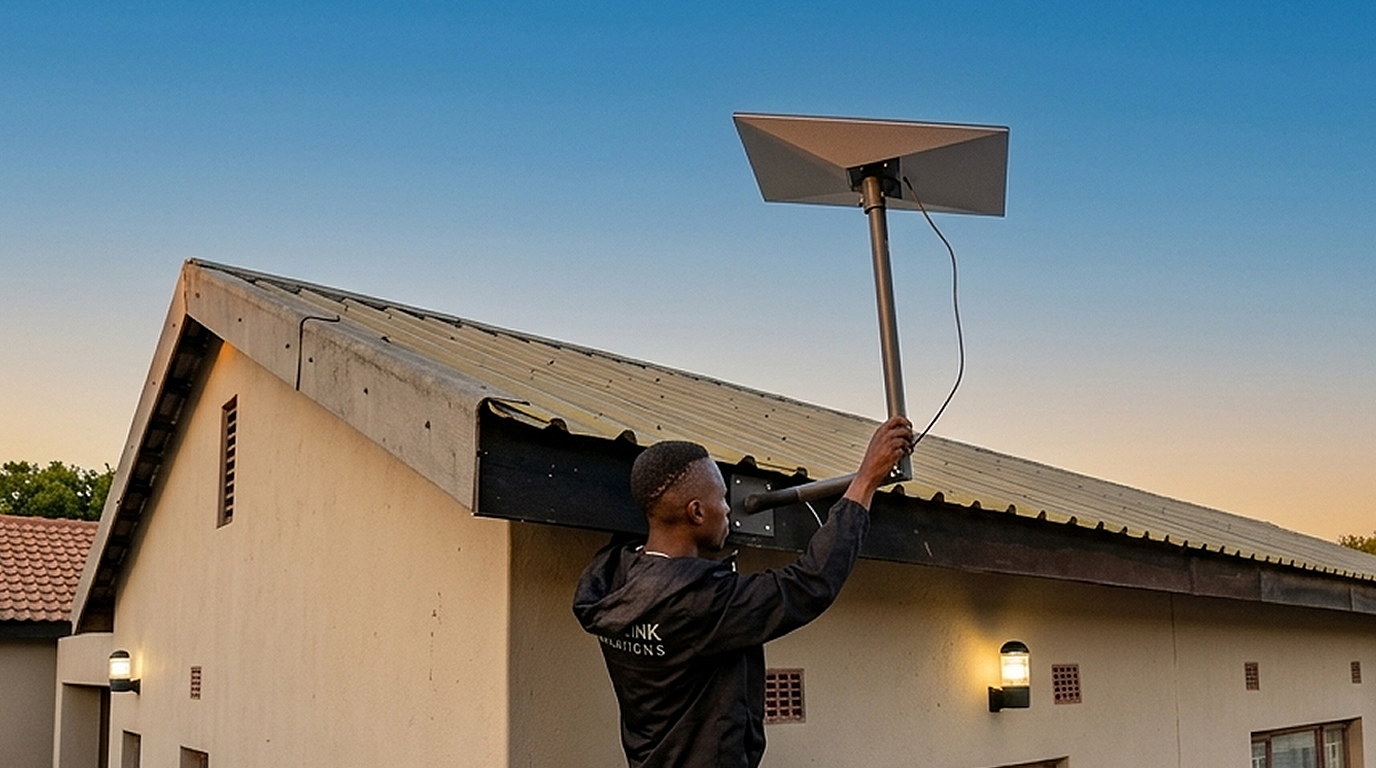
Starlink users in Zimbabwe who rely on accounts registered in other countries are facing a tighter battle to keep their internet connections alive after the satellite company introduced a 30-day limit on international roaming.
The new rule has already left some customers without service. It has also forced users to reconsider the foreign-registered accounts that became popular when local Starlink capacity was limited and Zimbabwean residential subscriptions were difficult to obtain in parts of the country, especially around Harare.
One international Roam customer described what happened after the policy was activated on an account registered in Chile.
Heads-up for international Starlink Roam users: the new 30-day travel restriction is now being actively enforced. My Roam Unlimited kit is registered in Chile and had been outside Chile since June 23. The new policy took effect on August 17, and my service was restricted yesterday. Starlink Support confirmed that the time already spent abroad was counted—they did not start a new 30-day window on August 17. Completing Travel Registration does not extend that allowance. While the account was restricted, Local Priority and Global Priority were not available, and Support could not change the plan from their side.
They confirmed two practical options:
- Return the kit to its registered location in Chile and keep it connected for at least 24 hours to reset the travel window.
- Cancel the service, release the hardware, and activate it in the new country using a new account, different email, and local service address. The same payment card can be used. Another transfer will generally require about 90 days of active service.
I cancelled the restricted service, and Starlink issued a prorated refund for the unused portion of my billing period.
This is not a complaint or a request for help—just a first-hand report so other travelers know the new policy is being enforced.
Starlink’s updated support rules state that Roam Unlimited customers can use their service outside the registered home country for up to 30 days at a time. After that period, the customer must upgrade to a Priority plan, transfer the account to the country where the service is being used, or return the kit to its registered home country.
The company previously allowed a longer period abroad. The change applies to customers who signed up under the new policy from 14 July 2026, while existing customers moved to the new terms on 17 August.
The company has also narrowed the international use of its other Roam plans. The 100GB and 300GB packages are now intended for use within the registered home country or the relevant grouped region. Customers on those plans who need international service must upgrade to Roam Unlimited, move to a Priority plan or localise the account.
That change is particularly important in Zimbabwe because many people using Starlink there do not have accounts registered locally. When the service first became available, demand was high and residential capacity filled quickly in parts of Harare and other busy areas. Some prospective customers could not activate a Zimbabwean residential account, so they turned to kits and subscriptions registered in countries including Zambia, Mozambique, Venezuela, France and the United Kingdom.
The arrangement gave Zimbabwean households a way to connect even when local registrations were unavailable. Some kits were bought through third-party sellers, while others were obtained by people who used international roaming accounts for long-term home internet rather than temporary travel.
That practice helped widen access, but it also placed users directly in the path of Starlink’s new enforcement system. The company’s own rules say Roam is designed for travel and not for permanent installation in another country. The reduction from the former 60-day period to 30 days now leaves much less room for customers who have been using foreign accounts as a substitute for local service.
Travel Registration has added another hurdle. Customers travelling outside their home country may be required to submit their full legal name, nationality, date of birth, passport number or another government-issued identification number, a copy of the document and a live portrait. The name on the documents must match the name on the Starlink account.
That requirement creates an immediate problem for Zimbabwean users whose kits are linked to accounts belonging to people or businesses in other countries. A local customer may have the equipment in Zimbabwe but lack the passport or identity documents connected to the overseas account. The registration process does not change the 30-day limit, and Starlink states that billing can continue even when service has been disabled because registration is incomplete.
The company’s current options are expensive or inconvenient for many households. Priority plans are designed for extended international use, but they work differently from unlimited Roam packages because they combine a monthly terminal charge with paid data blocks. Local Priority can provide a longer period outside the home country, while Global Priority is intended for continuous international use without the same time restriction. Both plans are aimed at customers who can absorb higher monthly costs and variable data charges.
Returning a kit to its registered country is also difficult for a household in Zimbabwe that bought a device registered in another part of the world. Under the reported support instructions, the terminal must be connected in its home country for at least 24 consecutive hours before the international travel allowance is reset. Cancelling the old service and activating the hardware under a new local account is another route, but it requires a different email address, a local service address and an account transfer that may be subject to an active-service waiting period.
Some customers, however, say they have found a simpler way to avoid reaching the limit. One Starlink roaming user told My Zimbabwe News that the kit could be switched off for up to two days once a month, preventing the 30-day travel restriction from affecting the service. The method has been shared among users who depend on foreign-registered accounts and cannot move easily to a local plan.
The reported trick has not worked consistently for everyone. Other recent user reports say Starlink has tightened the technical controls around the roaming timer and that a previously used 48-hour shutdown no longer resets the allowance. Users who had relied on the method are therefore finding that the company’s systems are now tracking time abroad more closely.
The tightening comes as Starlink’s footprint in Zimbabwe has grown at remarkable speed. Satellite broadband subscriptions, a category that includes Starlink, rose from 3,814 in the third quarter of 2024 to 23,410 in the fourth quarter after the service launched locally. The number climbed to 30,907 in the first quarter of 2025.
By the first quarter of 2026, satellite subscriptions had reached 86,488, only 17 connections behind the country’s 86,505 fibre subscriptions. The satellite category added 19,431 connections in that quarter alone, making it the fastest-growing broadband technology in the country.
The rise was driven by a combination of price, speed and reach. Starlink’s standard residential service launched at about US$50 a month, while hardware costs were far lower than the long-term expense of some high-speed terrestrial packages. The satellite system also gave households in areas without fibre access to a connection without waiting for cables to be installed.
The service has also put pressure on local internet providers. Several companies reduced prices or introduced larger packages after Starlink entered the market. Yet Starlink’s rapid growth has come with capacity problems of its own. Busy areas have at times faced restrictions on new residential activations, pushing some customers towards Priority packages or unofficial roaming accounts.
The latest roaming crackdown now puts that unofficial market under direct pressure. Zimbabwean users with foreign accounts may still keep their service by returning the equipment to its registered country, transferring the account locally or paying for a Priority option. Others are testing the shutdown method, even as the company works to close the gap that made it possible.
For customers whose accounts have been operating in Zimbabwe for months, the message is clear: the time spent abroad is being counted, and the 30-day clock does not restart simply because the new policy has taken effect. The foreign account that once offered a practical answer to local capacity shortages may now provide only a short-term connection before Starlink demands a return home, a local registration or a more expensive plan.
The change comes at a difficult moment for users who built their homes, businesses and shared neighbourhood connections around Starlink’s flexibility. The company’s service has expanded broadband access across Zimbabwe, but its new roaming rules are drawing a firm line between travelling customers and those using overseas accounts as permanent local connections.