


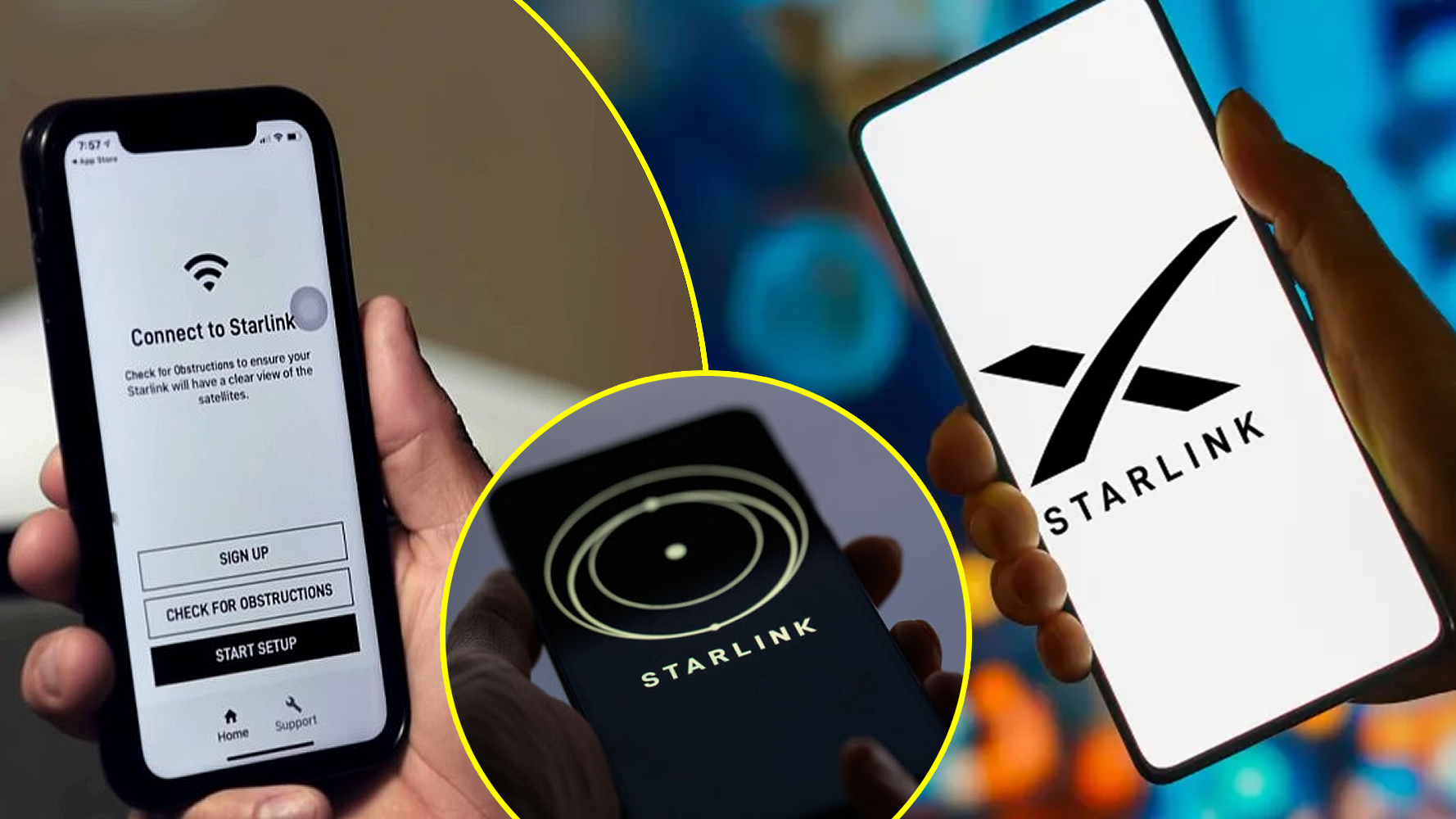
SpaceX has taken a major step towards turning Starlink Mobile from a satellite add-on into a global wireless service, a move that could bring a new source of competition to Zimbabwe’s mobile-phone market and put pressure on Econet’s long-standing dominance.
On 17 September, the United States Federal Communications Commission granted Space Exploration Holdings, the SpaceX company behind Starlink, international Section 214 authority for Starlink Mobile services. The FCC application is recorded as an application for “International 214 Authority to support Starlink Mobile service offerings” and lists the last action as a grant of authority.
The approval allows SpaceX to handle international communications traffic directly when it originates or ends in the United States. It also gives the company the status of carrier of record for that cross-border traffic, meaning that SpaceX can take operational responsibility for the service instead of relying entirely on a local mobile operator to carry the international leg.
That distinction is important because Starlink’s direct-to-device service has so far largely depended on partnerships with established mobile networks. In the United States, the first version has been offered through T-Mobile’s satellite service, providing connectivity in places where ordinary mobile coverage is unavailable. Internationally, SpaceX has also worked with carriers to extend satellite coverage into dead zones.
The new authorisation gives SpaceX greater independence. It can operate as a facilities-based provider using its own satellites or spectrum, resell capacity, and carry international traffic itself. The approval does not mean Starlink Mobile has already launched as a conventional mobile network in Zimbabwe. A service offered directly to Zimbabwean customers would still have to meet the country’s regulatory and commercial requirements. But the FCC decision removes a major obstacle to a service that could one day compete directly with mobile operators rather than simply supporting them.
SpaceX has been assembling the technology and spectrum needed for that wider ambition. In May, the FCC approved the assignment of about 65 megahertz of mid-band spectrum to SpaceX for a next-generation direct-to-device network. The regulator said the spectrum could support a substantial improvement over the company’s early satellite-to-phone services, moving from text messages towards mobile voice and data.
The FCC also imposed build-out conditions intended to ensure that the promised network is deployed rather than remaining a paper plan. The decision described the spectrum transaction as a way to expand connectivity, particularly in areas that are unserved or underserved, and said the development could increase competition in mobile services.
SpaceX’s planned satellite upgrade is central to that strategy. The first-generation system has focused mainly on messaging and limited data. The next generation is expected to support broadband data, internet applications, native calls and internet-of-things connections. SpaceX has said its V2 satellites will offer 100 times the data density of the earlier system, with deployment expected to begin in 2027.
SpaceX chief financial officer Bret Johnsen has said the company plans to switch on “5G-quality” mobile satellite services in the first half of 2028. He has also identified global roaming as a key objective, with the stated aim of keeping customers connected in remote areas, dead zones and even international waters.
Johnsen said the service would be a “full 5G quality service”, in contrast to the first text-focused version available through T-Mobile. SpaceX is also considering how much ground-based infrastructure it may need. Its options include working with existing carriers, using its own spectrum and deploying terrestrial equipment alongside the satellite network.
That combination could be especially relevant in Zimbabwe, where the mobile market is concentrated in the hands of three operators. Econet remains the largest, followed by state-owned NetOne, while Telecel has struggled to retain customers and maintain its position. The latest figures available from the Postal and Telecommunications Regulatory Authority of Zimbabwe show that active mobile subscriptions rose to 15.89 million in the first quarter of 2025. Econet and NetOne increased their subscriber numbers during the quarter, while Telecel lost 11.69 per cent.
The same figures show how central data has become to the business. Mobile data traffic rose by 17.31 per cent to 114.02 petabytes during the quarter. Econet’s data traffic increased by 20.68 per cent, compared with 5.23 per cent for NetOne, while Telecel recorded an 18.26 per cent decline. Data and internet services accounted for more than half of mobile network operators’ revenue, overtaking voice as customers shifted towards online messaging, social media, video and other internet services.
Econet’s strength in mobile would give it a large base of customers to defend, but Starlink’s fixed broadband launch showed how quickly satellite connectivity can alter the competitive landscape. Starlink began operating in Zimbabwe in September 2024 with a standard package priced at US$50 a month and a one-off equipment cost of about US$350. Its arrival was followed by a surge in demand, with the service reaching capacity in parts of Harare and Bulawayo within weeks.
The latest market figures underline the scale of Starlink’s progress. Zimbabwe recorded 86,488 active very small aperture terminal subscriptions in the first quarter of 2026, almost matching the 86,505 fibre connections recorded in the same period. VSAT subscriptions grew by 28.98 per cent in one quarter, rising from 67,057 at the end of 2025. Starlink subscriptions are not reported as a separate line in the regulator’s figures, but the timing of the increase and Starlink’s dominant position in the category make the VSAT total a useful measure of the satellite service’s growth.
The figures also show that satellite broadband has not simply replaced fibre. Fibre connections continued to grow, while older digital subscriber line connections declined. The main change has been a rapid expansion of the choices available to consumers, particularly households and businesses outside the reach of reliable fixed networks.
Telecel’s financial difficulties add another layer to the changing market. The operator entered corporate rescue and began searching for investors to support a turnaround plan in 2026. Its weakened position means that Zimbabwe’s mobile market could face a new entrant or a new technology at a time when one of the existing operators is already fighting to remain viable.
For Econet, Starlink Mobile would not necessarily replace the cellular network overnight. Satellite-to-phone services still depend on satellite capacity, compatible handsets, spectrum arrangements and the ability to provide reliable service in buildings and densely populated areas. SpaceX itself is weighing whether to add terrestrial infrastructure or work with existing carriers. But the service could reach places where towers are too expensive or difficult to build, while giving customers another option for messaging, calls and data when they travel beyond ordinary coverage.
The competitive pressure could therefore arrive in stages. Starlink may first operate through partnerships with Zimbabwean networks, as it has done elsewhere. It could then expand its direct-to-device coverage as the V2 satellite fleet grows and as handset support improves. If it eventually offers roaming or direct subscriptions across borders, customers may begin to compare mobile services not only by tower coverage and bundle prices, but also by how well they work in rural areas, along highways and beyond the reach of terrestrial networks.
Zimbabwe’s experience with Starlink broadband has already shown that the arrival of a satellite provider can force established companies to reconsider prices, packages and investment plans. The FCC’s international authorisation gives SpaceX a stronger platform for taking that challenge into mobile services. With Econet controlling the largest share of Zimbabwe’s subscribers and data traffic, it is the operator with the most to lose if Starlink Mobile moves from a partner technology to a rival network.
The immediate effect may be limited to more partnerships, more investment and sharper pricing. But the direction of travel is clear: the boundary between satellite and mobile networks is becoming less distinct, and Zimbabwe’s customers are likely to have more ways to connect than they did before Starlink arrived.