


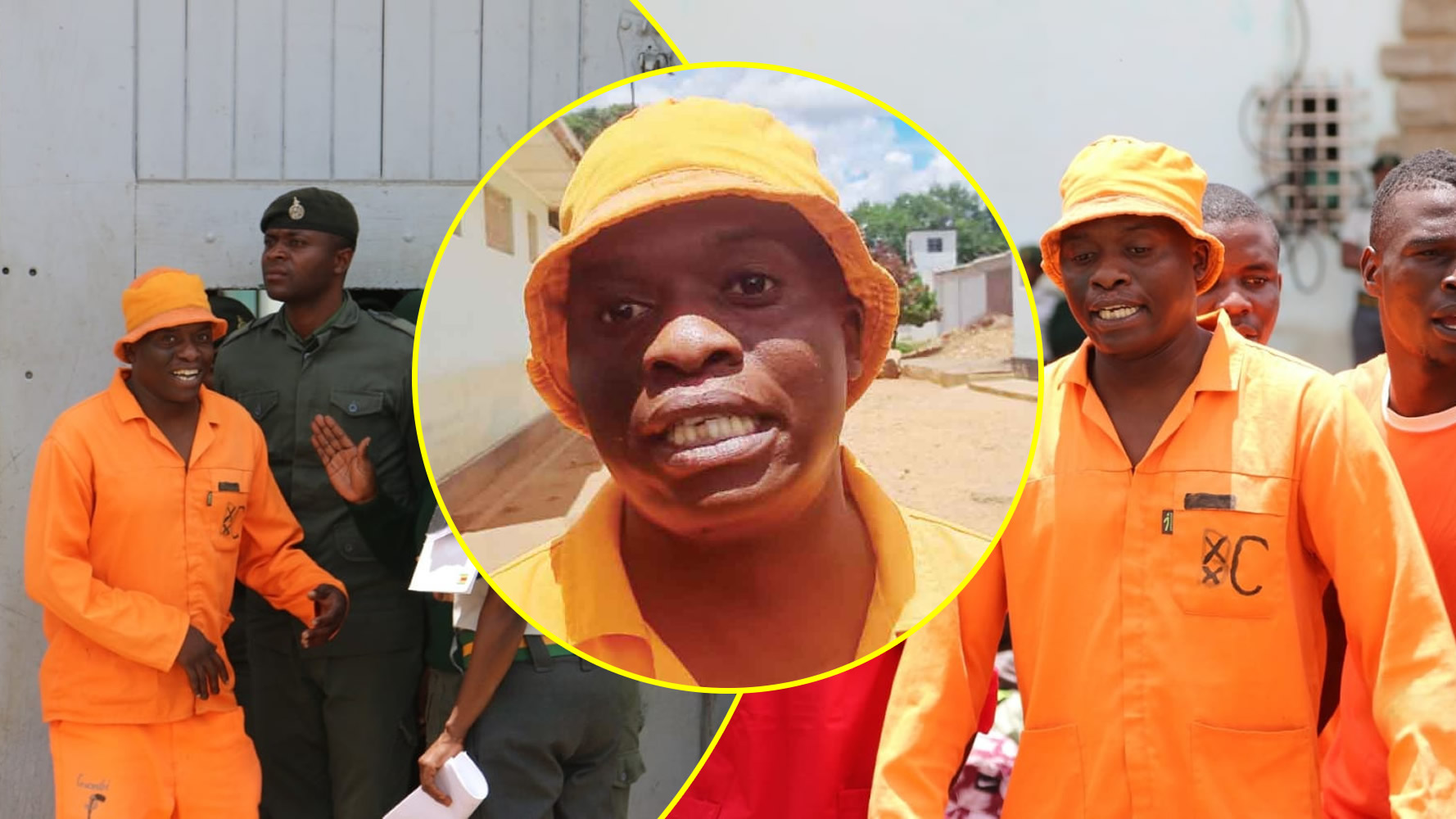
The iron gates of Harare Central Prison do not distinguish between the common thief and the celebrated star. Inside these grey, weathered walls, the rhythmic thumping of Zimbabwean Hip Hop is replaced by the somber clinking of shackles and the low murmur of men seeking redemption. For Tinashe Gonzara, known to millions of adoring fans as Ti Gonzi, the stage lights have been swapped for the dim fluorescent hum of a prison cell.
Once the charismatic chairperson of the ‘Musicians for ED’ movement — a high-profile affiliate of the ruling Zanu PF party — Ti Gonzi now finds himself an ordinary inmate among 2,260 others. His current reality is a stark contrast to the life of a multi-award-winning artist who once dominated the airwaves with hits like “Zvenyu” and “Kure”.
Speaking exclusively to H-Metro from within the confines of the prison, the rapper appeared humbled, perhaps even relieved, by the finality of his situation. As a wave of prisoners were being processed for release under a recent Presidential Amnesty, Ti Gonzi remained behind, reflecting on a series of choices that led him to this effective eight-month jail sentence.
“My arrest as a celebrity shows that no one is above the law,” he stated, his voice devoid of the bravado that usually accompanies a Hip Hop persona. “I commend our police officers and the judiciary for their diligent work.”
The incident that sealed his fate occurred on February 2, 2026. It was a Tuesday that began like any other but ended in a frantic confrontation with the law. Ti Gonzi was observed driving his Mercedes-Benz through the bustling Mupedzanhamo intersection. In a moment of blatant disregard for public safety, he ignored a red traffic signal, shooting through the intersection as pedestrians and other motorists looked on in disbelief.
When a female police officer attempted to intervene and inform him of his violations, the rapper did not stop. Instead, he accelerated, driving away towards Graniteside along Cripps Road. It was a futile attempt to outrun the inevitable. When the police finally caught up with him, the search of his vehicle revealed a darker side to the artist’s lifestyle. Officers discovered prohibited substances, including the notorious Broncleer cough syrup—frequently referred to as ‘Bronco’ on the streets—and marijuana, known locally as ‘dagga’.
Perhaps most damning was the discovery that the man behind the wheel of the luxury vehicle was not licensed to drive.
“I was not licensed to drive and the traffic police were just doing their job, as was the judiciary,” Ti Gonzi admitted during his interview. “I’ve come to understand that a prison sentence is not just punishment, it’s an opportunity to correct one’s wrongdoings.”
This is not Ti Gonzi’s first brush with the fragility of life. In March 2019, the rapper survived a horrific encounter that nearly ended his career and his life. While heading to a friend’s house in Kuwadzana, he entered what he believed was a taxi, only to be set upon by four armed robbers. He was stabbed repeatedly in the head, neck, and ear before being thrown from the speeding vehicle. His recovery was hailed as a miracle, and he later retraced the trauma in his music, most notably in his “Devil is a Liar” EP.
However, the resilience that saw him survive a murder attempt seems to have been eroded by the very vices he once sang about. His recent conviction is a significant blow to the ‘Musicians for ED’ movement, which he helped found alongside fellow artist Ishan. The group was established to urge artists to support the President’s vision, yet Ti Gonzi now finds himself seeking mercy from the very system he championed.
“Today, I witnessed the beneficiaries of the Presidential Amnesty,” he remarked, watching as sixty-six of his fellow inmates were prepared for release in a staggered process. “I thank the President for offering inmates an opportunity to contribute positively to our country.”
The irony of his situation is not lost on the public. As a high-profile ally of the administration, many expected Ti Gonzi to receive preferential treatment. Yet, the judiciary handed down a ten-month sentence, with two months suspended on the condition of future good behaviour. He was also fined US$100 for the licensing and traffic offences.
The conditions inside Harare Central Prison are notoriously difficult. Designed for a maximum capacity of 1,128 inmates, it currently holds double that number. For a man accustomed to the VIP lounges of Harare’s nightlife, the overcrowding and lack of amenities serve as a daily reminder of his fall.
“If our judiciary continues to perform their duties without fear or favour, we can all learn from our mistakes,” Ti Gonzi said, sounding more like a philosopher than a rapper.
His downfall comes amidst a broader national crackdown on drug abuse in Zimbabwe. The government has intensified its ‘anti-drug net’, and Ti Gonzi is perhaps the most high-profile individual to be caught in its mesh. The presence of Broncleer and marijuana in his car at the time of his arrest highlights the pervasive nature of the drug epidemic affecting all levels of Zimbabwean society, from the street corners to the recording studios.
Critics of the rapper have been quick to point out the hypocrisy of his leadership role in a political affiliate while engaging in illegal activities. Others, however, see a man struggling with the lingering psychological effects of his 2019 trauma, suggesting that his reliance on illicit substances may be a form of self-medication that went tragically awry.
Regardless of the cause, the consequences are undeniable. Ti Gonzi’s music career is now on an indefinite hiatus. The man who once stood on stages receiving accolades now stands in a queue for prison rations.
“I deserve my fate,” he concluded, a statement that has resonated throughout the local music industry. It is a rare admission of guilt in an era where celebrities often hide behind PR teams and legal technicalities.
As the sun sets over the walls of Harare Central, the city’s heartbeat continues. In the clubs of Mbare and the bars of Avondale, Ti Gonzi’s music still plays, a haunting reminder of the talent that is currently locked away. His story serves as a cautionary tale: that fame, political connections, and past triumphs offer no shield when the law finally decides to knock.
For now, Tinashe Gonzara is just another number in the system, waiting for the months to pass, hoping that the man who emerges from those gates is truly the reformed individual he claims to be. The journey from the top of the charts to the bottom of a prison cell has been swift and merciless, leaving a void in the Zimbabwean Hip Hop scene and a sobering lesson for those who believe they can dance on the edge of the law without ever falling in.
The music has stopped, the lights have dimmed, and for Ti Gonzi, the long walk to true redemption has only just begun.