


Roki’s viral money dispute revives questions about a career shadowed by controversy
A confrontation caught on camera has placed Zimbabwean Urban Grooves star Rockford “Roki” Josphats back at the centre of public attention. The facts behind the video remain incomplete, but the episode has reopened old questions about his relationships, legal troubles and repeated public apologies.
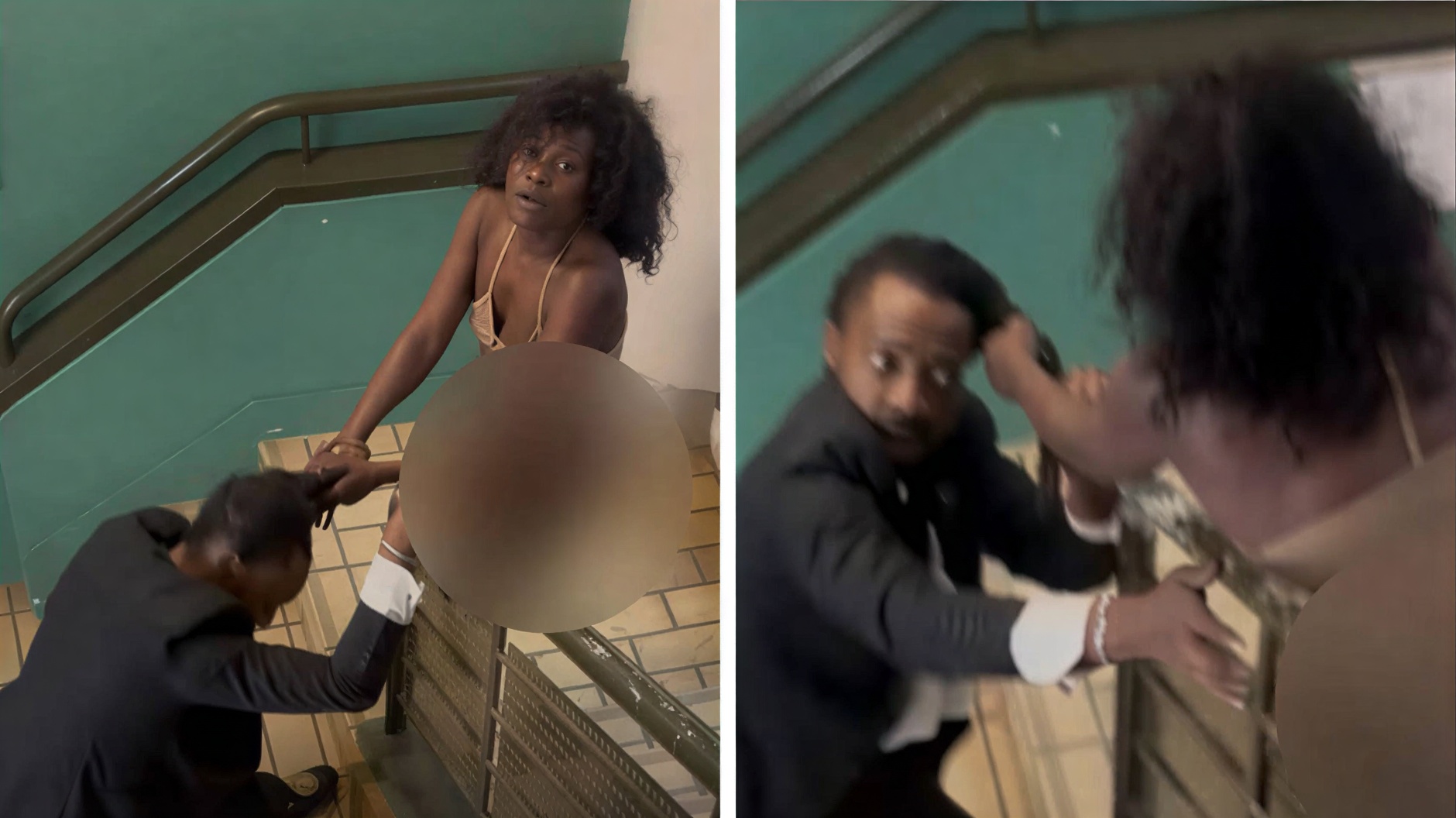
A short social-media video has thrust Zimbabwean musician Rockford “Roki” Josphats into another uncomfortable public debate after a partially dressed woman was filmed holding him by his dreadlocks and demanding payment.
The footage appears to show the woman, who was only wearing a top covering her upper body repeatedly saying, “I want my money,” while people nearby try to separate the pair. Roki is heard responding: “They drank my beer. They drank my Hennessy.”
WATCH | Musician Roki involved in a squabble with a thigh vendor after allegedly enjoying the forbidden fruit and failing to pay.
🎥ZimCelebs pic.twitter.com/fShymfWI13
— 𝐂𝐫𝐢𝐦𝐞 𝐖𝐚𝐭𝐜𝐡 𝐙𝐖 (@CrimeWatchZW) August 11, 2026
Those words are the clearest explanation offered in the clip, but they do not settle what happened. The amount allegedly owed is not known, nor is it clear what the payment was meant to cover. The woman’s identity has not been established in the report, and there is no independent confirmation of the description attached to her by some social-media users. Roki had not publicly commented on the video when the report was published.
That uncertainty matters. A viral clip can show a moment without showing what came before it, and it can turn an unresolved dispute into a fixed public story within hours. In this case, the available reporting supports the existence of a confrontation and the words heard in the recording. It does not establish who was right, whether money was owed, or whether any criminal conduct took place.
Judging by how the woman was dressed – only her upper part of the body was dressed – the buttocks, her ‘stonyie’ and the rest of the waist going down – was stark naked during that scuffle in which she was demanding her ‘payment’, made many to suspect that she may have been an adult entertainer who was demanding her money for the ‘no-under 18 services’ that she had just rendered to the bad boy musician.
Roki has not publicly addressed the video yet and the claim that the woman was a sex worker, has not been independently confirmed. However, the video has attracted attention not only because of its unusual setting and physical drama, but because it fits a familiar pattern in Roki’s public life. For more than 2 decades, his music career has been accompanied by stories about volatile relationships, court cases, public disputes and attempts to explain or apologise for earlier decisions.
A fresh apology to Pauline
Only weeks before the latest video, Roki appeared to address one of the most painful chapters in his personal life. In a report published by The Standard on June 21, 2026, the musician was said to have issued a public apology to his former wife, Pauline Gundidza, a former member of the group Mafriq.
The message appeared on a Facebook page called Rockford Gold Music. It read: “Please forgive me ndaiva Jonasi muMarriage yedu zvakava zvakaparadza imba yedu”. The Standard gave the English meaning as: “Please forgive me, I was Jonasi in our marriage, and it destroyed our home.”
That quotation should be treated as a direct statement from the post, not as an interpretation created by a journalist. It is also important not to go further than the report allows. The article described the message as an expression of remorse and said it appeared to place responsibility for the collapse of the marriage on Roki’s past actions. It did not report that Pauline had accepted the apology, nor did it establish that the former couple had resumed their relationship.
The apology nevertheless adds a significant layer to the current story. Roki’s public image has often been built around a tension between his talent and the disorder that has followed him. He has repeatedly remained visible after controversy, returning to recording, performing and collaboration even when earlier incidents threatened to overwhelm his career.
The claim about 6 children and 5 women
Reports about Roki’s family life have circulated for years, but the figures have not always been consistent.
The Herald reported in February 2015 that Roki “has been involved with several women and is reported to have sired six children with five women”.
An earlier Herald interview with Roki’s mother, Florence Josphat, published in June 2012, gave a different account. She said Roki had fathered 2 children with Pauline before becoming involved with Amanda. She then mentioned Juliana and Melody. The same 2012 interview contained a revealing description of Roki’s relationships. His mother said: “When it comes to love affairs my son is very indecisive.” She added: “One moment he says he loves this woman and the next he tells you stories about that woman. And, before you even go over it, he brings another woman.”
The Big Brother Africa confrontation
One of the most widely reported episodes came in 2012, when Roki and fellow Zimbabwean housemate Maneta Mazanhi were removed from Big Brother Africa’s StarGame edition after a physical confrontation.
NewsDay reported that the two had repeatedly provoked each other before the dispute escalated, with the pair pouring water and chemicals on one another. The programme’s ruling was direct. Big Brother told them: “Big Brother asked you both to show restraint – and neither of you did.” The announcement continued: “As you are both no doubt aware, you have left Big Brother with absolutely no choice. In terms of the house rules you have both been disqualified from the game.”
The producers said the pair would receive psychological and medical treatment, as well as counselling for conflict and anger management, before returning home. The incident became a major public embarrassment for Zimbabwe, which had hoped to see one of its representatives win the regional reality show. It also established a pattern that has followed Roki: a public confrontation, a wave of criticism, and a later attempt to explain what happened.
The musician later apologised to the nation over the disqualification, according to an archived report carried by AllAfrica. That apology did not erase the incident, but it showed how quickly Roki’s career could move from entertainment to reputation management.
An older court case
Roki’s controversies are not confined to relationship stories or television. In a report dated June 28, 2008, The Herald said Roki had been arrested for illegally possessing marijuana and was sentenced to 280 hours of community service at the Harare Magistrates’ Courts.
The same report said Magistrate Gloria Takundwa imposed a 12-month prison sentence on Roki and 2 friends, Lovedale Makajanga, also known as Discord, and Blessing Munjerenje. That episode belongs to a different period in Zimbabwe’s entertainment industry, when Urban Grooves performers were becoming household names and newspaper coverage often treated musicians’ private lives as part of the spectacle.
From Urban Grooves pioneer to enduring headline-maker
Roki rose to prominence in the early 2000s as one of the leading voices of Zimbabwe’s Urban Grooves movement. His early songs included “Seiko” and “Chidzoka”, with the latter receiving Song of the Year recognition at the Zimbabwe Music Awards.
His career has continued despite the setbacks. He has released music, mentored younger performers and worked with international names including Koffi Olomide and Rayvanny. That resilience is part of the reason each new controversy attracts such attention. Roki is not an unknown figure whose identity is formed by one viral clip; he is an established artist whose public history gives every incident a longer meaning.
In 2024, he urged younger musicians to learn from his mistakes. In a social-media post, he wrote: “So, other musicians must learn from my mistakes… thank God ndakakurumidza kuzviona fast.” The statement suggests that Roki understands the cost of his earlier decisions, even if it does not identify every mistake or resolve every dispute linked to his name.
For the musician, the immediate issue is likely to be whether he explains the scene. A clear response could establish what the money dispute was about and whether anyone was harmed or owed payment. Silence, by contrast, will leave social-media users to fill the gaps themselves. Roki’s story is powerful enough without exaggeration. It is the story of a gifted performer whose music helped define an era, whose relationships and personal choices have repeatedly entered the public domain, and whose apologies have become part of his professional biography.