


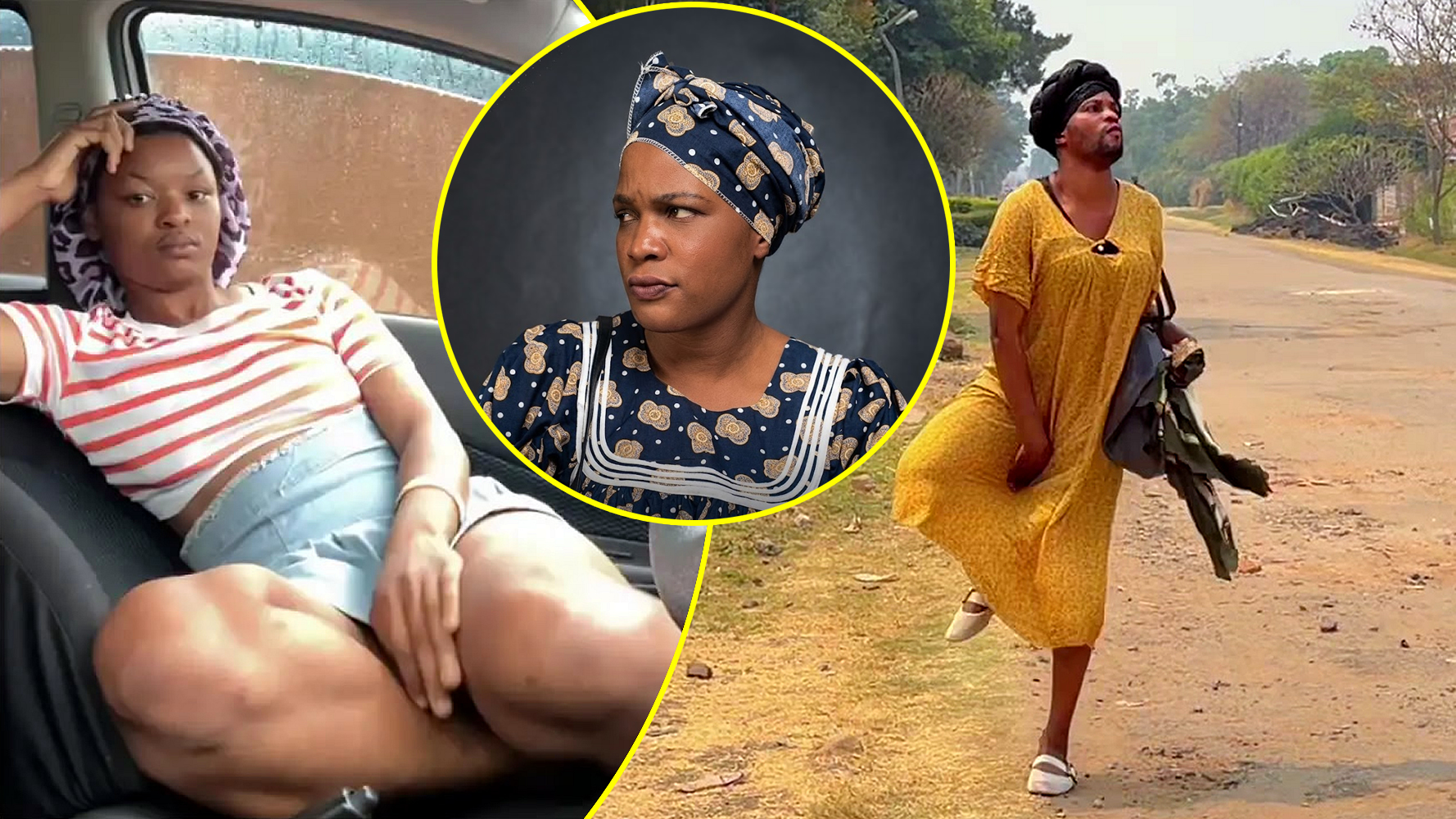
HARARE — Youth minister Tinoda Machakaire has issued a strong warning to comedian Admire Mushambi, better known as Mama Vee, after the cross-dressing performer was accused of disregarding Zimbabwe’s cultural sensitivities and using social media content to provoke the authorities. Machakaire delivered the warning in a Facebook comment directed at Mushambi, whose comic videos feature him dressed as a flamboyant woman. The minister did not identify the specific video or statement that prompted the intervention, but made it clear that he viewed the comedian’s conduct as a serious matter involving government, culture, and public values.
“Good afternoon Mr Admire Mushambi. I strongly urge you to understand the seriousness and consequences of this conduct,” Machakaire wrote. “Social media must be used responsibly, particularly on matters that touch on government, our culture and the values of our people. Do not mistake restraint for weakness. Deliberately provoking government or disregarding the cultural sensitivities of our people is unacceptable. Please respect this call to order and exercise greater responsibility. We expect this position to be taken seriously. Such conduct cannot be tolerated.”
The message placed Mama Vee at the centre of a widening national argument over what Zimbabwean creators can publish online, how far comedy can go, and whether the pursuit of attention and income is pushing social media personalities beyond accepted limits. Mushambi later said he had held what he described as “an enlightening and constructive conversation” with the minister. He presented himself as a comedian and content creator rather than a political campaigner, saying he had no hidden agenda behind his work.
“I’m simply a content creator, not an advocate for any hidden agenda,” Mushambi wrote. “I create content, share my thoughts and, sometimes, my words decide to take a little trip before my brain catches up!”
Despite the warning, he also indicated that audiences should expect to see more of Mama Vee. “I appreciate the conversation and the enlightenment. Lesson learned, message received but don’t worry, business as usual!” he wrote.
The exchange came as officials and members of the public continued to focus on Queen Nadia TV, the Zimbabwean social media personality whose short “view once” videos have triggered one of the country’s fiercest debates about explicit online content. Queen Nadia, who is based in South Africa, built a huge Facebook following in a matter of months.
The strategy brought attention, money, and controversy in equal measure. Queen Nadia reportedly shared a screenshot showing that one video had received 122 million views, with estimated earnings of about US$1,142.37. She also celebrated receiving money from Meta and buying a new car, turning the content into a public example of how online notoriety can be converted into income.
The debate deepened when a woman identifying herself as Queen Nadia’s mother spoke publicly about the effect of the videos on her family. She said strangers and neighbours had repeatedly taken the clips to her home and sent them to her by WhatsApp. She also said she had tried to persuade her daughter to stop.
“I am very embarrassed as a mother,” she stated. “People are sending me WhatsApp messages every day. Others are coming to my home to show me the videos of my daughter and telling me to counsel her.” She added, “Some are not just sending messages. They come personally to show me what my daughter is doing.”
The mother said her advice had been rejected because Queen Nadia viewed the online income as her livelihood. “I advised her many times,” she lamented. “But my words fell on deaf ears. She tells me this is where her bread is buttered.” Queen Nadia has defended her work by describing the clips as “view-once” content. She has also urged critics not to judge her without knowing the circumstances that shaped her choices. “Don’t judge me,” she has pleaded, “you don’t know my story.”
The Broadcasting Authority of Zimbabwe responded in February with a warning aimed at creators who distribute indecent and explicit material online. The regulator said digital content consumed in Zimbabwe remained subject to the country’s legal and constitutional framework, regardless of whether it appeared on Facebook or another platform. “In terms of the Broadcasting Services Act [Chapter 12:06], children have a right to protection from exposure to content that is harmful to their moral and psychological development, with the best interests of the child being paramount,” the authority said. “Broadcasters and content creators must therefore uphold public morality and national values as entrenched in the laws of Zimbabwe.”
The authority added that it would take enforcement measures against creators who failed to comply with the law. Its intervention brought official weight to complaints that had previously been confined to social media arguments, family disputes, and public criticism.
Queen Nadia is not the only Zimbabwean online personality to face public condemnation over intimate material. In October 2025, content creator Michelle Moyo, known online as Ritzmacleish, responded after an old nude video resurfaced and spread across social media. Moyo said the video dated back to around 2021 and claimed that someone had deliberately revived it to damage her growing career.
“People in Zimbabwe rejoice when you are failing, the moment you try to rise up that’s when they do their best to bring you down. I’m trying very hard to build my brand, a brand that everyone will want to work with, yet my enemy is doing everything they can to destroy me,” she said.
Moyo rejected the suggestion that she used explicit material to attract fame and said she had tried to contact the person circulating the video after being asked for money. “I am not a person who looks for fame by trending in that way,” she said. “I don’t share pictures without clothes. I value my morals greatly; I am a mother of two kids; I try by all means to be a mother with dignity.”
Her case differed from Queen Nadia’s because Moyo said the material had been leaked and circulated against her wishes. It nevertheless added to the pressure on Zimbabwean socialites and content creators, many of whom now operate in an environment where old posts, private images, and provocative videos can rapidly become national talking points.
The criticism has also extended to the audiences that keep such material profitable. Content creator Admire “Bhutisi” Kuzhangaira argued that viewers play a major role in sustaining the trend. “If the views didn’t exist, the content wouldn’t be profitable,” he said. That point has become central to the argument now facing Zimbabwe. The controversy is not only about what Mama Vee, Queen Nadia, or other personalities publish. It is also about the millions of clicks, shares, comments, and payments that reward material many people publicly condemn.
Machakaire’s warning to Mama Vee has widened that dispute beyond nudity and explicit clips. It has brought comedy, gender performance, political commentary, and cultural identity into the same national conversation. For creators, the message is that popularity does not remove responsibility. For officials, the challenge is to show that warnings will be followed by consistent action rather than remain angry statements posted online.
For now, Mushambi says his business will continue, while Queen Nadia’s online rise remains a vivid example of how quickly a creator can move from obscurity to fame, wealth, and official scrutiny. Zimbabwe’s social media space has become a crowded arena where cultural values, personal freedom, family reputation, and digital income collide every day—and where a single post can bring a minister to the keyboard.