


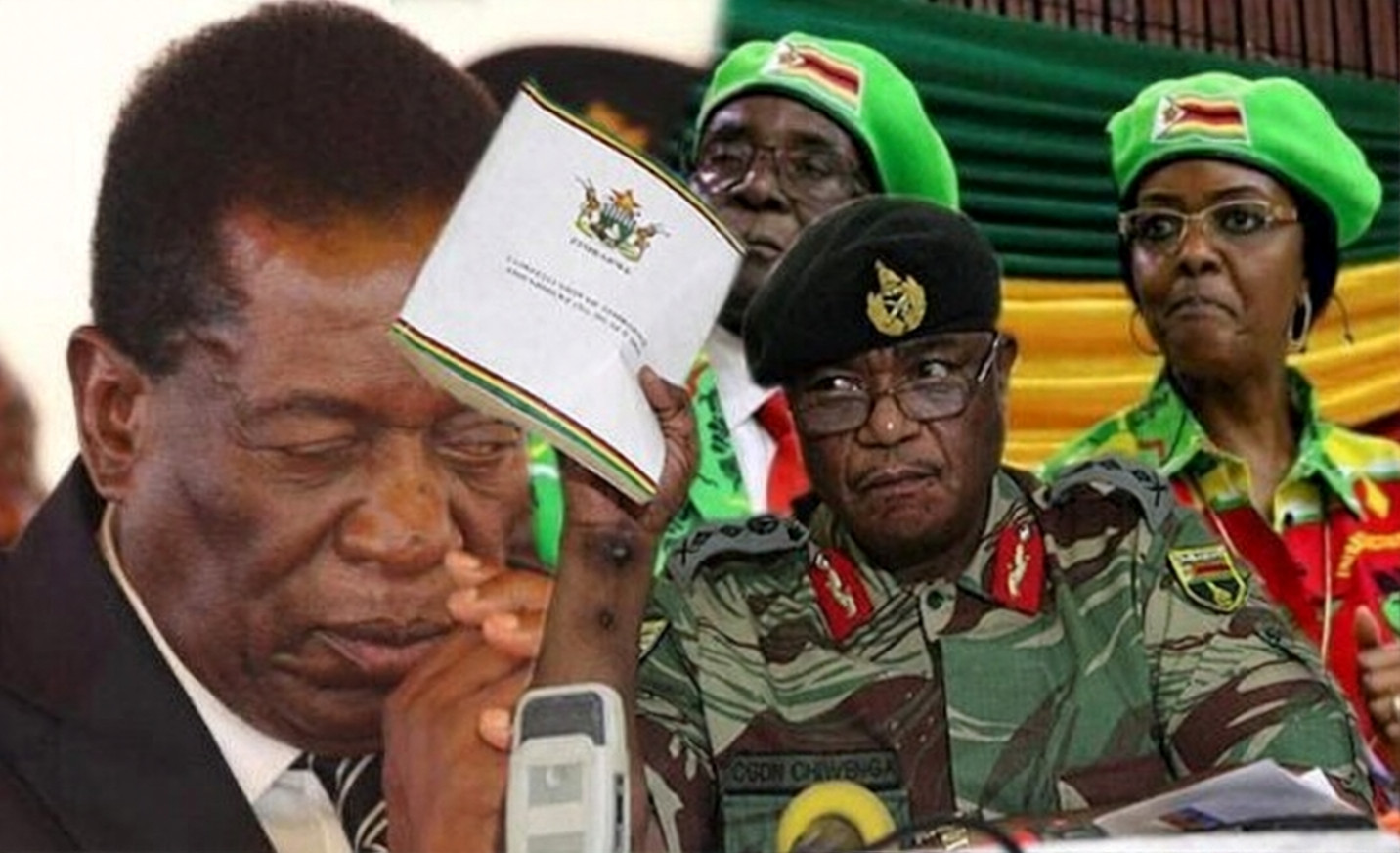
Harare – Zimbabwe finds itself at a critical juncture, as an escalating power struggle within the ruling ZANU-PF party, coupled with contentious constitutional amendments, threatens to reshape the nation’s political landscape. At the heart of this unfolding drama is a fierce confrontation between President Emmerson Mnangagwa and his deputy, Constantino Chiwenga, a rift that has spilled from party corridors into the highest echelons of government. The proposed Constitutional Amendment Bill (2026), aiming to extend presidential terms and alter electoral processes, has ignited widespread debate and exposed deep divisions, raising profound questions about the future of democracy and governance in the southern African nation.
For decades, Zimbabwe has grappled with the legacy of an imperial presidency, a system meticulously crafted through a series of constitutional and legal overhauls. This framework, characterised by immense personal power, authoritarian control, and a notable lack of accountability, allowed former President Robert Mugabe to consolidate his authority. Throughout the 1990s and 2000s, numerous constitutional amendments systematically strengthened the president’s hand, effectively weakening parliamentary oversight and eroding judicial independence. A significant milestone in this centralisation of power was the Constitutional Amendment (No. 17) in 2005, which, among other things, allowed for the expropriation of land with limited judicial recourse. This historical trajectory fostered an environment where the presidency became almost unassailable, with its occupant often believing themselves to be omniscient and invincible.
Following years of protracted crisis and economic meltdown, partially ameliorated by the 2009–2013 unity government, a new constitution was adopted in 2013 through a national referendum. This landmark document was designed to curb executive power and rebuild democratic institutions. It introduced a mandatory two-term limit for the president, a provision that could only be altered via a referendum, and significantly reduced the president’s ability to unilaterally dissolve parliament. The 2013 constitution also championed the devolution of power, aiming to decentralise governance and enhance accountability. However, this period of attempted reform proved to be short-lived.
Under President Mnangagwa, who ascended to power in 2017 following a military intervention that ousted Robert Mugabe, the spirit and letter of the 2013 constitution have been systematically undermined. Critics argue that the constitution has beenrecklessly subverted, eroded, mutilated, and vandalised, leading to a re-centralisation of power.
One of the most significant legislative actions under Mnangagwa has been Constitutional Amendment (No. 1) 2017, gazetted in September 2017. This amendment fundamentally altered the procedure for appointing key judicial figures, including the Chief Justice, Deputy Chief Justice, and Judge President of the High Court. It granted the President direct power to appoint these top judicial officers after mere consultations with the Judicial Service Commission, effectively eliminating the requirement for public interviews. This move was widely seen as a direct assault on judicial independence and a mechanism to ensure a judiciary amenable to executive influence.
Further consolidating presidential authority was Constitutional Amendment (No. 2) of 2021. This extensive amendment heavily revised the 2013 constitution, notably removing the “running mate” clause, which had been designed to provide a clear line of succession. It also allowed the president to appoint judges without public interviews and controversially extended the tenure of senior judges beyond the mandatory retirement age of 70. These changes collectively served to reconsolidate the imperial presidency, an institution that Mnangagwa, as one of its architects, understands was built through decades of constitutional manipulation.
Despite initial appearances that these new changes might dismantle the imperial presidency, in reality, they subtly reinforce it, albeit with reduced accountability. The amendments largely consolidate executive power, further centralising authority. They also include provisions for appointing 10 senators, expanding patronage networks, and extending tenures, all while diminishing direct public accountability. This intricate web of legislative alterations is designed to ensure the executive’s dominance and minimise any checks and balances that might challenge presidential authority.
The latest and most contentious legislative effort is the Constitutional Amendment Bill (2026), which has been approved by Zimbabwe’s Cabinet. This bill proposes two radical changes: extending presidential and parliamentary terms from five to seven years, and replacing direct popular presidential elections with a parliamentary election of the president. If applied to the current cycle, as critics and some reports suggest, this could allow President Mnangagwa, currently 84 years old, to remain in office until 2030, two years beyond his current constitutional limit of 2028.
The timing of this constitutional push is not coincidental. It emerges amidst acute succession pressures within ZANU-PF, with political commentary linking the “2030 Agenda” directly to an intensifying power struggle, particularly the rivalry between Mnangagwa and Vice President Constantino Chiwenga. The government, through figures like Justice Minister Ziyambi Ziyambi and Jenfan Muswere – the former Information Minister who was demoted by Mnangagwa yesterday – is packaging these power-centralising reforms as measures for “stability” and “efficiency.” They argue that longer terms will reduce electoral disruption and improve policy continuity, while shifting the presidential vote to Parliament is framed as enhancing “accountability” and “judicial oversight”.
However, this narrative is fiercely contested. Vice President Chiwenga has emerged as a vocal opponent of the proposed amendments. During a “fierce and emotionally charged” Cabinet confrontation on 10 February 2026, Chiwenga passionately argued that the amendments negated the gains of the liberation struggle. According to ministers present, Chiwenga stated, “He said the liberation war was fought so that people could choose their leaders through the ballot, and removing that right would betray its values and objectives”. His allies, including Sports Minister Anselem Sanyatwe, a former army commander, supported this stance, arguing that the proposed changes were too sweeping and went far beyond the scope of ZANU-PF’s 2030 resolution, amounting to an overhaul of the constitutional order rather than a simple term extension.
The confrontation in Cabinet highlighted the deep factionalism within ZANU-PF. While Mnangagwa’s allies, such as Local Government Minister Daniel Garwe, Energy Minister July Moyo, and Primary and Secondary Education Minister Torerayi Moyo, rallied behind the proposals, Defence Minister Oppah Muchinguri-Kashiri reportedly responded sharply to Chiwenga and Sanyatwe, “reminding Chiwenga and Sanyatwe that they were not the only ones who fought in the liberation war”. Despite the intense debate, Mnangagwa’s camp ultimately carried the day, with Cabinet approving the memorandum. This outcome, however, does not signify an end to the internal conflict but rather its escalation, now openly playing out at the highest levels of government.
This internal party struggle is not new. In October 2025, President Mnangagwa accused his deputy, Constantino Chiwenga, of “incitement” and “treason” following Chiwenga’s presentation of a corruption dossier to the ZANU-PF politburo. The dossier reportedly detailed instances of corruption and mismanagement, and significantly, invoked the November 2017 coup that brought both men to power. This accusation, particularly serious in Zimbabwe’s legal and political context under the “Patriotic Bill” which polices criticism against state interests, underscored the existential nature of the power struggle.
Since assuming office, Mnangagwa has systematically reshaped the security and political landscape, replacing senior military, police, and intelligence officials. These actions are widely interpreted as efforts to consolidate his authority and prevent the emergence of rival power bases, particularly those aligned with Chiwenga, who was instrumental in the 2017 military intervention. The purging of Chiwenga loyalists from key security sectors has been a consistent feature of Mnangagwa’s tenure, further intensifying the rift.
The opposition and civic society groups have vehemently condemned the proposed constitutional changes. Leading opposition figures have accused the government of orchestrating a constitutional “coup.” Job Sikhala, a prominent opposition figure, has petitioned the African Union, highlighting concerns about the erosion of democratic principles. The National Opposition Movement led protests at the National Assembly in February 2026, rejecting what they perceive as ambiguities and power grabs within the proposed amendments. A leaked Central Intelligence Organisation (CIO) memo reportedly warned against the proposed constitutional amendments, suggesting that even within the state’s security apparatus, there are concerns about the implications of these changes.
Crucially, the 2013 Constitution contains a significant legal safeguard: Section 328(7), the anti-retroactivity rule. This provision explicitly disqualifies a person from election as President or Vice President after two terms and, more importantly, states that a term-limit extension cannot apply to someone who held the office before the amendment. This clause presents a direct legal minefield for any attempt to personally tailor the reform to Mnangagwa. While the bill might pass Parliament due to ZANU-PF’s dominance, its successful application to keep Mnangagwa in power until 2030 remains legally precarious. The most realistic “successful” outcome, according to analysts, would be a diluted implementation applying mainly to future presidents, or a contested implementation leading to extensive litigation and political destabilisation.
The implications of this constitutional push are far-reaching. Domestically, it risks an escalation of intra-party conflict, transforming the reform into a proxy battle for succession and control over security and patronage networks. The removal of direct presidential elections could trigger a “legitimacy shock,” potentially catalysing protests, repression, and deeper political polarisation. The judiciary is likely to become a key battleground, with court challenges on constitutionality and retroactive benefits. Internationally, these actions could lead to increased reputational and diplomatic costs for Zimbabwe, particularly from regional bodies like SADC and the AU, who may view it as democratic backsliding. This, in turn, could raise investor risk, exacerbating the country’s already fragile economic conditions, characterised by high inflation and shortages.
Zimbabwe stands at a crossroads. The current confrontation represents a tipping point: it could either lead to a more entrenched, authoritarian rule under Mnangagwa, or it could accelerate a dynamic of fragmentation that ultimately weakens or dislodges him. The outcome will profoundly shape Zimbabwe’s political future, determining whether the nation moves towards greater democratic accountability or further entrenches an imperial presidency under a new guise.