


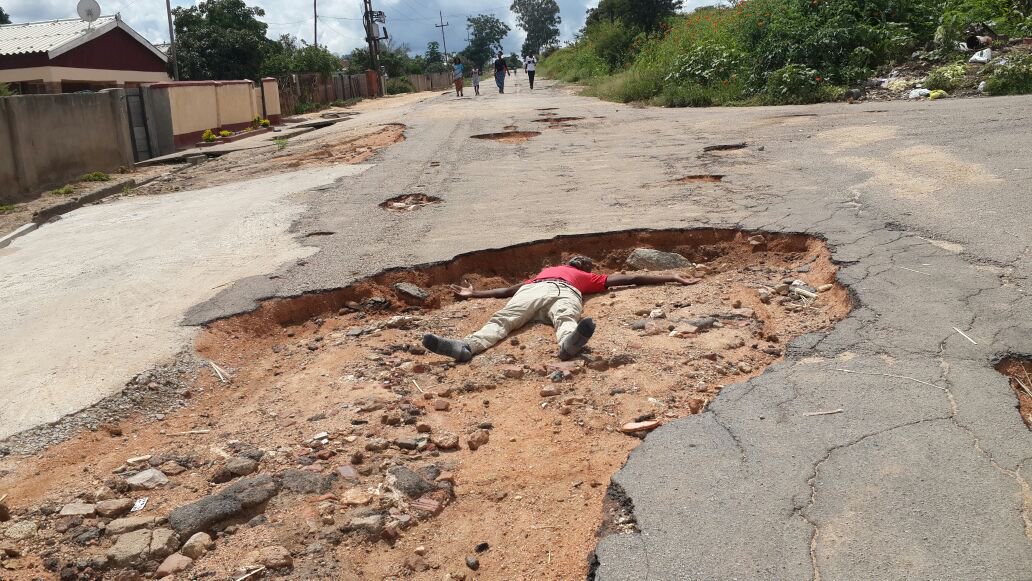
HARARE – The recent public announcement by the City of Harare regarding the termination of Engineer Albert Madanha’s contract as the principal engineer for road maintenance has ignited a firestorm of speculation. While the official statement from the municipal authority was terse, our investigation delves far beyond the surface, uncovering a complex web of political infighting, budgetary mismanagement, and alleged corruption that truly underpins the capital’s crumbling infrastructure. This isn’t merely a personnel change; it is a symptom of deeper systemic failures that have left Harare’s roads in a perilous state, posing daily hazards to motorists and pedestrians alike.
Engineer Madanha’s contract was officially ended on 10 November 2025, a detail only made public in February 2026. This delay in announcement itself raises questions, particularly given the intense scrutiny the Harare City Council (HCC) has been under regarding its governance and financial probity. The Acting Town Clerk, Engineer Phakamile Mabhena Moyo, issued a stern caution to residents and stakeholders, stating that Engineer Madanha no longer holds any official position with the council. The official notice was unequivocal:
“The City of Harare terminated the contract of employment of Engineer Albert Madanha on 10 November 2025. Any representations made by Eng A Madanha are illegal, and the city will not honour any of the commitments he makes purporting to represent the City of Harare.”
Furthermore, the council explicitly warned that: “Any individual or organisation engaging with Eng Madanha on official City of Harare business does so entirely at their own risk.”
This public disavowal, coming months after the actual termination, suggests a deliberate attempt to distance the council from any lingering associations with the former engineer, perhaps anticipating further revelations or seeking to preempt potential liabilities. But what truly lies beneath this administrative decision, and why now?
To understand the full context of Engineer Madanha’s dismissal, one must look back at a series of events that have plagued the HCC for years. The city’s roads have deteriorated to an alarming extent, becoming synonymous with potholes and poor maintenance. This crisis is not new; it is a chronic ailment that has resisted numerous attempts at repair and rehabilitation. Despite the collection of road taxes and the allocation of funds from the Zimbabwe National Road Administration (Zinara), the state of Harare’s road network has only worsened, leading to public outcry and significant economic costs due to vehicle damage and increased travel times.
The government, under President Mnangagwa, has been compelled to intervene directly through initiatives such as the Emergency Road Rehabilitation Programme (ERRP2), effectively bypassing the HCC’s own road maintenance department. This intervention underscores a profound lack of confidence in the council’s ability to manage its core responsibilities, particularly in infrastructure development and upkeep. The question then arises: if funds are being collected and external assistance is being provided, why are the roads still in such a deplorable condition? The answer, many believe, lies in systemic corruption and financial mismanagement.
Engineer Madanha himself is no stranger to controversy. In March 2024, he was arrested following allegations of assaulting officers from the Zimbabwe Anti-Corruption Commission (ZACC). This incident, which saw him spend Easter behind bars, also brought to light accusations of forging documents to illegally obtain land. These charges, though separate from his employment termination, paint a picture of an individual embroiled in legal and ethical challenges, further fuelling speculation about the integrity of the road maintenance department under his leadership.
The broader context of corruption within the HCC is critical. A Commission of Inquiry, led by retired Justice Maphios Cheda, was appointed by President Mnangagwa in May 2024 to investigate widespread allegations of governance failures and corruption within the council. This commission’s findings, which are anticipated to be “explosive,” are expected to shed light on how the HCC allegedly lost an estimated US$1.34 billion to corruption and financial mismanagement between 2017 and 2024. Such staggering figures suggest a deep-seated rot that extends far beyond any single individual.
One of the key issues identified by the Commission of Inquiry is the absence of a robust Enterprise Resource Planning (ERP) system within the HCC. This technological deficiency is believed to have created significant loopholes, facilitating the siphoning of funds and making accountability a near-impossible task. Without proper systems to track finances and resources, it becomes easier for illicit activities to thrive, diverting money meant for essential services like road maintenance into private pockets. Entities like Harare Quarry, City Parking, and Rufaro Marketing, all council-owned, have been cited in reports as potential hubs of corruption, allegedly used to siphon funds away from public coffers.
The timing of Engineer Madanha’s dismissal, coming just as the Commission of Inquiry’s report is being finalised and its contents eagerly awaited, suggests a potential link. Was Engineer Madanha made a scapegoat, a visible target to demonstrate the council’s commitment to tackling corruption, while perhaps protecting more influential figures? This narrative is not uncommon in environments where political will to address systemic issues is often perceived as selective.
Indeed, the political landscape of Harare adds another layer of complexity. The HCC has historically been led by opposition parties (MDC/CCC), creating a constant friction with the ruling ZANU-PF central government. The government frequently attributes the city’s failures to the council’s alleged incompetence and corruption, while the council often counters by blaming central government interference and inadequate funding. This blame game creates a fertile ground for opacity, where accountability can be easily deflected, and the true beneficiaries of mismanagement remain obscured.
The dismissal of Engineer Madanha, therefore, can be viewed through multiple lenses. On one hand, it could be a legitimate administrative action against an employee whose conduct and department’s performance were deemed unsatisfactory, especially in light of his previous brushes with ZACC. On the other hand, it could be a strategic move within a larger political chess game, designed to appease public anger over the deplorable state of the roads and to signal a crackdown on corruption, without necessarily addressing the root causes or implicating higher-ranking officials.
Ultimately, the saga of Engineer Albert Madanha and the Harare City Council’s road maintenance woes is a microcosm of broader governance challenges facing Zimbabwe. It highlights the critical need for transparency, accountability, and genuine political will to tackle corruption at all levels. Until these fundamental issues are addressed, the capital’s roads may continue to crumble, and the public will remain sceptical of official pronouncements, always searching for the real reasons behind the headlines. The citizens of Harare deserve well-maintained roads and a council that prioritises their welfare over political manoeuvring and personal gain. The dismissal of one engineer, while significant, is unlikely to pave the way to a smoother future unless the underlying systemic problems are truly confronted and rectified. The path to progress, much like Harare’s roads, remains fraught with obstacles, demanding a thorough and honest assessment of who truly benefits from the current state of affairs.