


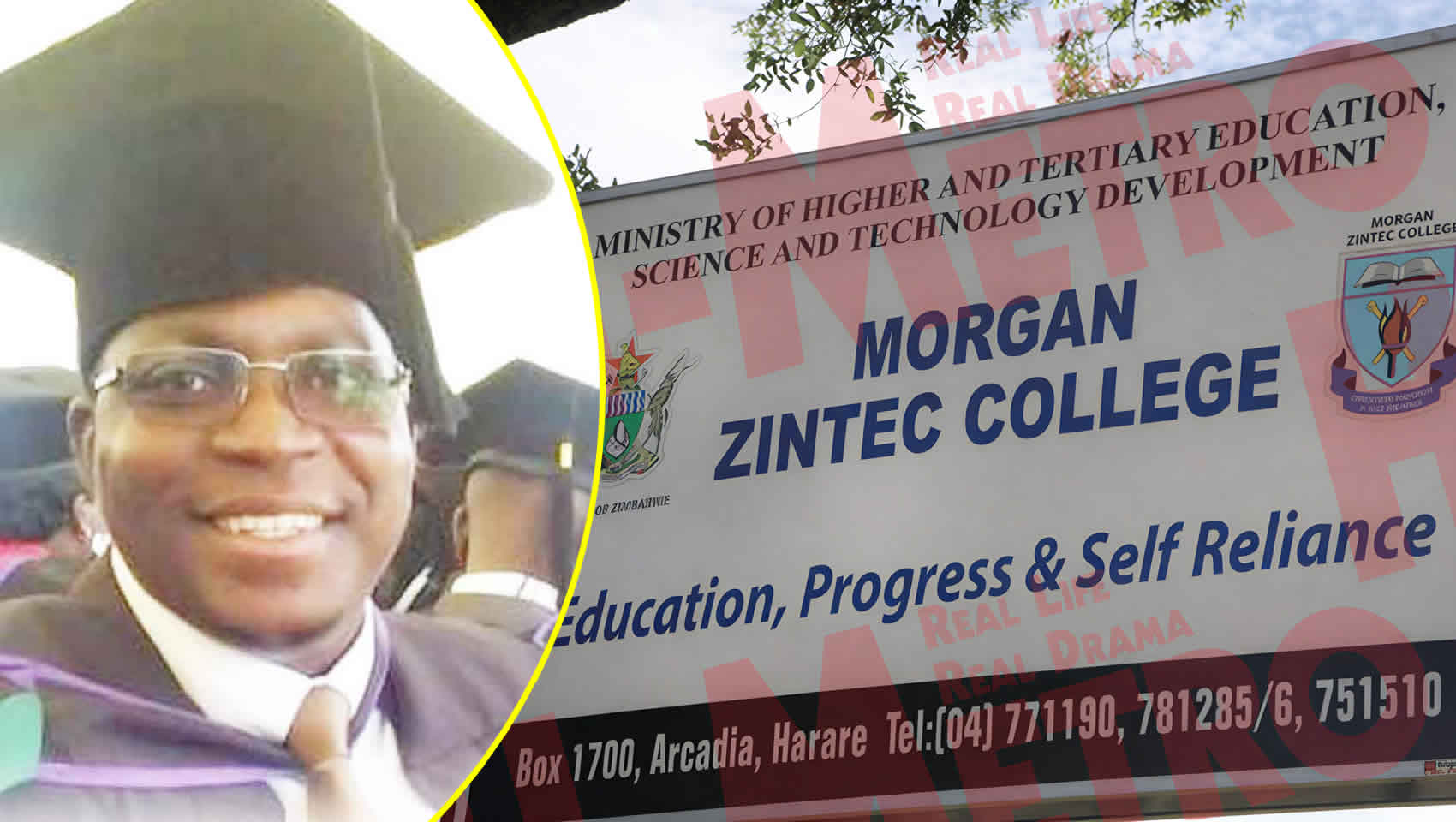
HARARE – A lecturer from Morgan Zintec College, Happiness Karengo, is currently at large following serious allegations of raping one of his students. The incident, which reportedly occurred in November 2025, has brought to the forefront the persistent and troubling issue of sexual harassment and abuse within Zimbabwe’s higher education institutions. Concerns are mounting that Karengo may have exploited other students, with many such cases often remaining unreported due to fear and systemic vulnerabilities.
The alleged assault unfolded when Karengo reportedly summoned a 30-year-old female student to his office under the pretext of an in-class examination she had missed. According to reports, upon their arrival at the office, Karengo locked the door from the inside. He then allegedly confessed his affection for the student and began touching her shoulders. Despite her immediate rejection of his advances and a threat to scream, Karengo is said to have retrieved a condom before allegedly proceeding to rape her. Following the alleged act, he reportedly dressed himself, handed her the examination paper, and left her to complete the test in the office alone.
The student, deeply distressed by the ordeal, confided in her sister. It was her sister who advised her to delay reporting the incident to the authorities. The rationale behind this difficult decision was a profound fear that Karengo might tamper with her coursework marks, potentially jeopardising her academic future, if she reported him before her grades were finalised. This delay highlights a critical barrier to justice for victims in academic settings, where power imbalances can create an environment of intimidation and silence. The student eventually gathered the courage to file a police report in early February 2026, with the case being recorded at Braeside Police Station under RRB 6473934. As of now, police officials have not provided a comment on the ongoing investigation.
Within the college corridors, the alleged incident has become a topic of open discussion among lecturers, underscoring the gravity of the situation. A student, whose identity remains protected, voiced a sentiment shared by many, stating:
“This is serious abuse and unprofessional conduct shown by the lecturer. We suspect that he could have been doing this to some students in exchange of favours and went unreported.”
This statement points to a deeper, more pervasive problem, suggesting that the alleged actions of Karengo might not be isolated. The victim has since undergone a medical examination at Edith Clinic, a standard procedure in such cases to gather forensic evidence and provide necessary care.
A Systemic Challenge: Sexual Harassment in Higher Education
The incident at Morgan Zintec College is not an isolated occurrence but rather a stark reminder of the widespread issue of sexual harassment and gender-based violence (GBV) prevalent across Zimbabwean higher and tertiary education institutions. National surveys indicate an alarmingly high rate of GBV in Zimbabwe, with approximately 40% of women and girls experiencing physical violence and 12% enduring sexual violence. These figures are particularly concerning, with physical GBV rates about 10% higher than the global average.
A 2019 UNESCO situational analysis specifically focusing on higher and tertiary education revealed that over 1 in 10 students reported experiencing sexual and gender-based violence. Victims included both female and male students, with perpetrators often identified as fellow students or, disturbingly, lecturers. The analysis further highlighted that the vast majority of these incidents go unreported, largely due to a lack of deterrent institutional responses and insufficient survivor-centred safeguards. This creates a culture where perpetrators may act with impunity, and victims are left without adequate support or recourse.
Towards Safer Campuses: Policy and Progress
In response to these pervasive challenges, the Ministry of Higher and Tertiary Education, Innovation, Science and Technology Development (MoHTEISTD), with support from UNESCO’s Our Rights, Our Lives, Our Future Plus (O3 PLUS) programme, launched the Model and Benchmarking Anti-Sexual Harassment Policy in October 2025. This landmark policy aims to establish a clear framework for preventing and addressing harassment and sexual misconduct across all higher and tertiary education institutions in Zimbabwe.
The policy outlines crucial measures, including clear definitions of sexual harassment, distinct responsibilities for institutions, staff, and students, and comprehensive reporting and complaints procedures. These procedures are designed to be survivor-centred, ensuring protection, confidentiality, and the right for victims to report to the police. Furthermore, the policy details investigation and disciplinary processes, sanctions for perpetrators, and consequences for breaches of confidentiality. It also mandates referral pathways for medical, psychosocial, and legal support, alongside obligations for awareness-raising and training for all campus members.
Prior to this, in May 2025, the Zimbabwe Gender Commission (ZGC) initiated a significant investigation into sexual harassment allegations plaguing higher and tertiary education institutions across the country. This inquiry was prompted by a growing number of complaints and aimed to gather comprehensive data to inform policy and intervention strategies. The findings of such investigations are crucial for guiding nationwide reforms to make Zimbabwe’s tertiary institutions safer and more inclusive environments for all.
Since the policy’s launch in June 2025, all O3 PLUS-supported institutions have begun developing or adapting their own sexual harassment policies in line with the national model. Phase 2 of the O3 PLUS programme, scheduled from 2026 to 2029, will extend this support to all 56 Higher and Tertiary Education Institutions nationwide. The goal is to ensure that by 2030, every institution will have an operational and enforced policy framework that guarantees safe, inclusive, and conducive learning and working environments for both students and staff.
While the alleged incident at Morgan Zintec College serves as a grim reminder of the work that still needs to be done, the proactive steps taken by the Zimbabwean government and supporting organisations like UNESCO offer a glimmer of hope. The implementation and rigorous enforcement of these new policies will be paramount in fostering a culture of respect, accountability, and safety, ensuring that educational institutions are indeed places of learning and growth, free from the threat of sexual misconduct.