


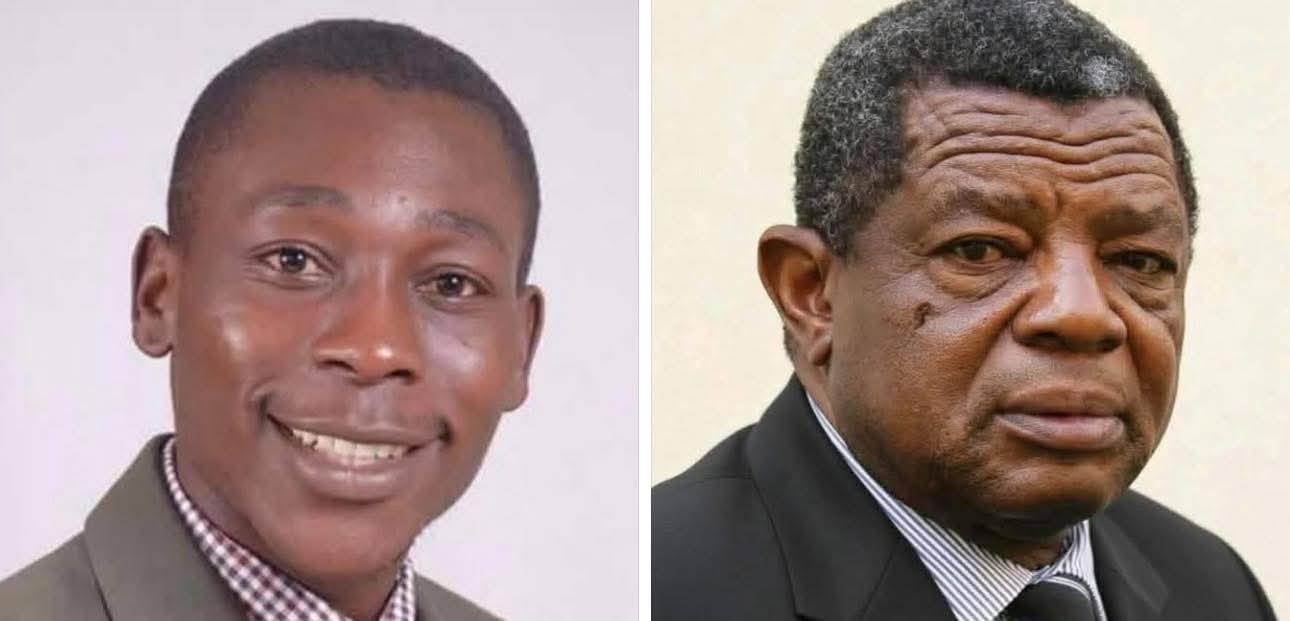
PRETORIA – The tragic death of Zimbabwean political activist Kudzai Weston Saruwaka, found with multiple gunshot wounds in Mabopane, Pretoria, on 7 February, has ignited a firestorm of speculation and fear among exiled dissidents. His demise, occurring just a day after the passing of prominent war veteran and opposition figure Blessed Geza, has fuelled widespread rumours of a politically motivated assassination, despite official denials from the Zimbabwean government.
Saruwaka, a staunch supporter of the late Blessed Geza’s calls for political change in Zimbabwe, was discovered lifeless in what his family and associates describe as a meticulously planned ambush. The circumstances surrounding his death have raised serious questions, painting a grim picture of the dangers faced by those who dare to challenge the status quo from beyond their homeland’s borders.
According to his brother, Trevor Saruwaka, a former opposition Member of Parliament for Mutasa Central, Kudzai’s killing was a deliberate act by “political thugs.” In an emotional Facebook post, Trevor Saruwaka declared, “The political thugs have assassinated my young brother, Kudzai Weston Saruwaka, of the GEZA REVOLUTION only a day after the death of Cde Blessed Bombshell Geza. You are a martyr who has paid the ultimate price for the freedom of Zimbabwe. The cause is still there so the struggle shall continue.” This powerful statement immediately pointed fingers towards a sinister plot rather than a random act of violence.
However, the Zimbabwean government has vehemently rejected any involvement. Government spokesman Nick Ndavaningi Mangwana dismissed the allegations as “unfounded,” suggesting that Saruwaka’s death was merely another statistic in South Africa’s alarmingly high murder rate.
“We categorically reject the unfounded allegations being pushed around the internet regarding the tragic death of a Zimbabwean national in South Africa. We had absolutely no role in this incident,” Mangwana stated. He further extended condolences to the family and expressed confidence in the South African authorities to conduct a thorough investigation, urging against “harmful speculation.”
Yet, the timing of Saruwaka’s death, so closely following Geza’s, has made it difficult for many to accept the official narrative. Activists and observers alike have questioned the coincidence, suggesting a more intricate and disturbing connection. A video interview circulating online shows Saruwaka outside what was identified as “the home of Bombshell Geza,” where he explained he had come to pay his respects. In the video, he mentioned leaving South Africa soon, adding another layer of poignancy to his untimely end.
Friends and family revealed that Saruwaka had left Zimbabwe in October of the previous year, driven by what he believed were credible threats to his life due to his political activism. In South Africa, he had reportedly established a modest living selling branded door rugs, entrance mats, and carpets. It was through this venture that he was allegedly lured to his death.
Accounts shared by his family and associates detail a significant order worth R27,000, paid in three instalments of R9,000 via ATM cash deposits. After preparing the order, Saruwaka reportedly found that the client’s contact number had become inactive. He heard nothing for over two months until, last week, he received a location in Mabopane to complete the delivery. Reports indicate that Saruwaka travelled to the designated site using an Uber. Upon arrival in a bushy area, gunmen ambushed the vehicle, fatally shooting him. Crucially, family members, citing police information, noted that nothing appeared to have been stolen from the vehicle, including the consignment he was delivering. This detail has intensified suspicions that he was deliberately lured to the location, not for a robbery, but for a targeted killing.
United States-based pro-democracy campaigner Freeman Chari voiced his conviction on X, stating, “There is no doubt in my mind that hitmen sent by Zanu PF assassinated Saruwaka.” This sentiment resonates with many who fear a pattern of extraterritorial targeting of Zimbabwean dissidents. South African police have yet to publicly comment on potential motives, as investigations are ongoing. However, the incident has cast a long shadow over the safety of Zimbabwean exiles in neighbouring countries, particularly those who have been vocal critics of the current regime.
The Shadow of Blessed Geza: A Revolution Ignited
Blessed Runesu Geza, known as “Bombshell,” was a figure of considerable influence, a war veteran and former Zanu-PF Central Committee member who dramatically turned against President Emmerson Mnangagwa. His rise to prominence in 2025 was marked by a series of explosive social media broadcasts where he accused Mnangagwa and his allies of widespread corruption. These broadcasts, often expletive-laden and delivered with a gritty voice and furrowed brow, captivated national attention and triggered a swift response from the authorities.
Geza’s anger stemmed from attempts within the ruling party to amend the country’s laws, potentially allowing President Mnangagwa to seek a third term in office. Despite the Zimbabwean constitution limiting presidential terms to two five-year periods, slogans like “2030 he will still be the leader” began to emerge from Mnangagwa’s supporters, advocating for his continued leadership to complete his “Agenda 2030” development programme.
His public denunciations were stark. “I must apologise for helping him come into office,” Geza stated in one widely circulated press conference. He continued, “As soon as he [Mnangagwa] had the taste of power, he escalated corruption, forgot the people and only remembered his family. Mnangagwa has also surrendered state power to his wife and children. We sadly see history repeating itself. We can’t allow that to happen”. These accusations were not merely political rhetoric; they were a direct challenge to the highest echelons of power.
The repercussions for Geza were immediate and severe. Police prepared treason charges against him, forcing him to flee to South Africa in January 2025. His wife, Roseline Tawengwa, was detained and questioned for several hours, and his home in Sanyati was petrol-bombed, illustrating the ruthless measures taken against perceived threats to the regime. From exile, Geza continued to be a vocal critic, igniting what became known as the “Geza Revolution,” a movement that called for mass protests and Mnangagwa’s resignation.
A Haunting Farewell: Geza’s Final Letter
Blessed Geza’s death on 6 February, just a day before Saruwaka’s, was attributed to a long and private battle with cancer. However, the timing, coupled with his recent activism, added another layer of intrigue to the unfolding events. Hours before his passing, Geza released a poignant and powerful “final letter” to the people of Zimbabwe, a message that resonated deeply with his followers and critics alike.
In this letter, shared in the early hours of 6 February 2026, Geza spoke candidly about his pain, his illness, and his fear that he might not live to witness the political transformation he so desperately sought for Zimbabwe. “I am in pain that I might not see the new Zimbabwe after Emmerson, but I take solace in the hope that you will continue the faith for a free and prosperous nation – the Zimbabwe I fiercely fought for,” he wrote.
He reflected on his youthful involvement in the liberation struggle, recalling the sacrifices made by his comrades. “We fought fierce battles, and the memories of our dear comrades who fell to the enemy’s guns and bombs still haunt us. But this did not deter us; it fortified our resolve,” he penned, emphasising the enduring spirit of resistance.
Geza also expressed regret for his role in the November 2017 removal of former president Robert Mugabe, acknowledging that the hopes for reform that followed were quickly dashed. “What followed has been a nightmare. Mnangagwa has fared even worse, completely neglecting the values we fought for,” he asserted, accusing the current leadership of unprecedented corruption and state capture. He specifically named figures like Kuda Tagwirei, Wicknell Chivhayo, and Scott Sakupwanya, alleging they were “pillaging our nation” alongside Mnangagwa and his sons.
The letter served as a final rallying cry, urging Zimbabweans not to succumb to fear but to let it fuel their resolve. “As I speak to you now, I feel my energy sapping; I might not be here tomorrow, next week, or next month. Do not let fear engulf you; let it fuel your resolve. We have fought too hard and lost too much to turn back now,” Geza concluded, leaving behind a legacy of defiance and a call to action.
A Chilling Coincidence or a Calculated Strike?
The proximity of Geza’s death to Saruwaka’s has inevitably led to intense speculation about a possible connection. While Geza’s passing was attributed to natural causes, the subsequent assassination of his close ally has cast a long shadow of suspicion. The video of Saruwaka visiting Geza’s home just before his own death, expressing his intention to leave South Africa soon, adds a layer of tragic irony to the narrative.
For many Zimbabwean dissidents living in exile, the deaths of Geza and Saruwaka are not isolated incidents but rather disturbing echoes of a broader pattern of repression. The fear of extraterritorial targeting by state agents is a palpable concern, particularly for those who have been vocal critics of the Zimbabwean government. The allegations by Freeman Chari, a US-based pro-democracy campaigner, that “hitmen sent by Zanu PF assassinated Saruwaka” reflect a deep-seated distrust and belief that political opponents are not safe even beyond Zimbabwe’s borders.
A Troubling Pattern: Past Incidents and Ongoing Fears
The deaths of Kudzai Saruwaka and Blessed Geza, particularly the alleged assassination of Saruwaka, bring to the forefront a troubling history of violence and disappearances targeting Zimbabwean activists. This pattern extends beyond the recent events, raising concerns about the safety of dissidents both within Zimbabwe and in neighbouring countries like South Africa.
One of the most prominent cases that continues to haunt Zimbabwe’s political landscape is the enforced disappearance of Itai Dzamara. A journalist and pro-democracy activist, Dzamara was abducted in broad daylight on 9 March 2015, from a barbershop in Harare by five unidentified men in a white truck with a concealed number plate. He had been a vocal critic of then-President Robert Mugabe and had organised protests demanding electoral reforms. Despite numerous calls from international human rights organisations and his family, Dzamara’s whereabouts remain unknown a decade later, symbolising the impunity often associated with such acts.
Another grim reminder is the murder of Tonderai Ndira in May 2008. Ndira, a prominent opposition activist, was abducted from his home and later found dead with horrific injuries, including a broken skull, jaw, and knuckles. His death was one of many politically motivated killings that occurred during a period of intense political violence in Zimbabwe, particularly targeting members of the opposition Movement for Democratic Change (MDC). The brutality of his murder was widely condemned and served as a stark warning to other activists.
More recently, the abduction, torture, and killing of Pastor Tapfumaneyi Masaya in November 2023 further underscored the precarious situation for political activists. Masaya, a Citizens Coalition for Change (CCC) activist, was abducted by unidentified men and his body was later found. His death, which occurred barely two weeks after another CCC lawmaker, Takudzwa Ngadziore, was abducted, tortured, and dumped, highlighted a disturbing trend of escalating violence against opposition figures. These incidents collectively paint a picture of a political environment where dissent is met with severe, often fatal, consequences.
The Zimbabwean government has consistently denied involvement in such cases, often attributing them to ordinary crime or dismissing them as politically motivated fabrications. However, the consistent targeting of opposition figures and critics, often under mysterious circumstances, fuels the narrative that these are not random acts but rather calculated efforts to silence dissent and instill fear.
The implications of such alleged extraterritorial killings are profound, as they suggest that even seeking refuge in another country does not guarantee safety for those who challenge the powerful in Zimbabwe. This creates a chilling effect, deterring potential activists and further entrenching a climate of fear among the diaspora. The South African authorities, while investigating Saruwaka’s death, face immense pressure to uncover the truth and address the growing concerns about their country being used as a hunting ground for political opponents from neighbouring states.