


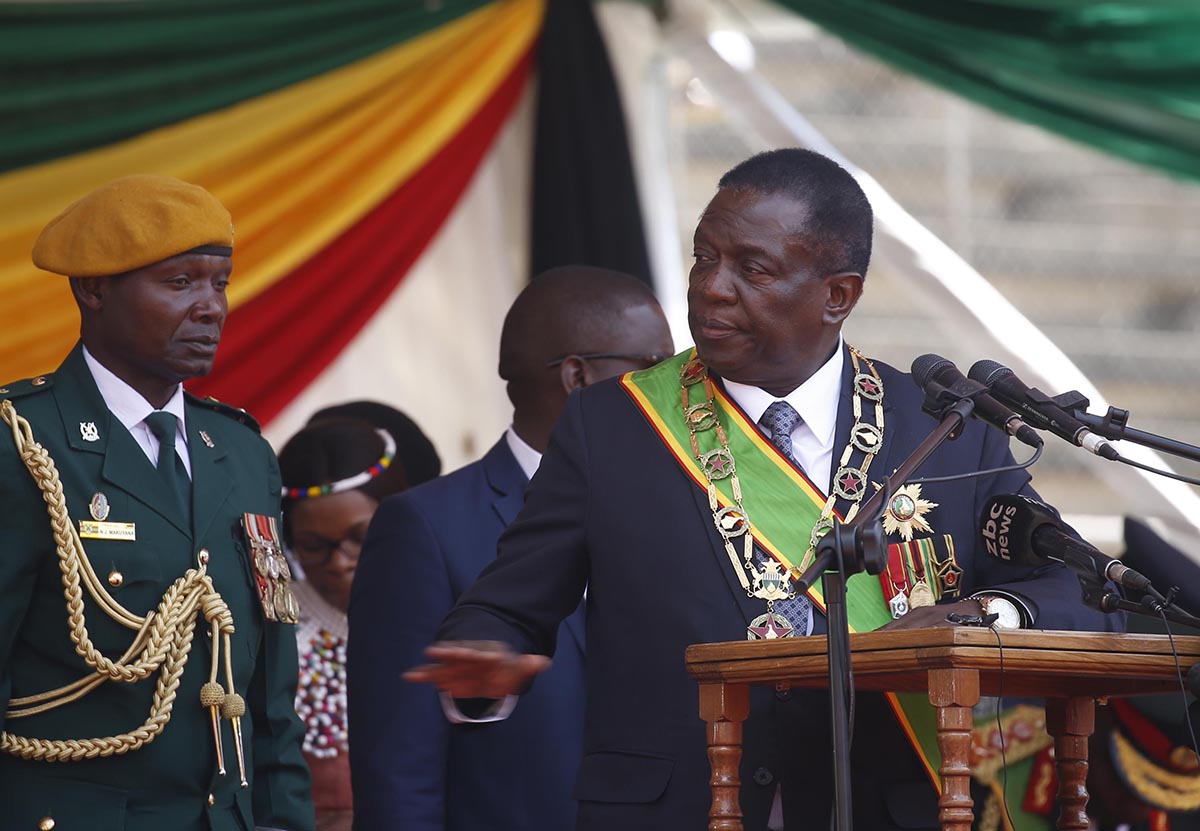
MASVINGO – A profound crisis is unfolding within Zimbabwe’s traditional leadership, epitomised by the contentious appointment of Silas Chikwanda as Chief Chikwanda. This move, allegedly orchestrated by President Emmerson Mnangagwa, has ignited a firestorm of controversy, with family members and traditional leaders alike decrying a blatant disregard for established customs and the rule of law. At the heart of the dispute lies the accusation that Silas Chikwanda, believed to be an operative of the Central Intelligence Organisation (CIO), was installed without due process, further entangling traditional institutions in the web of state politics.
The Masvingo Mirror has obtained a Cabinet minute dated 28 November 2025, bearing President Mnangagwa’s signature, which confirms Silas Chikwanda’s immediate appointment as Chief. This official endorsement, however, stands in stark contrast to the deeply rooted traditions governing chieftainship succession within the Chikwanda clan. Family members, including Samson Chizu and Peter Chikwanda, expressed profound shock at the development, asserting that no family meetings or recommendations, which are foundational to the appointment of a substantive chief, ever took place. The appointment of a chief, according to Zimbabwean law and custom, is meant to be a meticulous process, grounded in the consensus and recommendations of the relevant family houses.
The Farce of the Two Badges
The controversy surrounding Silas Chikwanda’s elevation is further complicated by an earlier, equally irregular, appointment. Minutes seen by the Masvingo Mirror reveal that a meeting was convened on 23 February 2024, at Zishumbe Primary School, specifically to select an acting chief. This gathering included prominent traditional figures such as Chiefs Chitanga, Nhema, and Mazungunye, alongside four officials from the Ministry of Local Government. During this meeting, Silas Chikwanda’s older brother, Peter Chikwanda, was duly selected as the acting chief and was presented with the official chief’s badge.
However, in a bewildering turn of events, a Cabinet minute dated 23 October 2024, unilaterally appointed Silas Chikwanda as the acting chief, completely bypassing the earlier decision and the family’s choice. This led to the creation of a new badge for Silas, resulting in the unprecedented and deeply symbolic situation where the Chikwanda chieftainship now possesses two official badges – a tangible representation of the fractured and contested nature of the leadership. This dual badging underscores the administrative chaos and the apparent disregard for established protocols that have plagued the succession process.
Family’s Defiance and Legal Recourse
Samson Chizu and Peter Chikwanda have not remained silent in the face of what they describe as an unlawful and destabilising appointment. They have formally petitioned Minister Daniel Garwe, whose ministry is responsible for traditional leaders, to challenge the decision. Their petition articulates a clear and resolute stance against the perceived imposition:
“We the members of the Chikwanda Clan, categorically dispute the recommendation by Cabinet. Succession within the Chikwanda Clan is governed by long-standing customs: the chieftainship rotates among the Houses of Chikwanda in accordance with established succession traditions, not by direct inheritance from father to son, as is being imposed in this case.”
This statement highlights a critical aspect of traditional Shona succession, where chieftainships often rotate among eligible houses rather than following a direct patrilineal inheritance, especially after the initial lineage. The family’s petition further asserts that the Cabinet’s recommendation to the President is not only misleading but also unconstitutional, as it attempts to circumvent due process and violates both their ancestral customs and the Constitution of Zimbabwe. The matter has since escalated to the High Court, with cases HCH5689/24 and HCH4797/25 currently pending, indicating a protracted legal battle ahead.
A Breach of Custom and Constitutional Mandate
The appointment of Silas Chikwanda on 28 November 2025, also occurred before the customary two-year mourning period for the late Chief Kadiwa Chikwanda had lapsed. This mourning period, often culminating in the sacred Kurova Guva ceremony, is a crucial cultural rite of passage in many Zimbabwean traditions, signifying the formal end of mourning and the spiritual transition of the deceased. To appoint a successor before this period concludes is seen as a profound disrespect for the departed chief and a violation of deeply held cultural beliefs, further alienating the community.
Both the Masvingo Provincial Chiefs’ Assembly chairperson, Chief Chitanga of Mwenezi, and the National Chiefs’ Council President, Chief Mtshane Khumalo, have publicly stated that no selection processes for a substantive Chief Chikwanda have been carried out by the legitimate families since the passing of Kadiwa Chikwanda. This absence of proper consultation and recommendation directly contravenes Section 283 of the Constitution of Zimbabwe, which mandates that the President must appoint chiefs in accordance with the prevailing customary principles of succession. Furthermore, Section 3 of the Traditional Leaders Act [Chapter 29:17] implicitly requires nomination by the clan, a step that was evidently bypassed in Silas Chikwanda’s appointment.
The Long Shadow of the CIO
The alleged involvement of Silas Chikwanda as a Central Intelligence Organisation operative, coupled with his reported attachment to the Ministry of Local Government under Minister Daniel Garwe, casts a long shadow over the entire affair. This situation is not an isolated incident but rather indicative of a broader, troubling trend in Zimbabwe where state security apparatuses are increasingly perceived to be encroaching upon and manipulating traditional leadership structures for political ends.
Reports from organisations like The Sentry and Human Rights Watch have consistently highlighted the growing influence of the CIO and military in co-opting traditional leaders. This interference is often aimed at securing rural votes and consolidating political power, particularly evident during critical electoral periods. The Forever Associates Zimbabwe (FAZ), a shadowy organisation with alleged links to the CIO, played a significant role in the 2023 elections, reportedly intimidating voters and monitoring traditional leaders to ensure their compliance with the ruling party’s agenda.
This pattern of political interference extends beyond appointments. In December 2021, Chief Murinye of Masvingo was reportedly summoned and grilled by CIO operatives after he publicly spoke out against corruption surrounding President Mnangagwa. His experience underscores the pressure traditional leaders face to align with the political establishment, with dissent often met with swift and severe repercussions. Similarly, the controversy surrounding Chief Fortune Charumbira, the President of the Chiefs’ Council and a Senator, who faced sexual assault allegations, further illustrates the complex and often compromised position of traditional leaders within the current political landscape.
A System Under Strain
The Chikwanda chieftainship dispute is but one symptom of a larger systemic issue plaguing traditional leadership in Zimbabwe. The High Court is increasingly inundated with cases challenging chieftainship appointments, with rulings both dismissing and upholding various claims, such as those involving Chief Mugabe and Austin Murwira in 2025. This judicial overload reflects the deep-seated conflicts arising from politically motivated appointments that disregard customary law.
Concerns have also been raised about the alleged political indoctrination of traditional leaders through government-sponsored workshops, and even attempts to influence the judiciary. The allocation of substantial government resources, including a significant portion of capital expenditure on official vehicles for chiefs, is often viewed by critics as a means of buying political loyalty rather than genuinely supporting traditional institutions. At the 2025 Chiefs’ Conference, while President Mnangagwa reaffirmed government support, there were also reports of chiefs demanding hefty payouts, including US$4,000 per month and Starlink internet kits, further blurring the lines between traditional roles and political patronage.
The integrity of traditional leadership, once a revered cornerstone of Zimbabwean society, appears to be eroding under the weight of political manipulation and alleged corruption. The Chikwanda case, with its conflicting appointments, legal battles, and alleged CIO involvement, serves as a stark reminder of the urgent need to uphold customary law and constitutional principles to safeguard the authenticity and legitimacy of these vital cultural institutions. The ongoing disputes threaten not only the stability of local communities but also the very fabric of Zimbabwe’s rich traditional heritage. The question remains whether the rule of law and ancestral customs will ultimately prevail over political expediency in the appointment of those who are meant to be the custodians of tradition.