


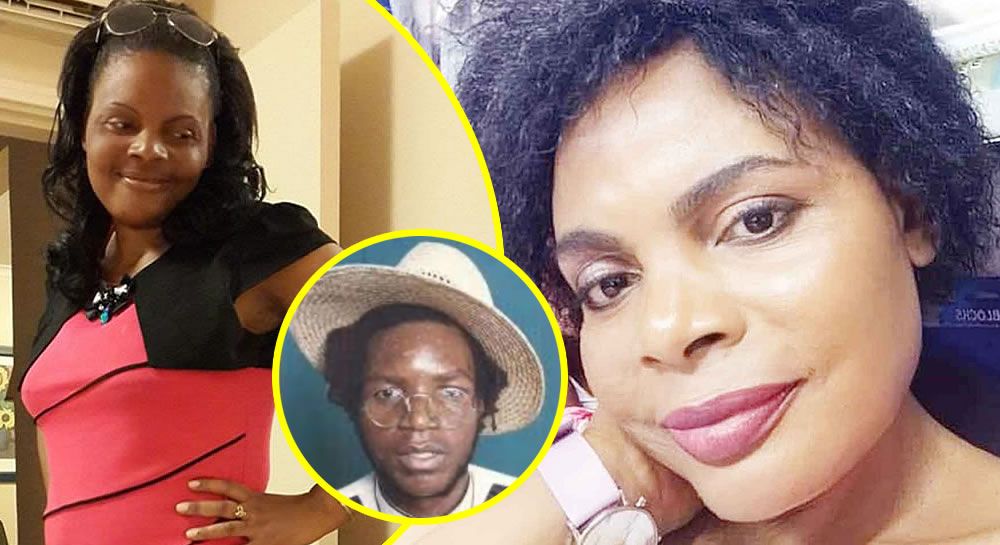
HARARE – For thousands of sungura music enthusiasts across Zimbabwe, the 4th of February is not merely a date on the calendar. It is a day of solemn reflection, marking the moment when the vibrant pulse of “Smoko” music faltered and the nation lost one of its most distinctive voices. It has been twenty-seven years since Fanuel Nyasha Mazhetese Tazvida, better known to his legion of fans as System Tazvida, breathed his last at the tender age of 31. Yet, for his widow, Barbara Mabuyaye, the silence he left behind remains as loud as ever.
Standing as a testament to resilience and unwavering devotion, Barbara has spent nearly three decades navigating the treacherous waters of widowhood. While the world remembers the legend who gave them hits like Anodyiwa Haataure and Mushandi Ndimambo, Barbara remembers the man who was her “pillar of strength.” Today, she speaks of a lingering void that no amount of time seems able to fill.
“Sometimes I feel like he will come back and be with me, giving me true love,” Barbara revealed in a poignant reflection on her journey. “I will always miss the quality time we spent together and all those memories we created as husband and wife. Though the wound is still fresh, I find relief because System taught me to work hard.”
The story of System Tazvida is one of a meteoric rise followed by a tragically premature end. Born on the 2nd of May 1968 in Zaka, Masvingo, he was a man who crafted a unique musical identity that resonated with the common man. He didn’t just play sungura; he invented “Smoko” – an acronym for Simple Music of Original Kanindo. His career was a rich tapestry of collaborations with iconic groups such as the Khiama Boys, where he worked alongside Nicholas Zakaria, and the Sungura Boys, before he formed Mabhauwa Express with Cephas Karushanga. It was, however, with the formation of his own ensemble, the Chazezesa Challengers, in 1993 that he finally struck gold.
His debut solo single, Vaforomani, was an instant classic, followed by a string of hits that cemented his status as a “labour commentator.” He sang about the practical issues facing the working class, with songs like Mushandi Ndimambo (The Worker is King) turning him into a household name. System was more than just a singer; he was a storyteller who used humor and socially-themed lyrics to soothe the bitterness of everyday life. As Barbara notes, “System united people with his socially-themed songs. After listening to his songs, people would soothe their bitterness.”
At the time of his death on the 4th of February 1999, Tazvida was at the pinnacle of his powers, with six successful albums under his belt. The band, which then consisted of Leeroy “Kamusena” Lunga, Lucky Mumiriki, Peter Tazvida, Boysen Shoko, and Josphat Matope, was a formidable force in the industry. However, the leader’s death triggered a series of misfortunes for the group. The most devastating blow followed in 2011 when key member Lucky Mumiriki suffered a debilitating stroke, further silencing the Chazezesa Challengers’ stage presence.
“It still pains me each time we mark his anniversary because we came a long way,” Mumiriki recalled. “We met in 1990 at Sungura Boys, led by the late Ephraim Joe. I was the youngest in the band, but I was determined to learn the ropes under his guidance. We worked there for three years but I left Sungura Boys with System Tazvida to form our own band.”
For Barbara, the struggle has been both emotional and financial. In a country where the widows of famous musicians often fall into destitution, she has fought tooth and nail to maintain her dignity. She credits her late husband for the foresight he showed during their marriage.
“I learned a lot from Tazvida, who used to give me money to run my business,” she said. “He earned well but, as his wife, I had to contribute by working for myself and playing my part.”
Today, she is a familiar face in the world of informal trade, buying and selling goods to make ends meet. “I buy and sell things like most ladies out there, and I don’t regret it because I am not begging like many widows. I have accepted the fact that I am a widow, but I need to work because tears won’t put food on the table.” Her entrepreneurial journey has seen her adapt to changing times. “I sell network marketing products, perfumes, watches and handbags. After my husband passed on, I eked a living by purchasing my products from Tanzania, but nowadays, I just buy things online. I used to run a flea market, but because of high costs of rentals, I have since dropped it,” she explained, showcasing the grit that has kept her afloat.
However, the path has not been without its thorns. Barbara has previously had to take a stand against those who sought to profit from her husband’s legacy without due compensation. In a move that highlighted the ongoing battle for artists’ intellectual property rights in Zimbabwe, she once issued a stern warning to those performing his music at sold-out gigs without her consent.
“These boys are playing our husbands’ music at sold-out gigs… I urge them to stop performing my husband’s music forthwith. I can’t continue to tolerate this,” she stated, defending the royalties that remain a crucial, albeit unpredictable, part of her survival.
She has found an ally in the Zimbabwe Music Rights Association (ZIMURA) and promoters like Dr Johannes Marisa, who has stepped in to assist the families of departed icons. “My husband worked hard and I can safely say I am still surviving on some of the royalties I receive. I’m not sure how they calculate them, but I am just content with what I have because I also work for myself,” Barbara noted.
The legacy of System Tazvida is not just in the royalties or the business ventures of his widow; it is in the “Smoko” beat that still echoes in beerhalls, commuter omnibuses, and family gatherings across the country. He was a musician who never feared “copycats,” believing that imitation was the ultimate form of musical growth.
“My husband was my pillar of strength and the one thing I learnt from him was that he was unfazed by copycats,” Barbara recalled. “He used to say when people copy your music, then you know you have grown musically.”
As the 27th anniversary of his passing is marked, Barbara Mabuyaye remains a figure of quiet courage. She has held on for twenty-seven years, not just to the memory of a superstar, but to the hope of a “true love” that was cut short too soon. In the heart of Harare and the dusty streets of Zaka, the music of System Tazvida plays on, a bittersweet reminder of a man who sang for the workers, the lovers, and the ordinary Zimbabwean – and a widow who continues to battle on in his name.