


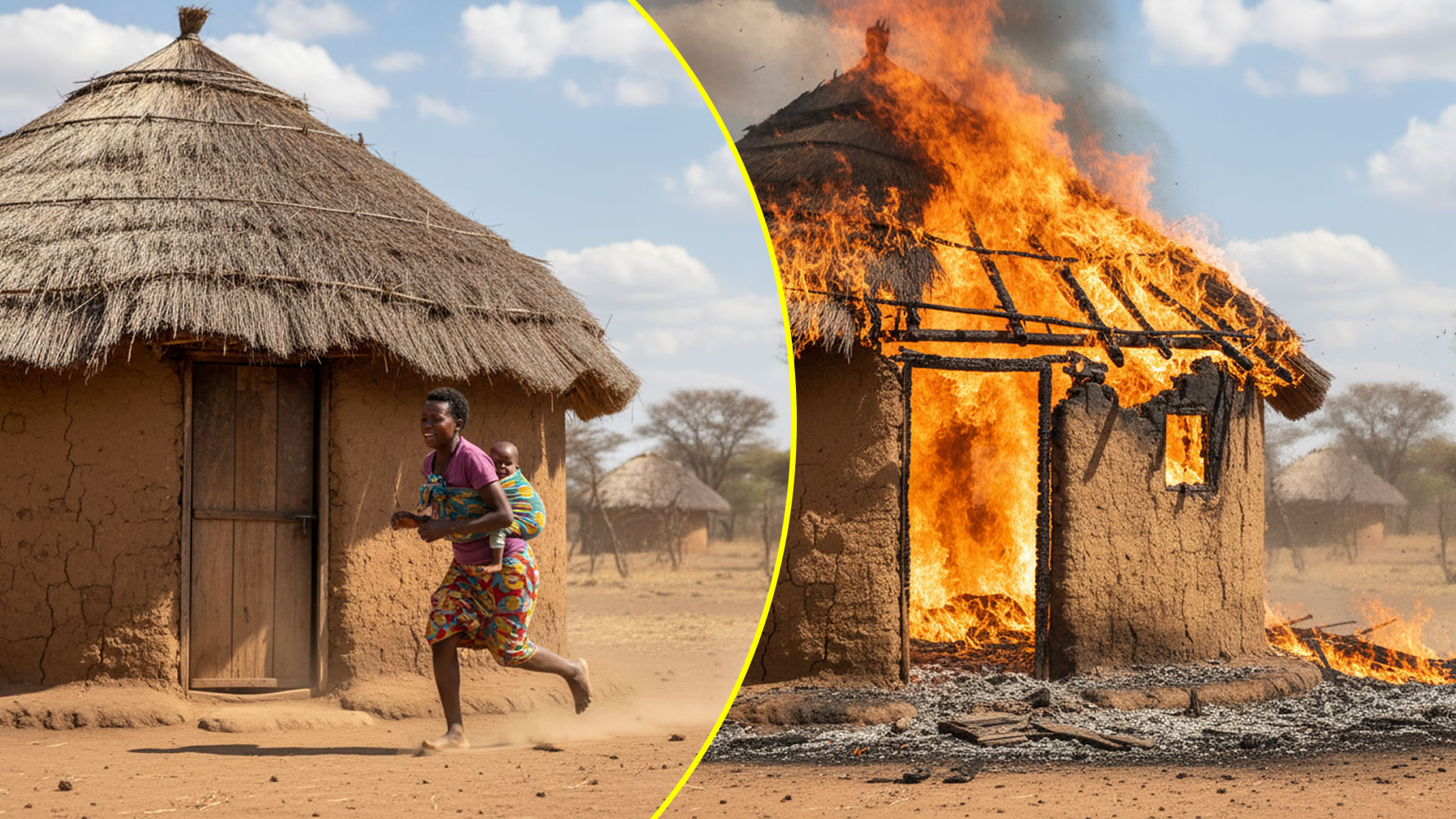
GWERU – In the quiet, rural expanse of Watershed Farm, the silence of the night was shattered on 19 March 2025, by a horror so profound it has left a community scarred and the nation reeling. What began as a family dispute over whispered allegations of the occult ended in a calculated act of mass murder that claimed the lives of two defenceless children, Everjoy Mangena, 13, and Natasha Kanyama, 5.
This week, the High Court sitting in Gweru brought a measure of grim finality to the case. Abel Mativenga, a 20-year-old whose name has now become synonymous with a peculiar brand of modern-day cruelty, was slapped with two life sentences. The presiding judge did not mince words, describing the killings as “cruel, calculated and beyond redemption.”
The details of the case, as laid bare by the National Prosecuting Authority of Zimbabwe (NPAZ), paint a chilling picture of premeditation. Mativenga, reportedly enraged by allegations that his own parents were practising witchcraft, had been warned by those around him to seek a peaceful resolution. He chose a different path. He ignored the advice against violence and instead armed himself with a simple lighter, the tool he would use to carry out his deadly plan.
“He obtained a lighter, tied the hut door with wire to trap the children and set the structure on fire,” the prosecuting authority stated during the proceedings.
The court heard that the attack was carefully planned and executed, with the children deliberately locked inside to ensure there was no escape. As the thatch ignited and the small structure was engulfed in a ferocious blaze, Mativenga did not flee immediately. Instead, he retreated into the shadows of the nearby brush. From his hiding place, he watched with cold detachment as neighbours arrived, their desperate attempts to break through the wire-bound door and rescue the screaming children proving futile. The heat was too intense, the trap too secure.
The hut eventually collapsed in a roar of flames, silencing the cries within. When the embers finally cooled, the recovery teams found the remains of Everjoy and Natasha. Both had suffered 100 per cent burns, their lives extinguished in an instant.
“Given the premeditation, deliberate entrapment and the killing of two minors, the court imposed the maximum penalty of two life sentences,” the NPAZ noted, emphasizing that the sentence was intended to serve as a stark warning. In condemning the killings, the authority said the sentence sends a strong message that violence against children will never be tolerated.
However, the Mativenga case is not an isolated eruption of violence. It is part of a disturbing and persistent trend across Zimbabwe where witchcraft accusations serve as the catalyst for brutal domestic and communal assaults. Only months prior, in December 2024, the Gweru Magistrates Court dealt with another harrowing case from Mncedisi Village in Lower Gweru. In that instance, a 23-year-old man attacked his own mother with an iron rod, leaving her with severe injuries after accusing her of using supernatural powers against him.
Further north, in Guruve, the Zimbabwe Republic Police (ZRP) recently confirmed the arrest of five family members in connection with the tragic murder of their relative, John Chimana Chaora. The motive, once again, was rooted in the toxic soil of witchcraft suspicions. In Bikita, a trio was arrested for the alleged murder of a four-year-old child, a case that combined crop disputes with dark allegations of sorcery.
These incidents highlight a deep-seated social crisis. Despite modern legal frameworks, the “witch-hunt” remains a lethal reality for many. The NPAZ has been vocal about the need for a shift in how communities handle such suspicions, urging people to act early when danger signs appear.
“Communities must resolve disputes peacefully, report warning signs and seek help before anger turns deadly,” the authority urged in the wake of the Mativenga sentencing.
As Abel Mativenga begins his life behind bars, the charred remains of the hut at Watershed Farm stand as a silent monument to two lives cut short. For the survivors and the neighbours who watched the inferno in helpless agony, the “strong message” from the High Court is a necessary one, but it cannot bring back the children who were lost to the flames of a senseless, superstitious rage. This case remains a dark chapter in the region’s history, highlighting the urgent need for communal vigilance and the peaceful resolution of disputes.